Landscape
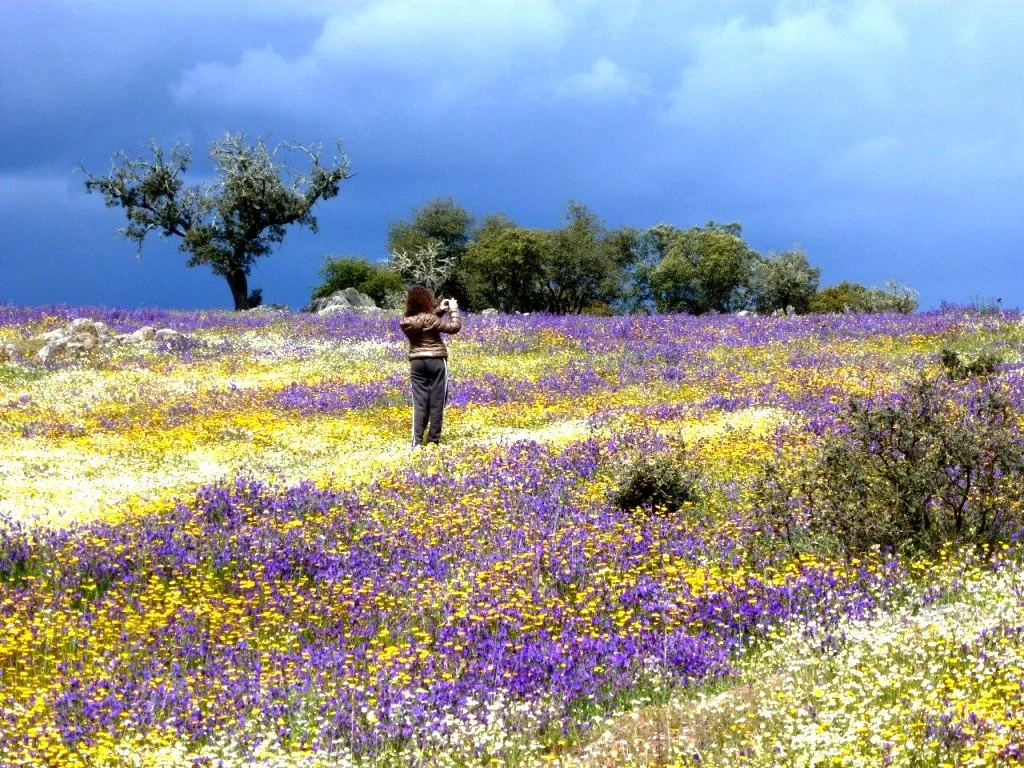
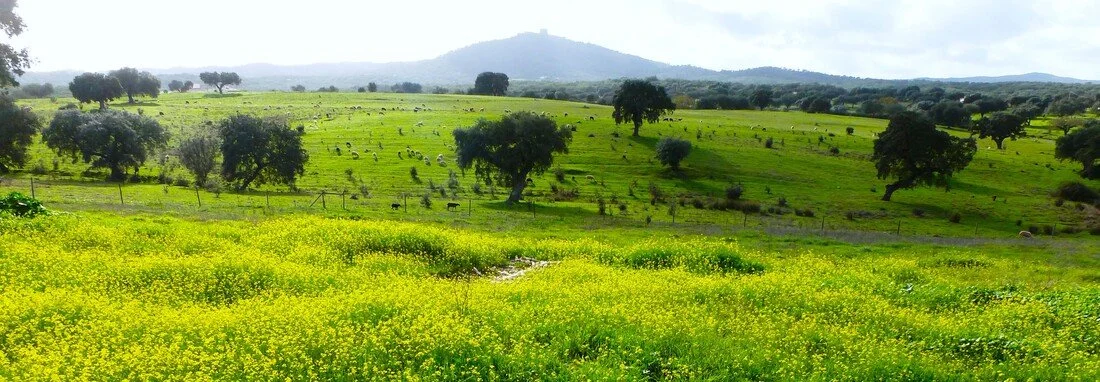
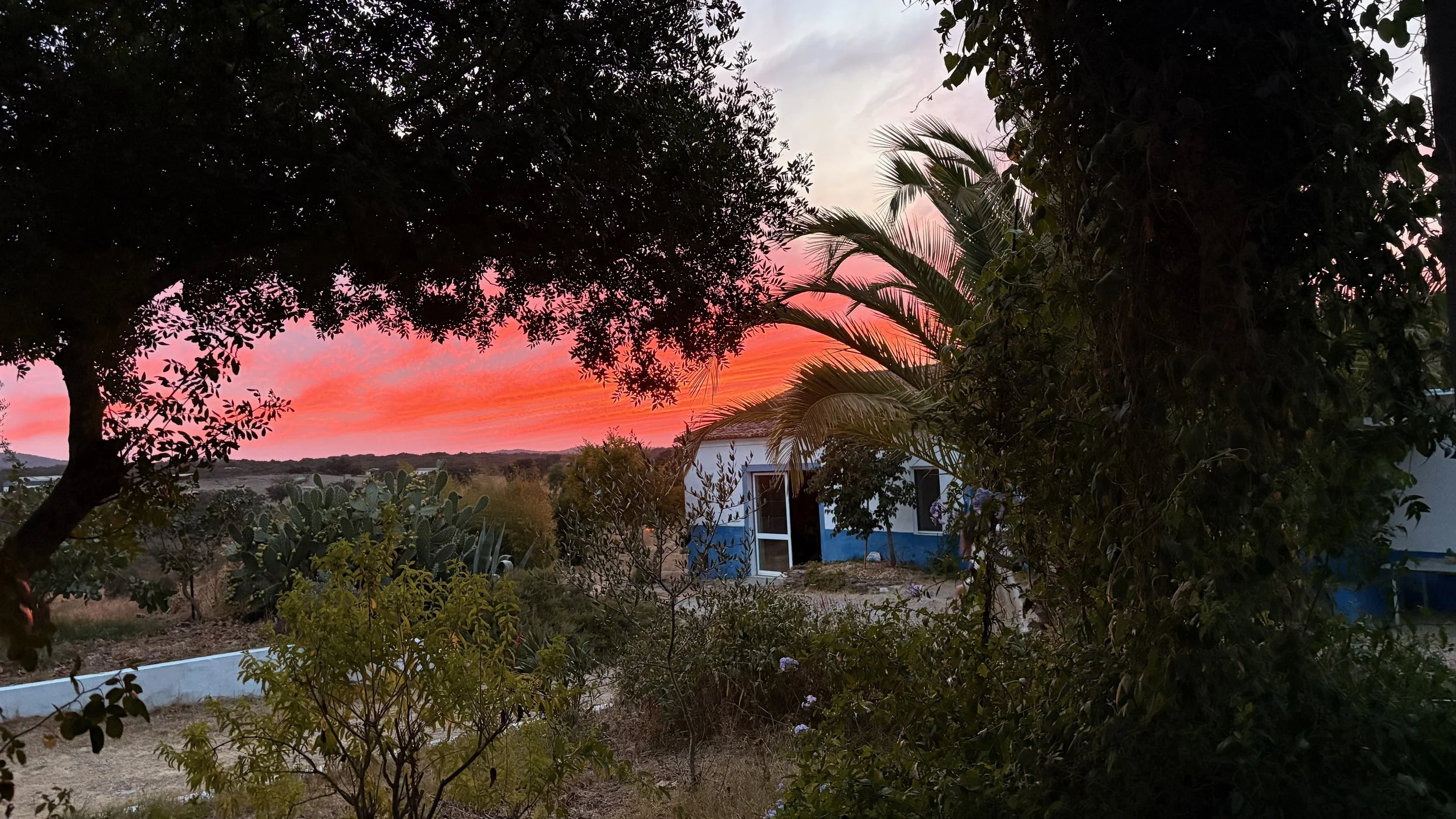
OBRAS sits on a hill within Herdade da Marmeleira, a working rural landscape in Alentejo. The land around the house includes agricultural fields, cork oak, marble quarries, traces of earlier habitation, and a network of walking paths.
The landscape around OBRAS is part of daily life. Fields, low hills, stone walls, and distant views of Évoramonte shape the horizon. The light shifts throughout the day, and the weather is felt directly.
You can walk straight from your door into the open countryside. Some residents work outside regularly. Others simply use the land as space to think. It does not demand attention, but it is always present.
Marble & Quarries
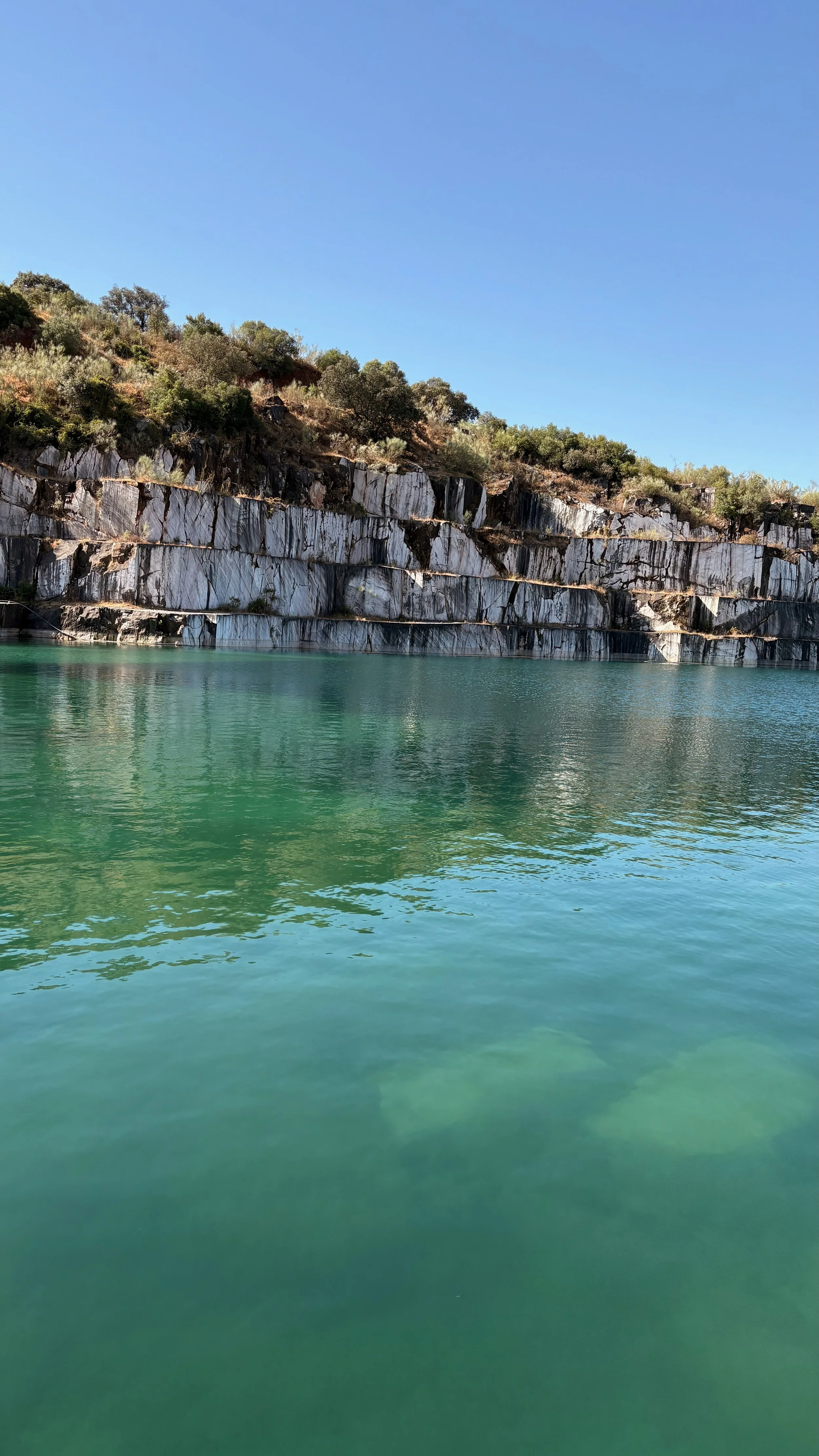
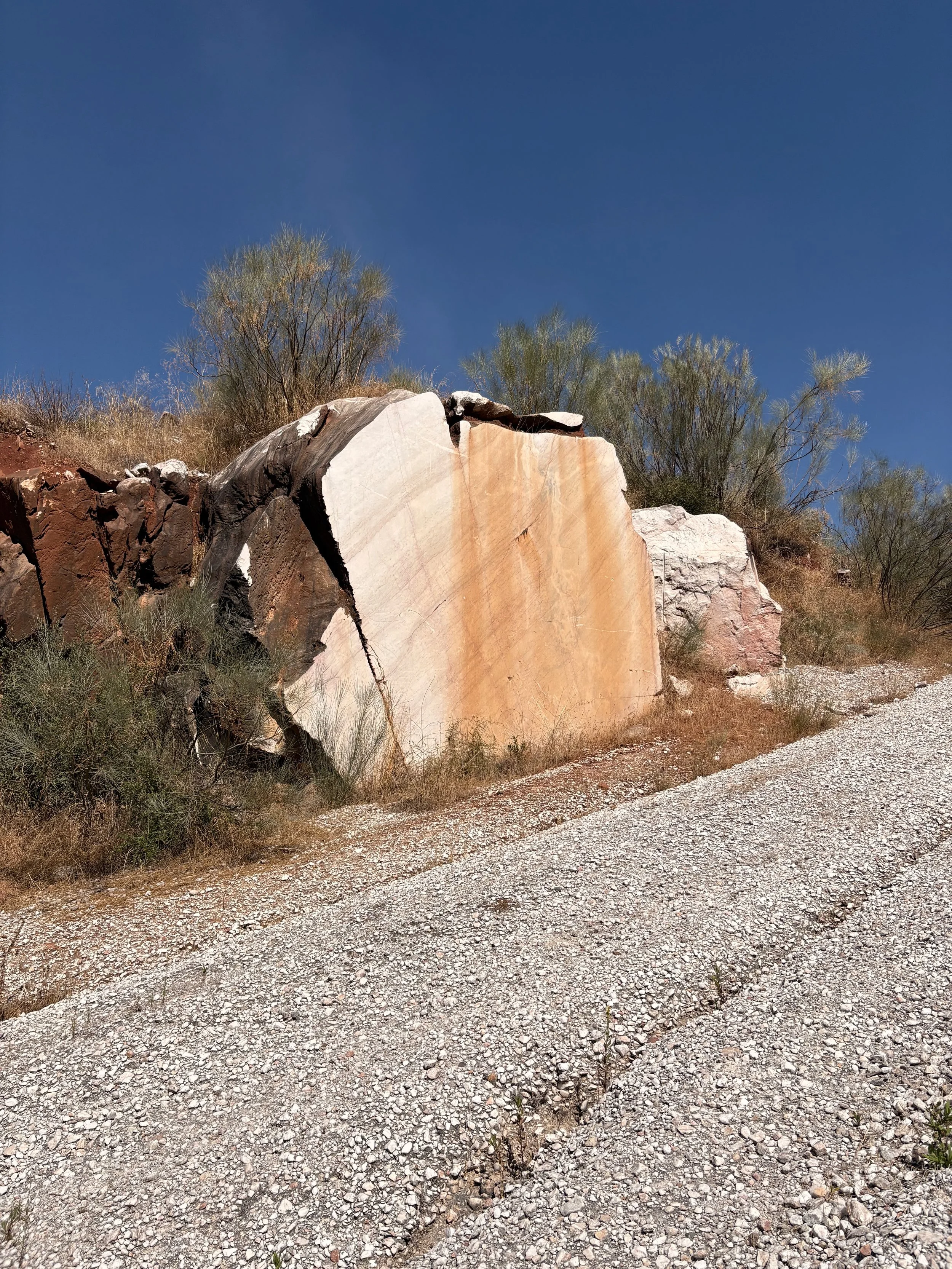
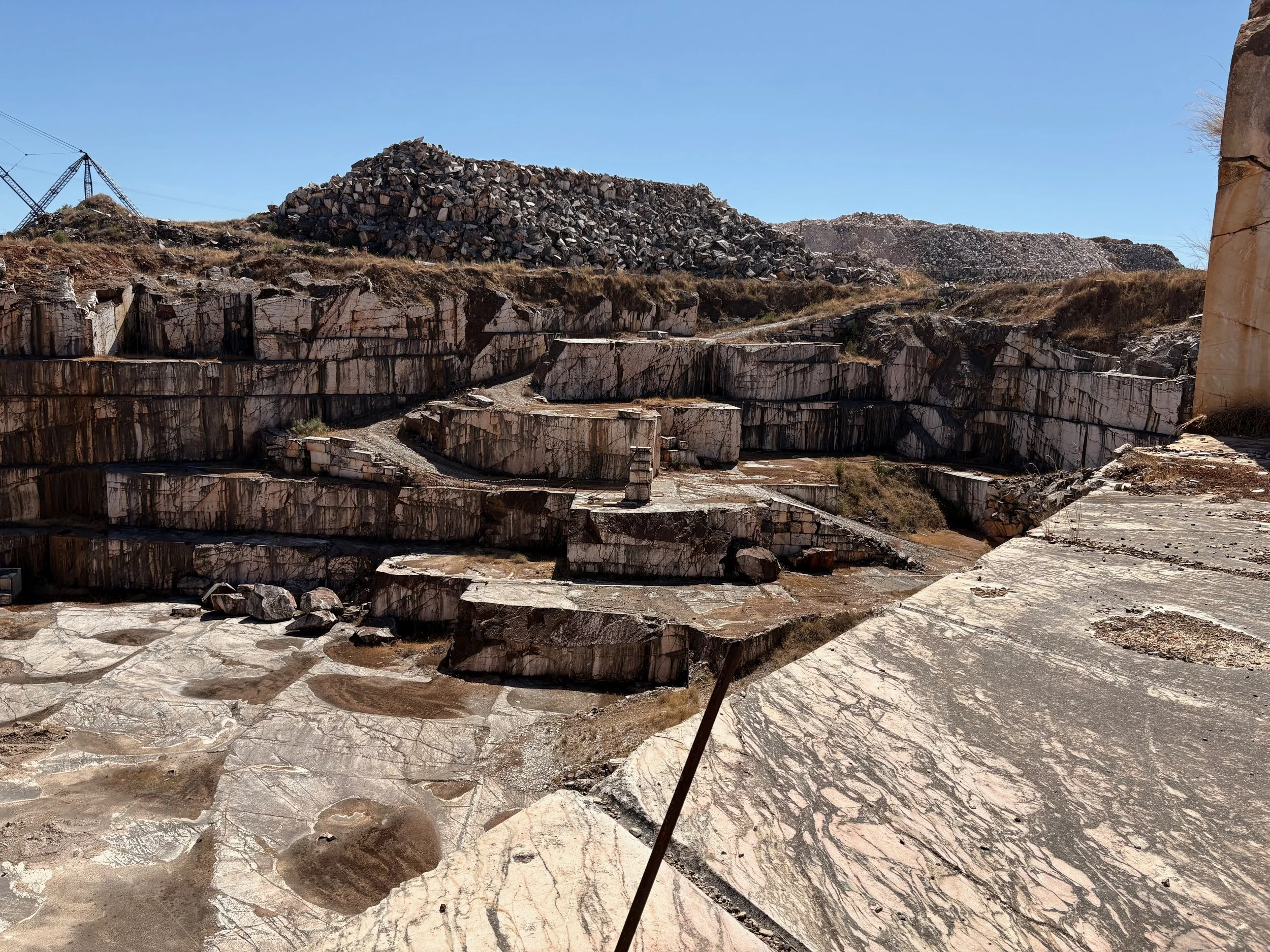
Within roughly ten kilometers of OBRAS begins one of the largest marble regions in Portugal — a belt of approximately 50 × 10 kilometers where marble lies close to the surface. The stone has been quarried here since Roman times and remains an active industry today.
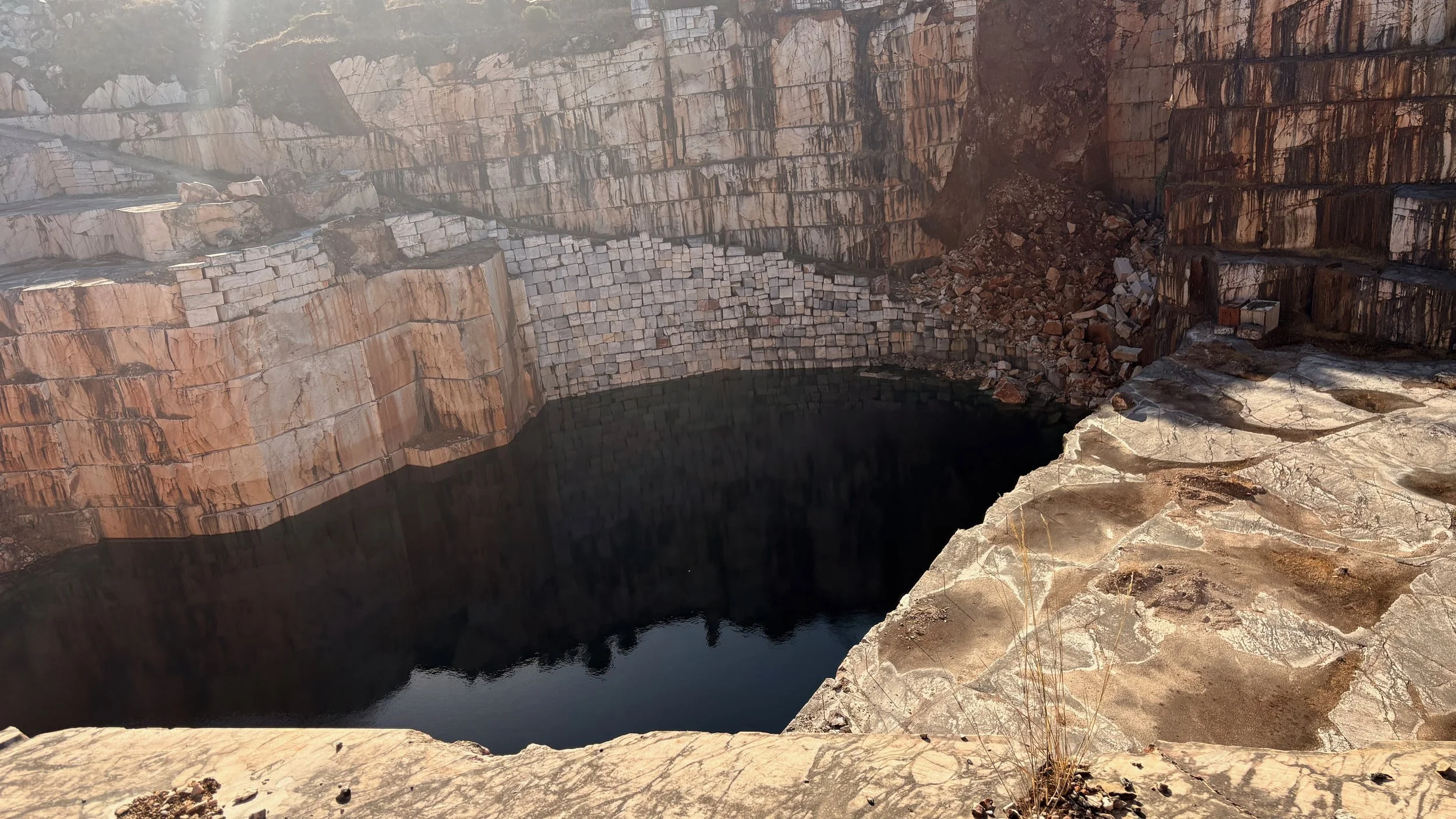
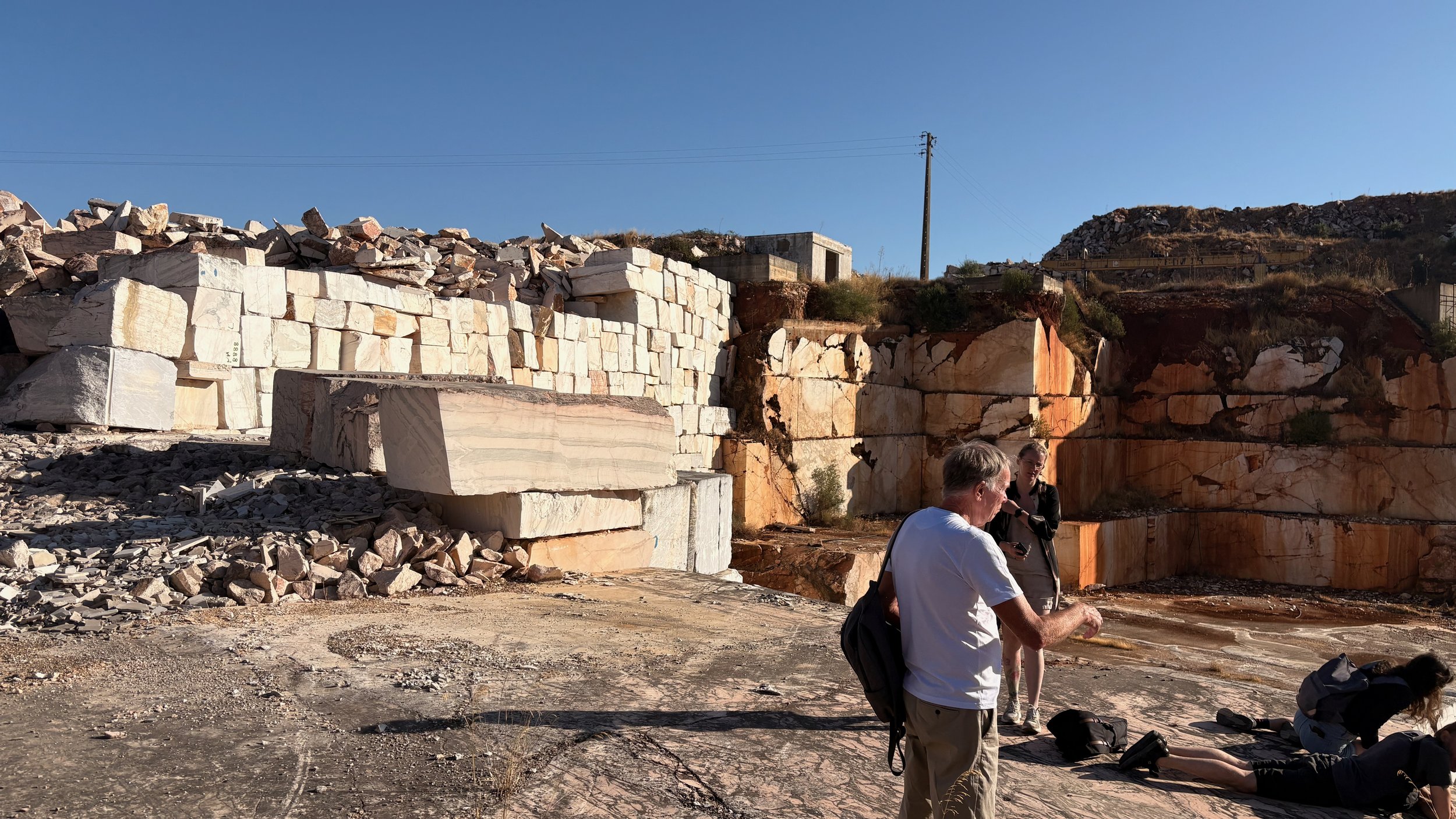
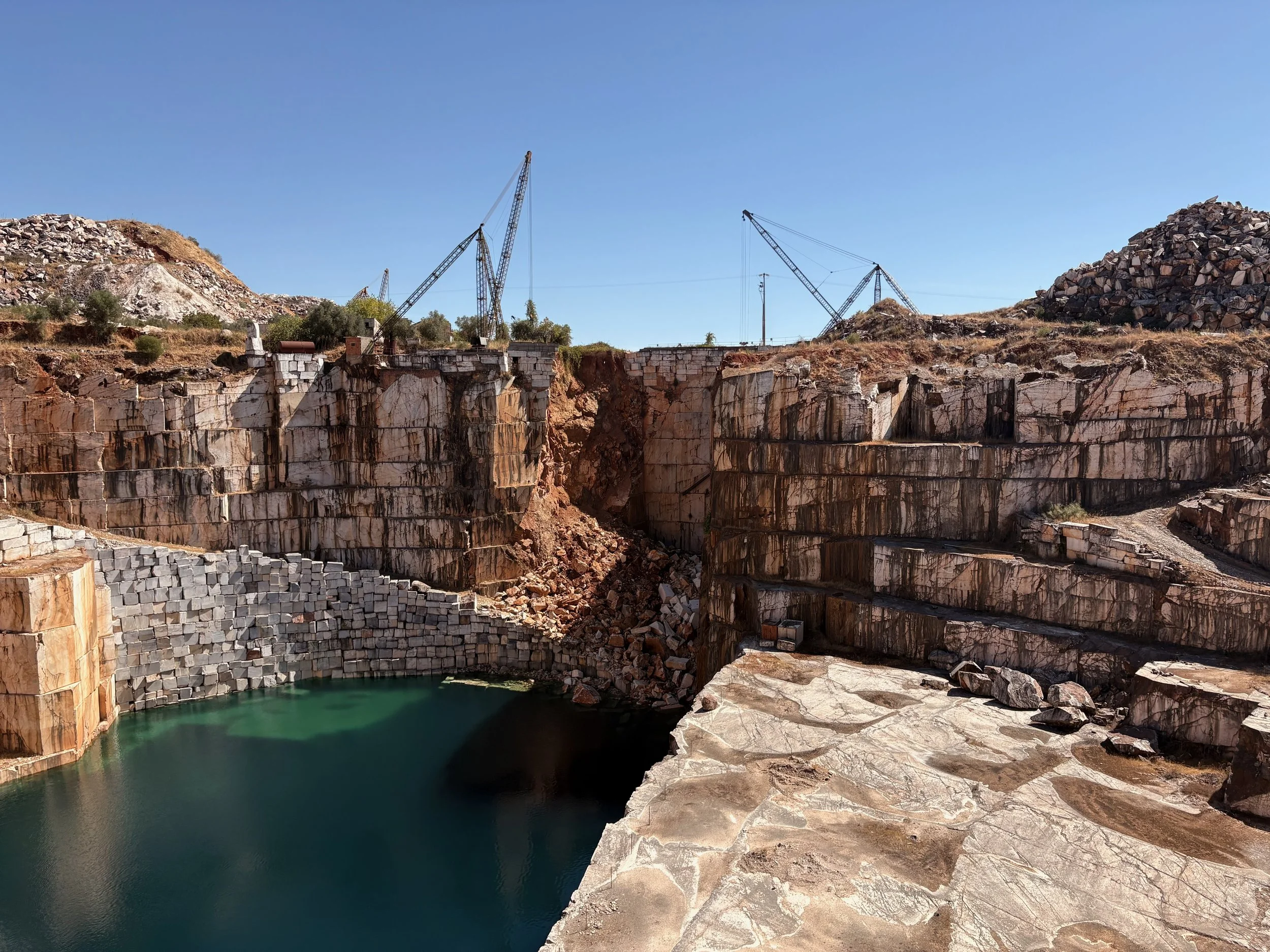
From the road, the quarries appear as pale terraces cut into the land. Up clos,e they are large open pits with vertical walls of exposed marble, machinery working below, and roads carved directly into the stone. The color ranges from white to rose and almond tones. Small crystals give the surface a subtle luminosity, and some varieties are known for their alabaster-like translucency.
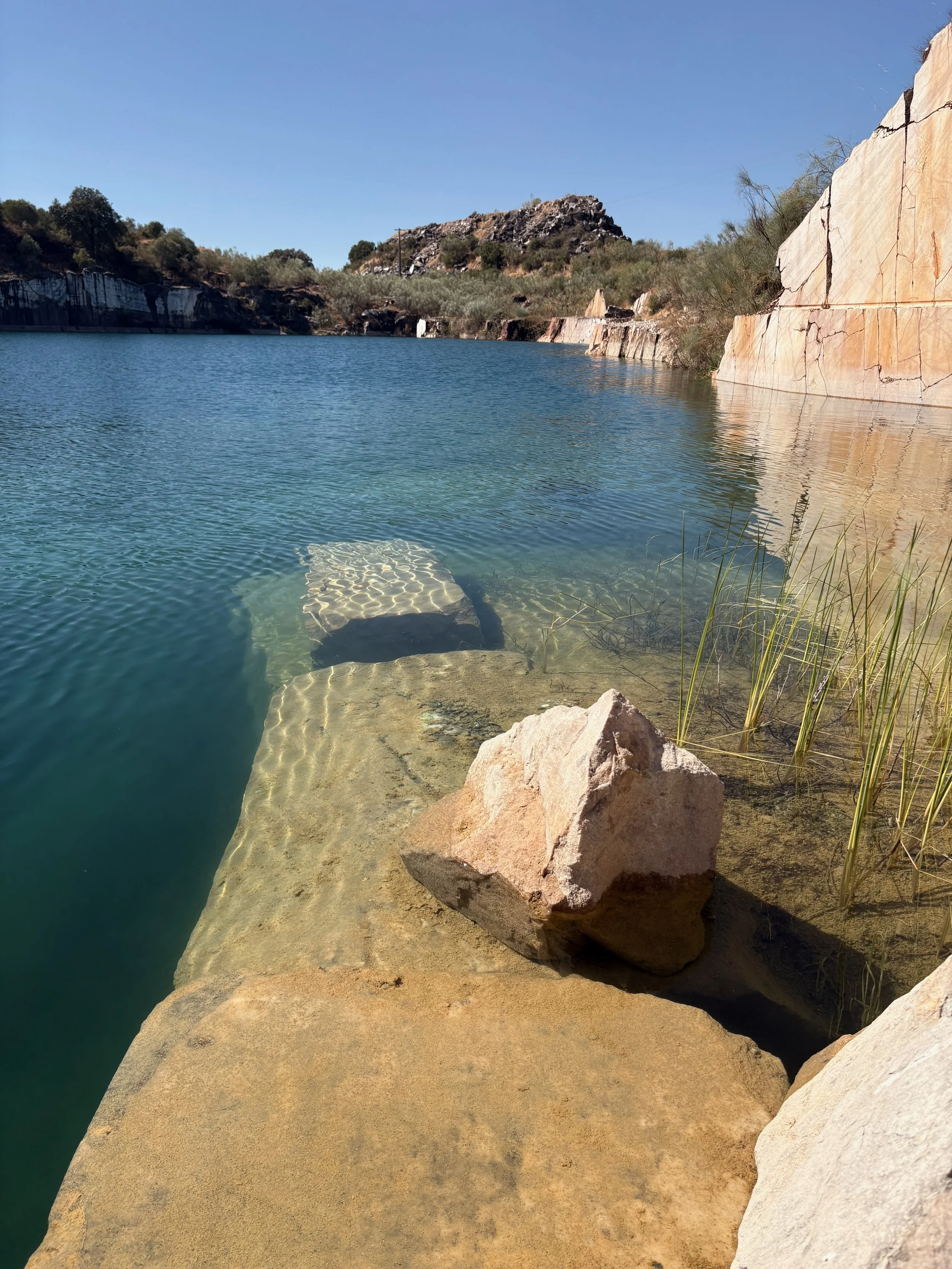
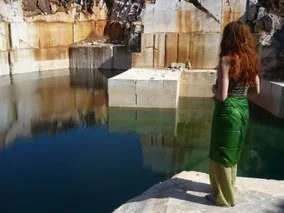
Of the roughly 400 quarries in the region, many are now abandoned. Some remain industrial and harsh. Others have become unexpectedly quiet places — filled with water, shaped by time into vast geometric cavities, or slowly reclaimed by vegetation.
The quarries introduce a dramatic shift in scale. What looks like landscape from a distance reveals itself, up close, as an excavation. Walls of marble rise where hills once stood, sound carries differently. Roads spiral downward into the earth. Trucks move stone in and out of the sites. Workers descend into pits that from above resemble pale amphitheaters carved into the land. The sense of depth changes how you read the terrain.
Most people don’t forget the first time they stand at the edge of one.
Marble is not presented as a theme at OBRAS. It is simply part of the region itself. The industry shapes the economy, the landscape, and the visual horizon. Whether residents work with stone or not, its presence tends to register.
OBRAS & Quarries
From the early years of the residency, OBRAS founder Ludger van der Eerden developed a deep interest in the marble landscape surrounding Estremoz. Over several decades, he studied the geology and history of the region through his own research while building relationships with quarry operators and local institutions.
Those relationships gradually became part of the residency experience. Ludger often guided residents through both active and abandoned quarries, explaining how the stone is extracted and how the landscape has been shaped by centuries of work.
These visits were never formal tours. They were exploratory — driven by curiosity and conversation, sometimes planned and sometimes spontaneous.
That spirit continues today. When possible, residents may visit quarries in the surrounding region depending on access, safety conditions, and the working schedules of the sites. The residency’s relationship to the quarries is practical and ongoing rather than symbolic.
Artists & Quarries
For many residents the quarries themselves become the point of interest.
Photographers, painters, and filmmakers often respond to the scale of the excavations, the geometry of the cut walls, and the pale terraces of exposed marble. Artists have occasionally used quarry environments for temporary projects and performances. Certain sites naturally form stages and audience areas, and informal experiments in music, dance, and exhibition have taken place there over the years. Any public event in a quarry requires careful attention to access, safety, and logistics.
For some residents the quarries become central to their work. For others they simply expand an understanding of scale, labor, and landscape.
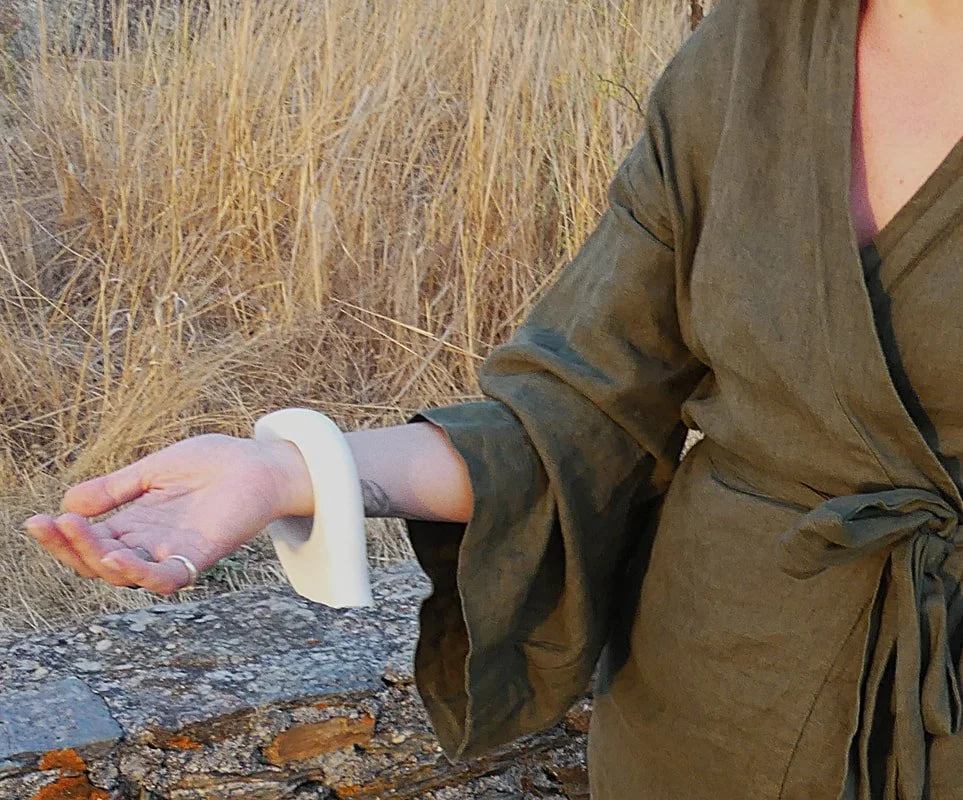
Some residents choose to work directly with marble.
The quarries surrounding OBRAS produce a range of stones — white, rose, and almond tones — that have been used in architecture and sculpture throughout the region. Small offcuts can often be collected near quarry areas at little or no cost. Larger blocks can be ordered through local commercial operators if arranged in advance.
Marble carving is slow and physical. Many residents work entirely by hand using chisels, rasps, and hammers. Others combine hand tools with basic stone-cutting machinery. Even a small piece can take days of steady work as the form gradually emerges from the block.
OBRAS has limited tools for marble work — primarily hand tools and some machine support — but artists interested in working with stone should contact us in advance to understand what is available and what limitations exist regarding noise, safety, and workspace.
Working directly with marble is not required for residents, but the proximity of the quarries occasionally allows artists to experiment with the material in ways that would be difficult elsewhere.
To see artist who have worked with marble and the quarries, see here.
Site History
The hill on which OBRAS stands shows traces of habitation that may reach back thousands of years.
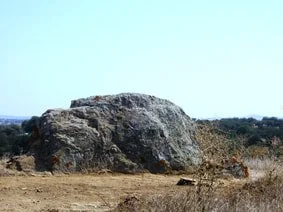
Near Casa Miradouro, there is a rock formation aligned with the summer solstice. If you draw a straight line from its ridge to the horizon, you arrive at the point where the sun sets on 21 June. About one kilometer to the northwest stands an anta (a prehistoric burial site). To the northeast, at Pego do Sino, a canyon contains circular cup marks carved into stone. These elements suggest that this hill was part of a wider ritual and settlement landscape long before the current buildings existed.
At some point, the solstice rock became a cornerstone of a substantial house. We excavated part of its remains. The structure appears to have contained at least twelve rooms. Casa Miradouro may once have functioned as the chapel of this earlier monte. Additional traces of walls nearby suggest that a small cluster of buildings once stood on the hill.
Archaeologists have suggested that Roman occupation would not be surprising. The Roman road between Mérida and Évora passed near this location, and a secondary road toward the River Tera and Pego do Sino likely crossed the property. Room dimensions correspond to Roman foot measurements, and fragments of plaster on the solstice rock resemble Roman construction techniques. No definitive artifacts have been found, but the possibility remains.
There are also architectural indications that the site may have been used during the Moorish period (8th–13th century). The remains suggest three rows of four rooms, possibly arranged around an inner courtyard — a typical feature of Moorish domestic architecture. Again, there is no conclusive proof, but the structure fits that pattern.
The present Casa Principal was built approximately 200 years ago. At that time, Herdade da Marmeleira covered several thousand hectares. In the early twentieth century, around thirty workers were employed permanently, and during harvest season, up to eighty additional laborers and their families came from northern Portugal to assist. The large hall was likely used for cooking and sleeping during these periods. Wages were modest and partially paid in bread and wine. The house had no electricity, running water, or sewage system. Its only ornament was the chimney cap.
The estate operated grain mills powered by the River Tera. The ruins of those mills remain.
Work on the land was carried out primarily with oxen. Each oxen manager maintained two pairs — one for morning work, one for afternoon. Oxen were guided by song rather than force. Each handler developed their own songs for this purpose.
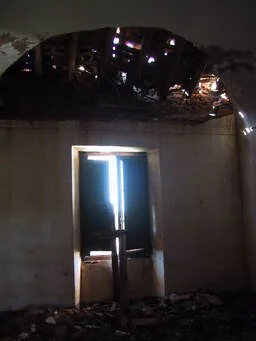
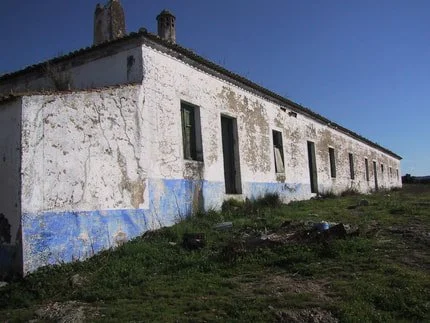
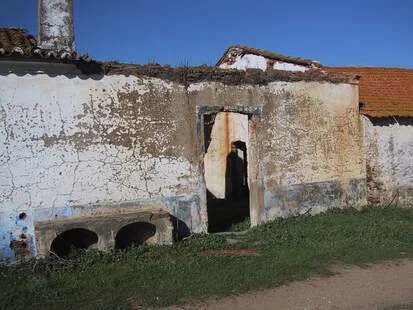
After the 1974 revolution, the estate was gradually abandoned. Doors were burned as firewood, and the roof collapsed. Livestock from neighboring shepherds occupied the structures. In a certain period, shepherds lived in what is now Casa Vicente.
The property changed hands several times before being purchased in 2002. At that time, the buildings were in poor condition but structurally stable. Renovation was undertaken without altering major architectural features. Electricity, running water, and a sewage system were installed for the first time.
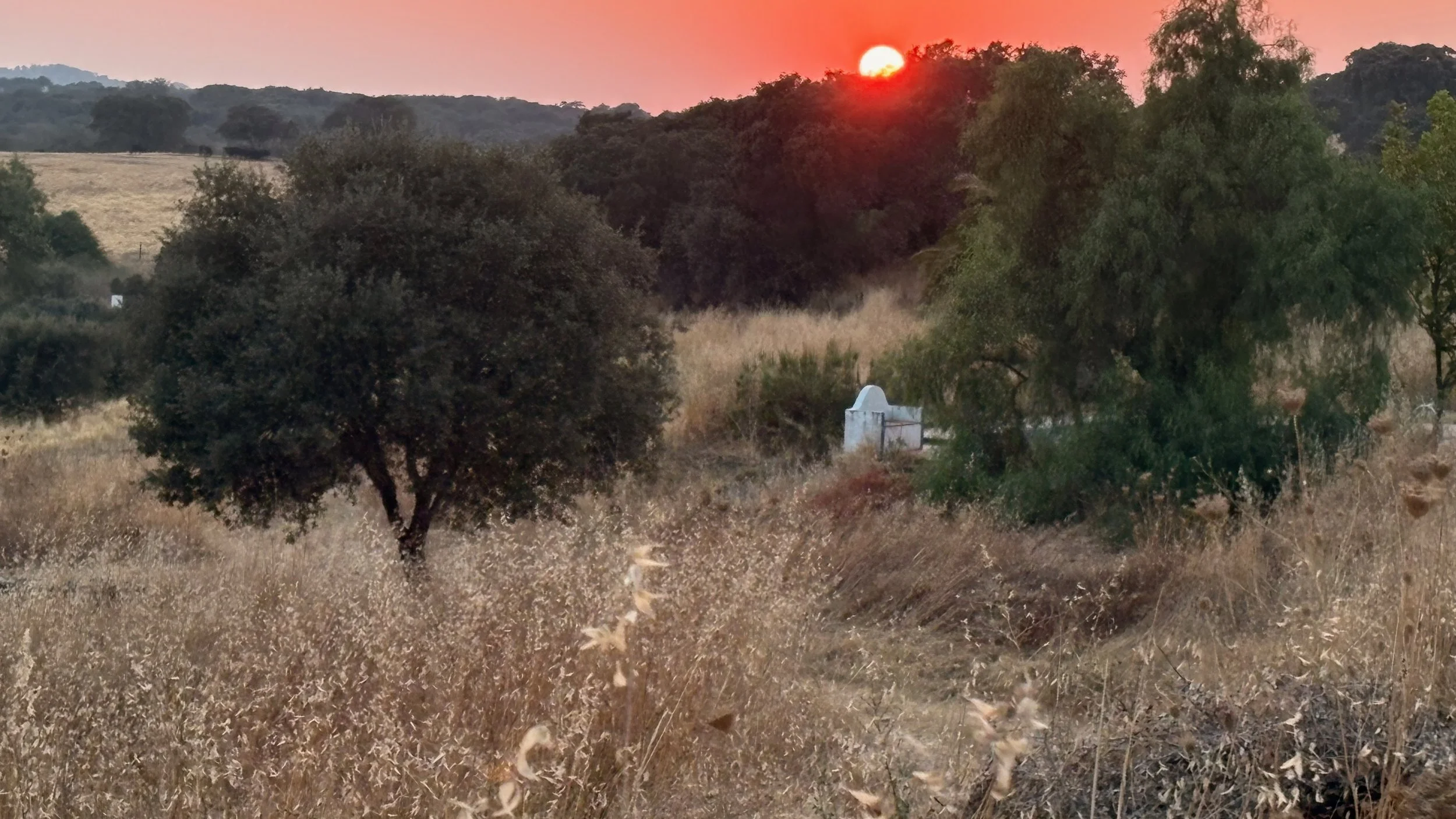
Since then, the surrounding region has continued to change. New houses have been built beyond the immediate hill. Fencing has been installed. Artificial lakes upstream have altered river flows downstream. Yet the essential landscape — rolling slopes with cork oak and cistus, cool nights, and open sky — remains.
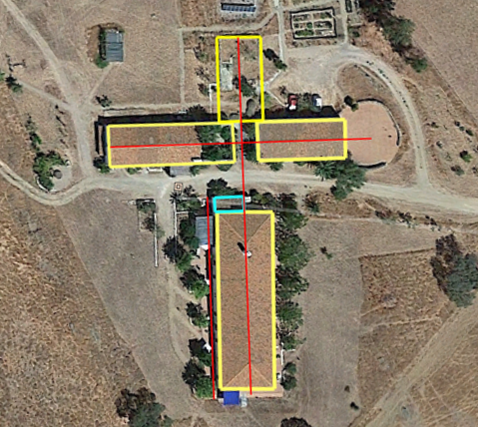
One unresolved question concerns the floor plan of Casa Principal. Its layout bears resemblance to that of a church. Several explanations are possible: coincidence, symbolic intention by the builder, or construction over earlier foundations. Excavations have not produced evidence to confirm any of these possibilities. The matter remains open.
What is certain is that this hill has been inhabited, used, abandoned, and rebuilt across many centuries. OBRAS occupies one chapter in that longer history.
Ecology
The landscape around OBRAS is not decorative. It is active, seasonal, and shaped by both natural processes and long-term human use.
Climate, vegetation, and wildlife are not separate from the residency experience. They influence daily rhythm, light, sound, and movement. Work shifts with temperature. Seasons alter color and ground conditions. Birds and grazing animals move through the same spaces residents do.
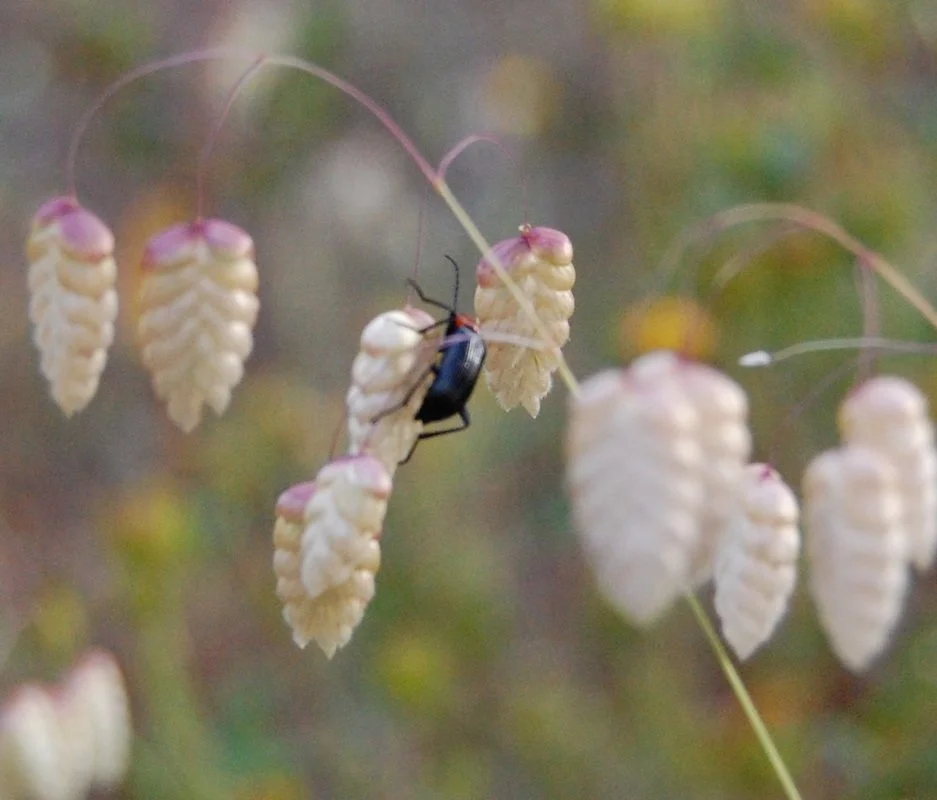
The land is neither wilderness nor garden. It is agricultural, semi-managed, and historically worked. Cork oak, scrub, grasses, stone, and cultivated plots coexist. The ecology of the site is layered — shaped by geology, farming systems, and recent stewardship.
What you encounter here is not curated nature. It is a working landscape with cycles that continue whether anyone is observing them or not.
Climate & Vegetation
The Alentejo region has a continental climate and the seasons are distinct. The last ice age did not reach this area, and the Iberian Peninsula is partly isolated from the rest of Europe by the Pyrenees. North African species extend into Alentejo. Atmospheric nitrogen levels remain low. These conditions, combined with local microclimates, allow many endemic plants to survive here.
Spring arrives early. February and March bring narcissi and irises. April and May are the months of wildflower carpets. By mid-June, the landscape turns gold. July and August are dry and hot. Shade matters. Evenings cool down quickly once the sun drops. In mid-September, the rains return. October shifts the land back to green. Winter is moderate, but can feel damp rather than cold. Even in December and January, growth continues.
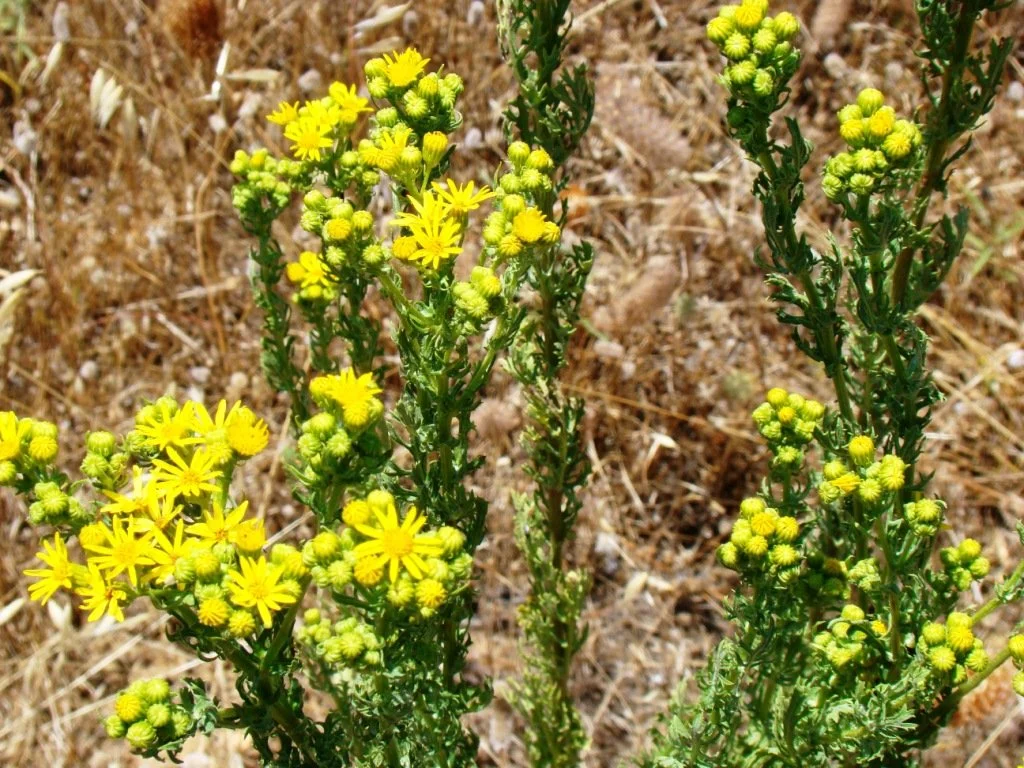
The Herdade is part of a region with unusually rich flora. Near Evoramonte, several plant families have a high number of endemic species. Centaurea, Thymus, Cytisus, Armeria, and Narcissus are particularly diverse in this region. Widespread in Alentejo, but rare elsewhere in Europe, is Cistus ladanifer — the gum rockrose — a bushy plant with large white flowers in spring and a distinct resinous scent throughout the year.
Nights are dark. With little surrounding light pollution, stars are visible in a way that many residents are not used to. Owls and foxes are often heard after sunset.
Land Use
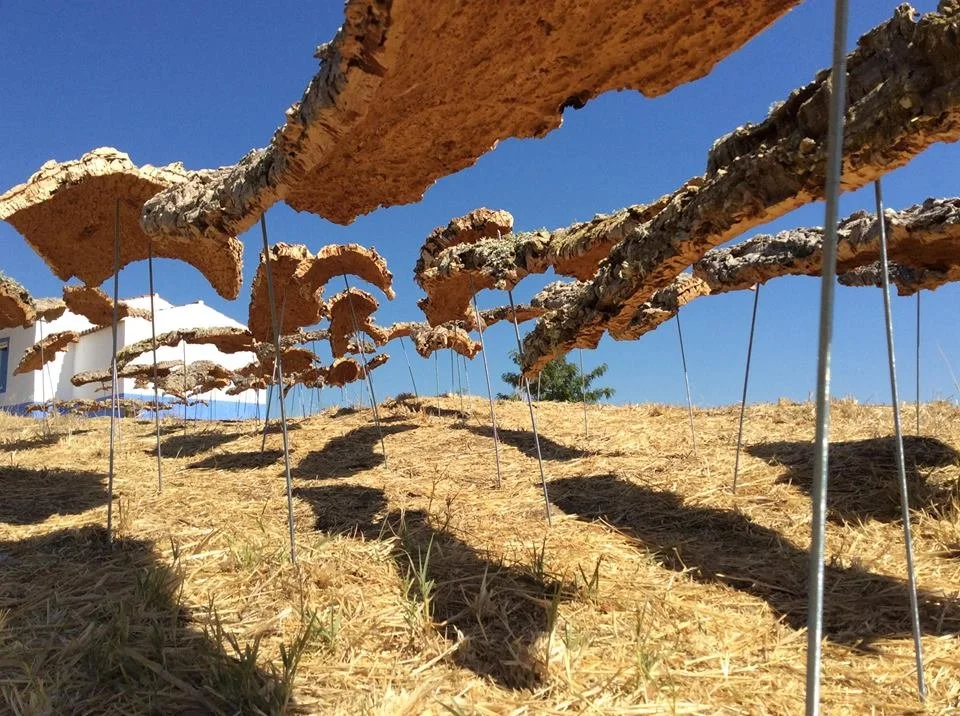
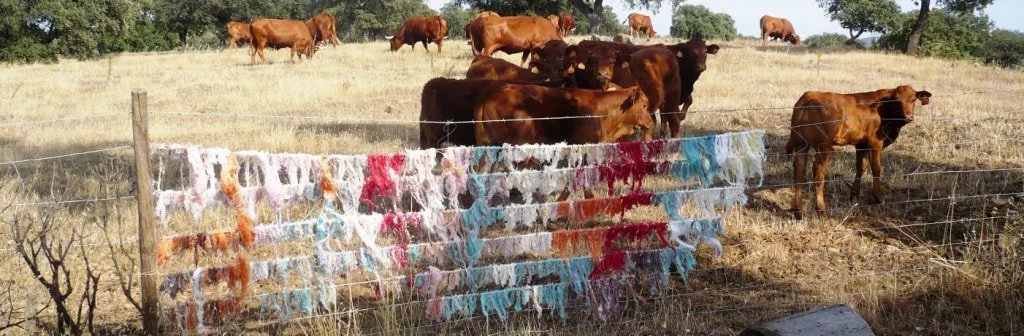
The land around the house has been used for agriculture for centuries. The broader region was historically grain-producing land supported by oxen and seasonal labor. Today, grazing continues in surrounding areas, and cork oak remains a defining presence in the rolling slopes.
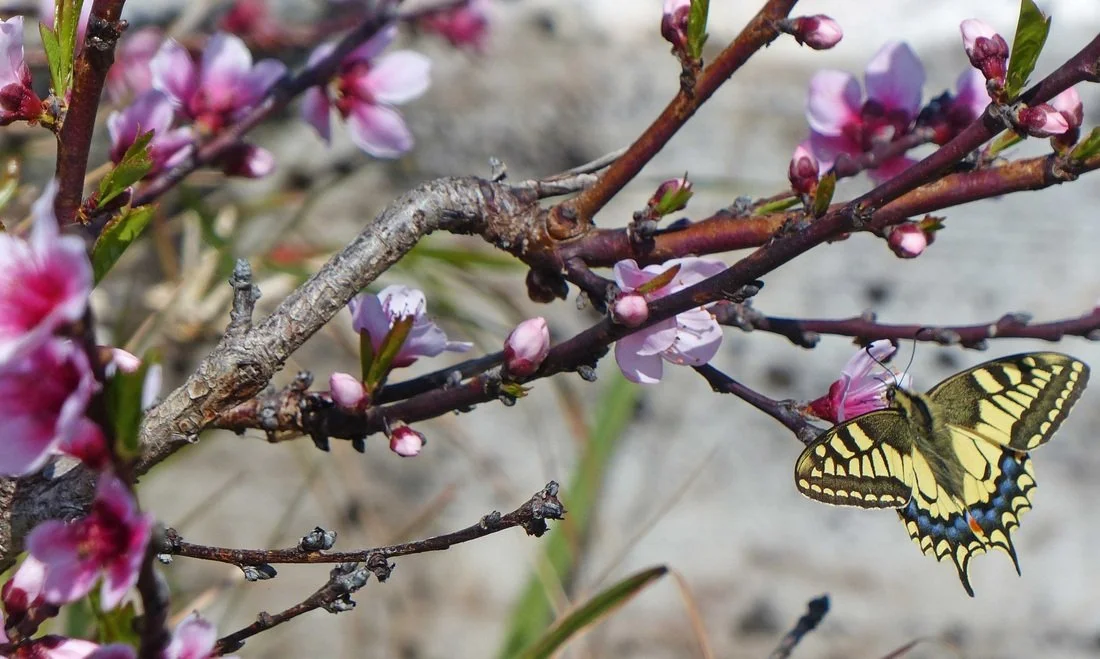
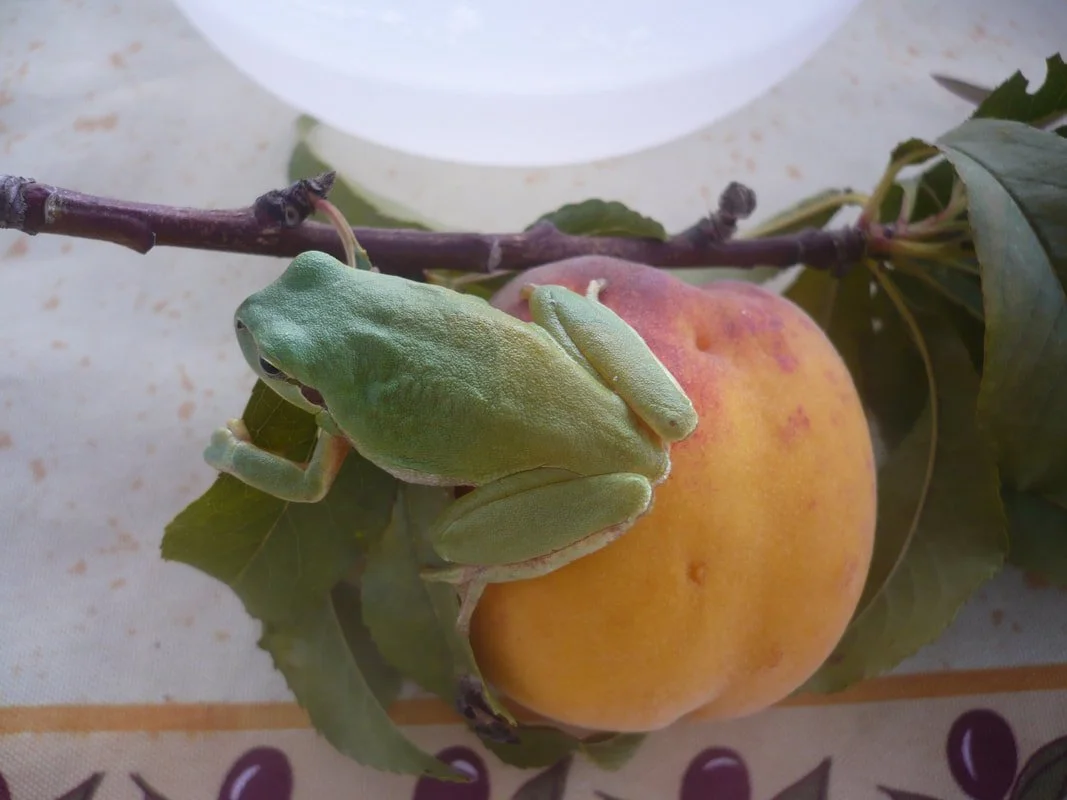
In recent years, we have added new layers of cultivation. A permaculture garden provides vegetables for part of the year. Since 2019, we have also begun developing a small food forest. The aim is modest — roughly fifteen additional trees — but the terrain is rocky, and each tree requires significant preparation. Building soil means building containment walls and hauling material by hand.
The planting of a 150-year-old olive tree marked a milestone in this ongoing work.
The intention is not to reshape the land, but to work with it carefully. The structure of the landscape — gently rolling slopes, cork oak, esteva, stone outcrops — remains intact. Seasonal change is visible and felt. The land is not ornamental. It is active, cultivated, and lived with.
Wildlife
The Herdade and its surroundings form a park-like landscape: open grassland, scattered oaks, cork oak, low scrub, occasional water channels, and agricultural fields. This mix of habitats supports a wide range of birds throughout the year.
You do not need to go far to encounter them. From the terrace of your apartment, it is common to see hoopoe, cattle egret, or black stork passing through. At dusk, you will hear owls. In the early morning, partridge.
Birds of Prey
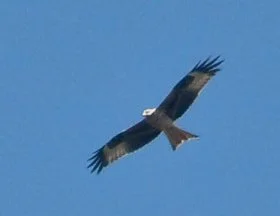
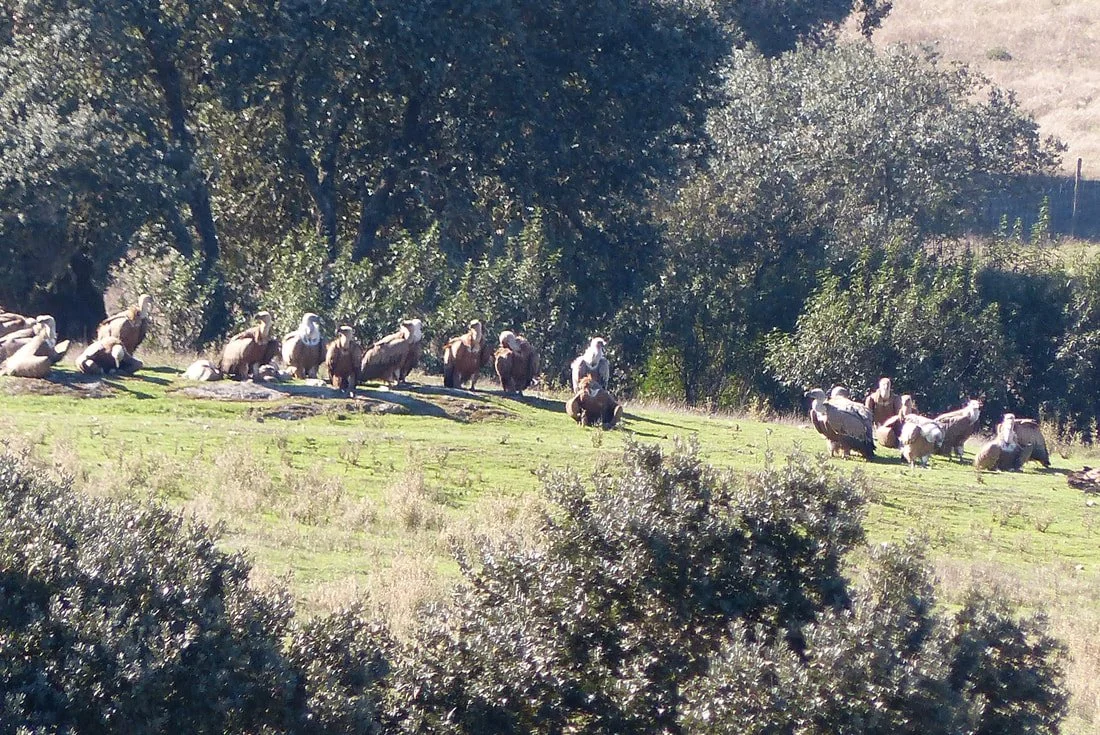
The Black Vulture (Aegypius monachus) is Europe’s largest bird of prey (wingspan up to 250 cm). Although rare in many parts of Europe, it is not unusual here. They often circle in groups together with Griffon Vultures (Gyps fulvus), searching for carrion. Large oaks provide nesting sites.
The Black-winged Kite (Elanus caeruleus) arrived from Africa roughly 25 years ago and has established itself quickly. It hunts mice with remarkable precision. Its flight can resemble a gull; its hovering resembles a falcon; its ground behavior resembles a harrier.
Owls & Night Birds
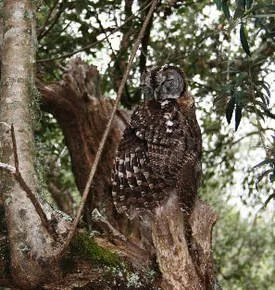
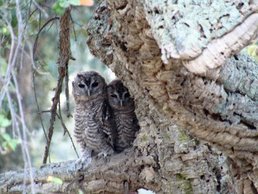
The Tawny Owl (Strix aluco) is frequently heard, though rarely seen.
The Eagle Owl (Bubo bubo) is present in the wider region. One resident once photographed an Eagle Owl landing on a rock ten meters from her house at dusk.
The Nightjar (Caprimulgus ruficollis) is a summer visitor. It appears in twilight, flying silently. Its call is a rapid, repeating sound — kioetek, kioetek.
Open Field Birds
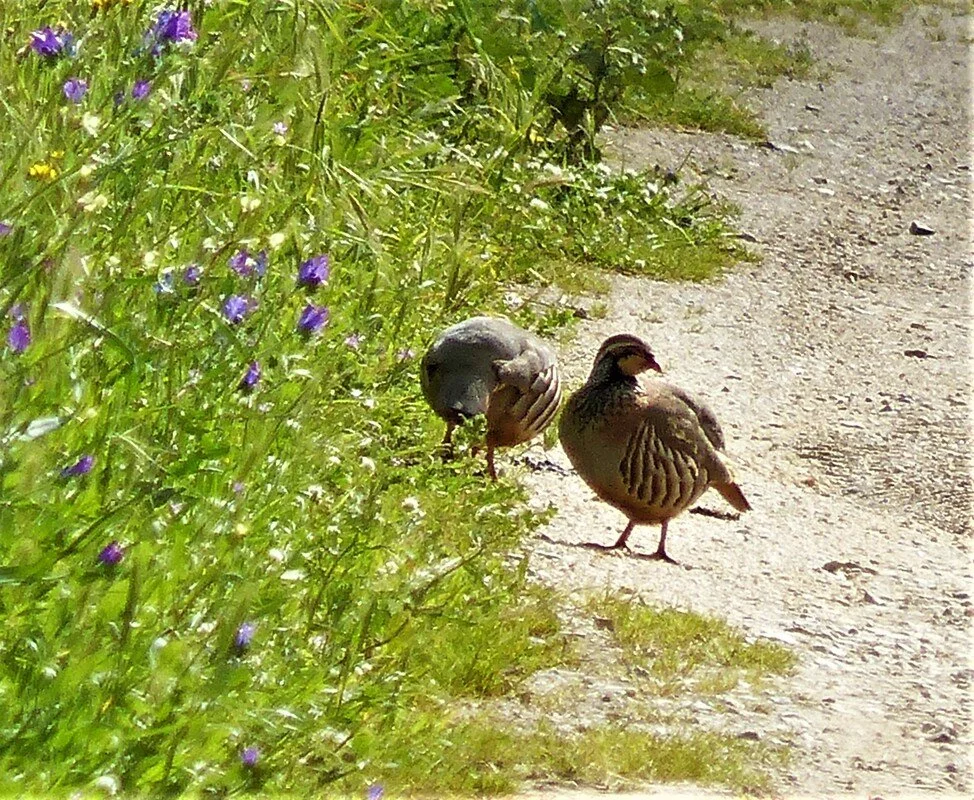
The Red-legged Partridge (Alectoris rufa) is heard before it is seen: low introductory notes followed by a louder ko-chick-chick and chuck-chuckar. They are most visible in the early morning and late afternoon.
The Great Bustard (Otis tarda) is the heaviest flying bird in Europe (wingspan up to 225 cm). Around 15,000 remain in Spain and Portugal — roughly half of the global population. They are more reliably seen near Cáceres or Trujillo, but also occasionally near Reguengos.
Larks & Smaller Species
The Tekla Lark (Galerida theklae) and the Crested Lark are similar in appearance. One distinction: if it sits in a tree, it is Tekla. The Crested Lark does not perch in trees.
The Wheatear (Oenanthe hispanica) has pale rose-brown plumage and a striking black throat and wings.
The Black Wheatear (Oenanthe leucura) is less visually dramatic but notable for its stone-arranging nest behavior and strong song.
The Azure-winged Magpie (Cyanopica cyanus) is a winter visitor. In Europe, its range is limited largely to southern Portugal and Spain. It moves in small groups from oak to oak.
The Hoopoe (Upupa epops) is frequently seen near dinner time, especially in winter, probing the soil with its curved beak.
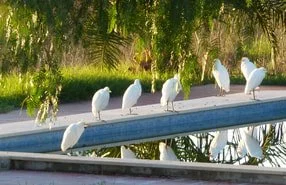
The Cattle Egret (Ardeola ibis) is nearly constant in the landscape, often following livestock in small groups.