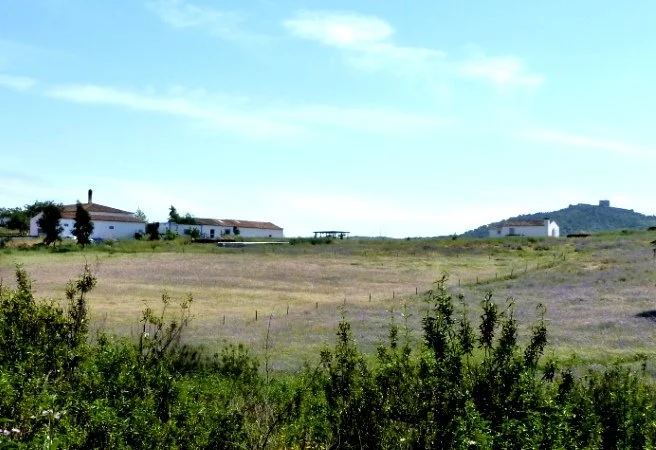
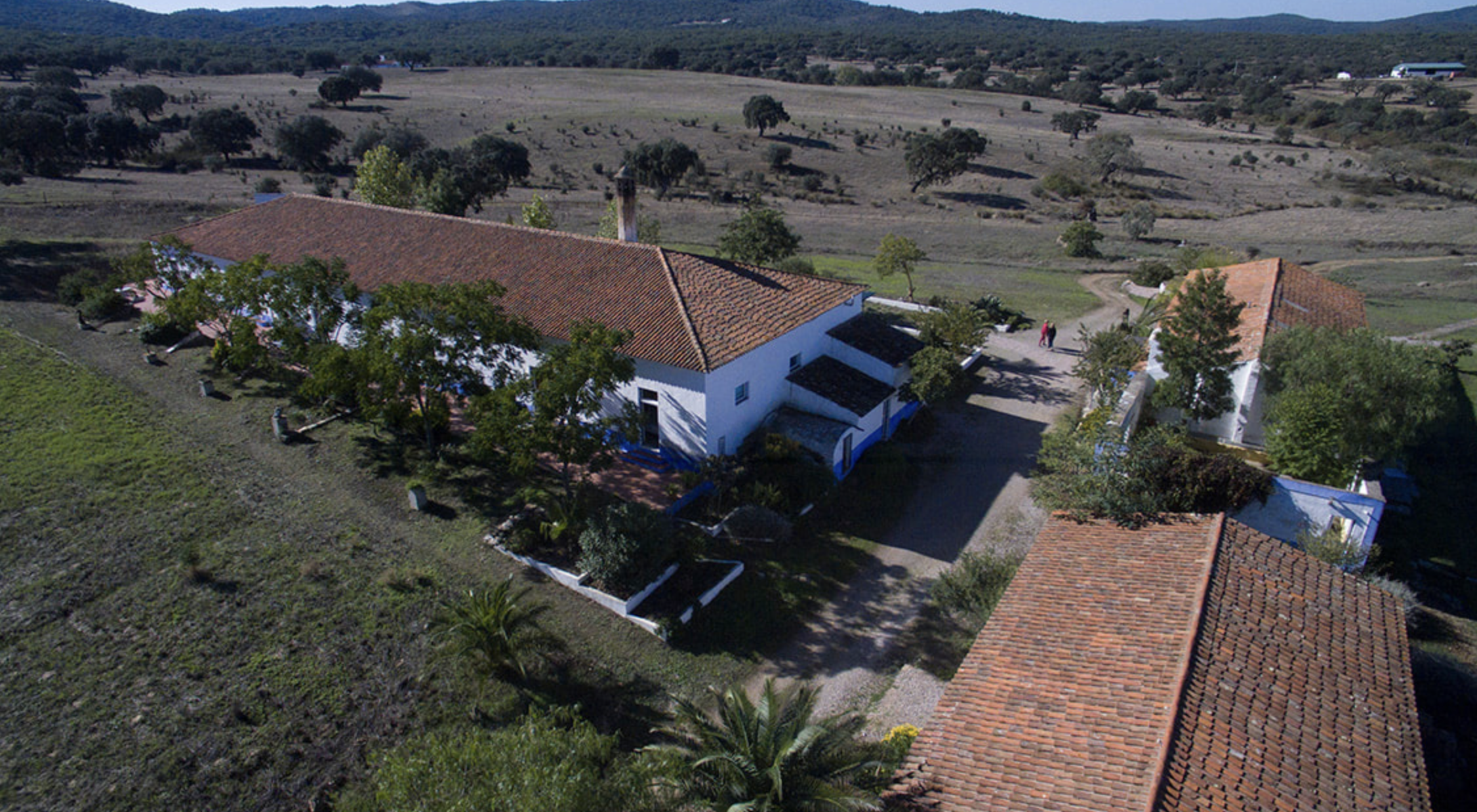
OBRAS is a small cluster of buildings and outdoor areas that have evolved over time. The property includes a main house with several apartments and work spaces, two cottages, four studios, outdoor working areas, and a swimming pool. The buildings sit close enough to feel connected, but far enough apart that you can move through the day without interruption.
Residents live and work across the property rather than in a single building. Paths and open views connect apartments, studios, courtyards, and gardens. The scale is small enough that people encounter one another naturally, but large enough that everyone can find privacy when needed.
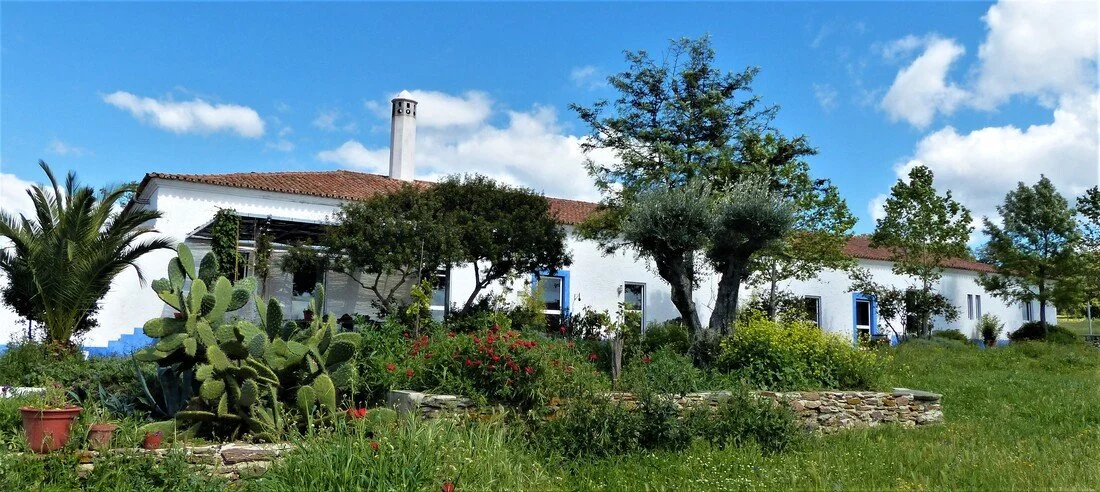
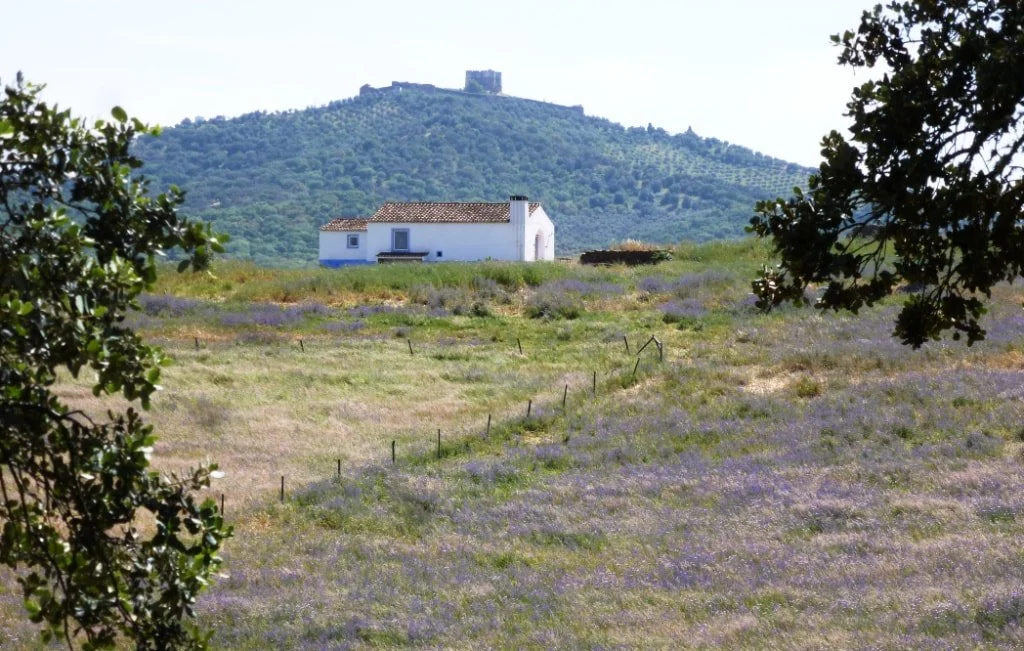
The buildings themselves are part of the region’s rural architecture. The main house is roughly two centuries old, a typical Portuguese monte overlooking open land with the medieval fortress of Évoramonte visible on the horizon.
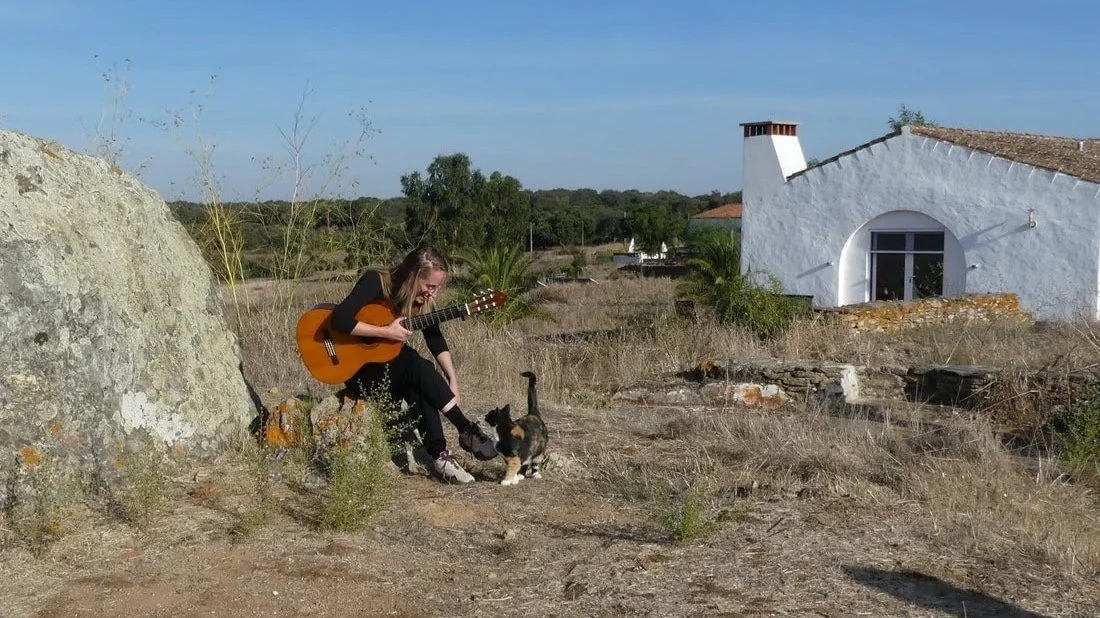
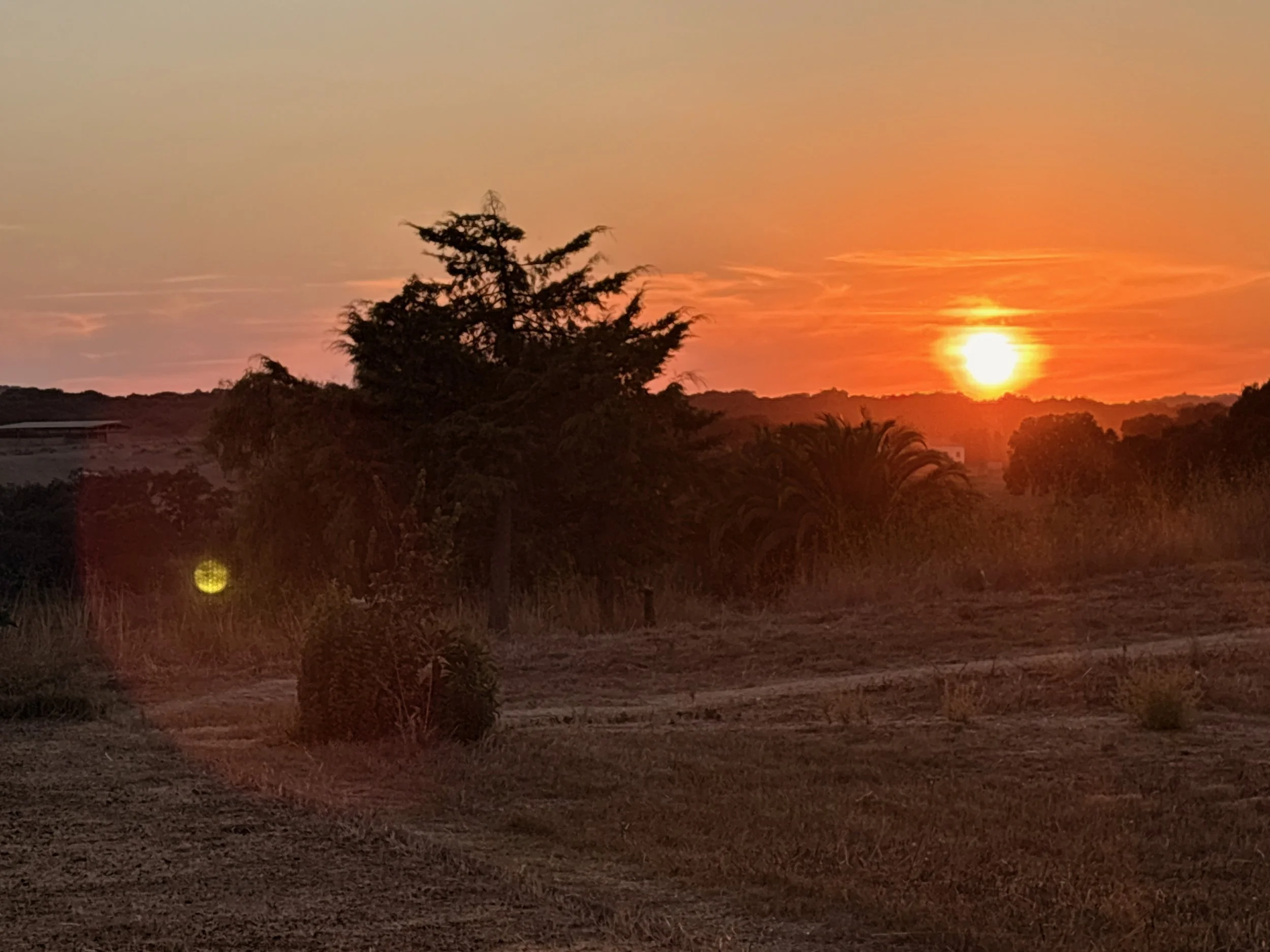
The surrounding landscape is part of daily life at OBRAS. Many residents move between indoor and outdoor spaces as they work, stepping directly from studios and apartments into the fields and paths that surround the property.
Residencies are offered on a weekly basis across the different spaces. Full details, including rates and availability, are outlined under Residency in the Structure and Costs section.
Apartments & Cottages
Residents stay in private apartments or cottages located across the property. You will have your own living space and, if you wish, access to a separate studio.
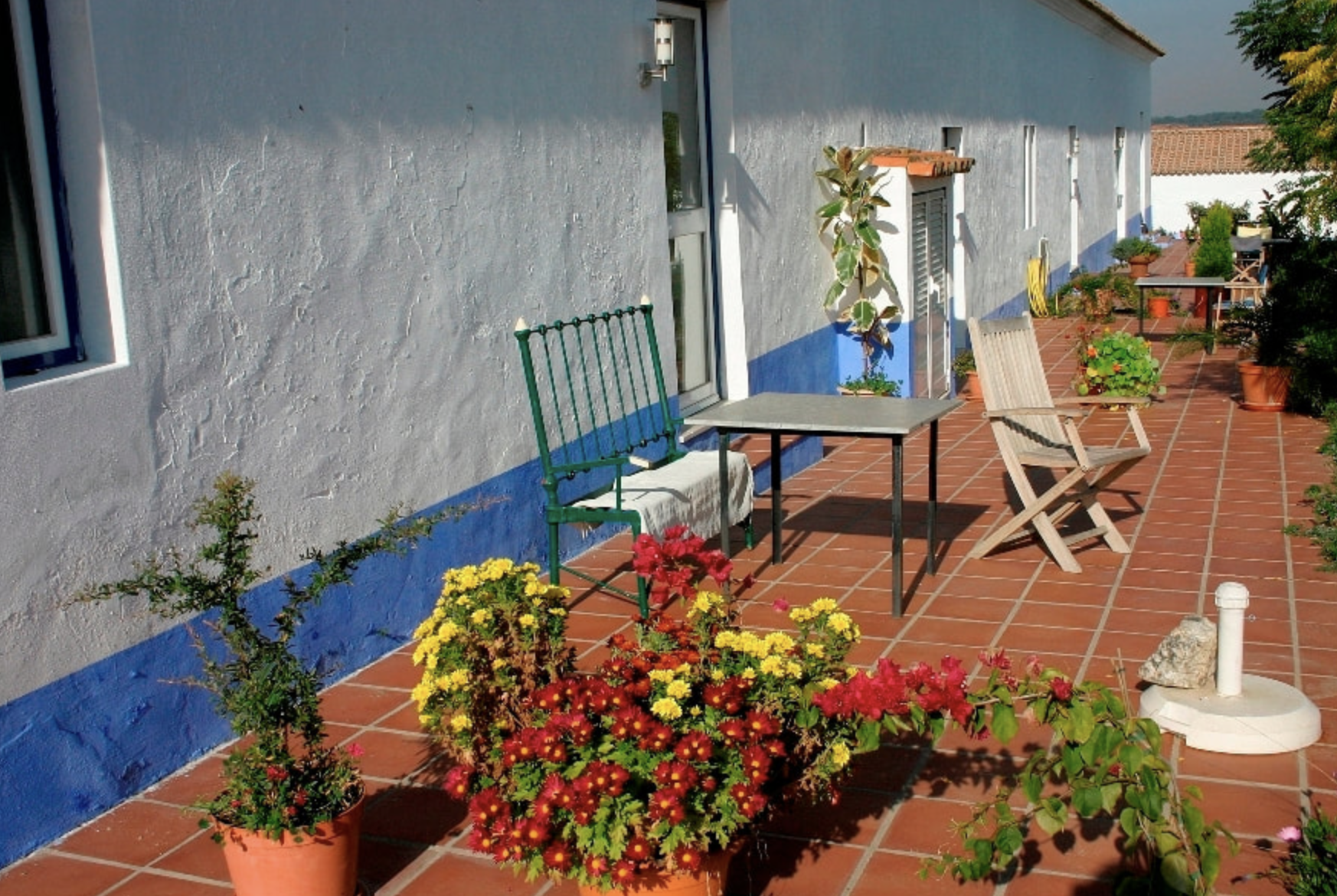
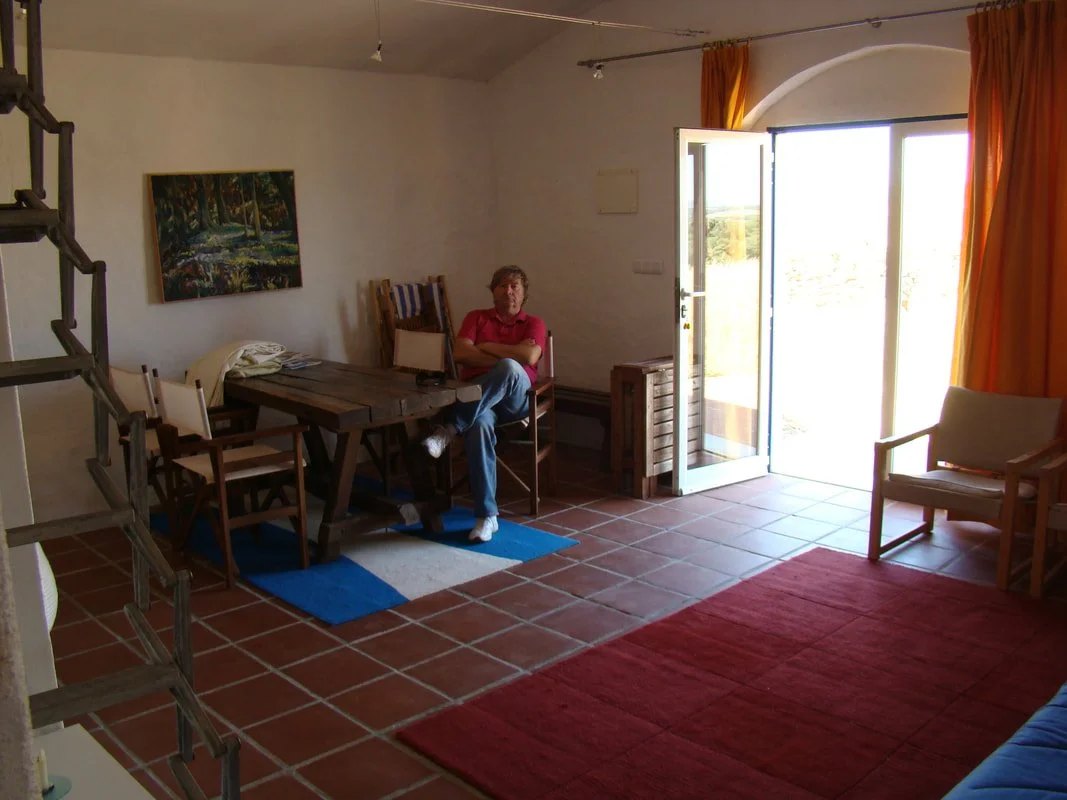
The spaces are simple and practical. Thick stone walls, tiled floors, and high ceilings help keep the interiors cool during the warmer months. Windows and doors open directly onto patios, gardens, and the surrounding countryside.
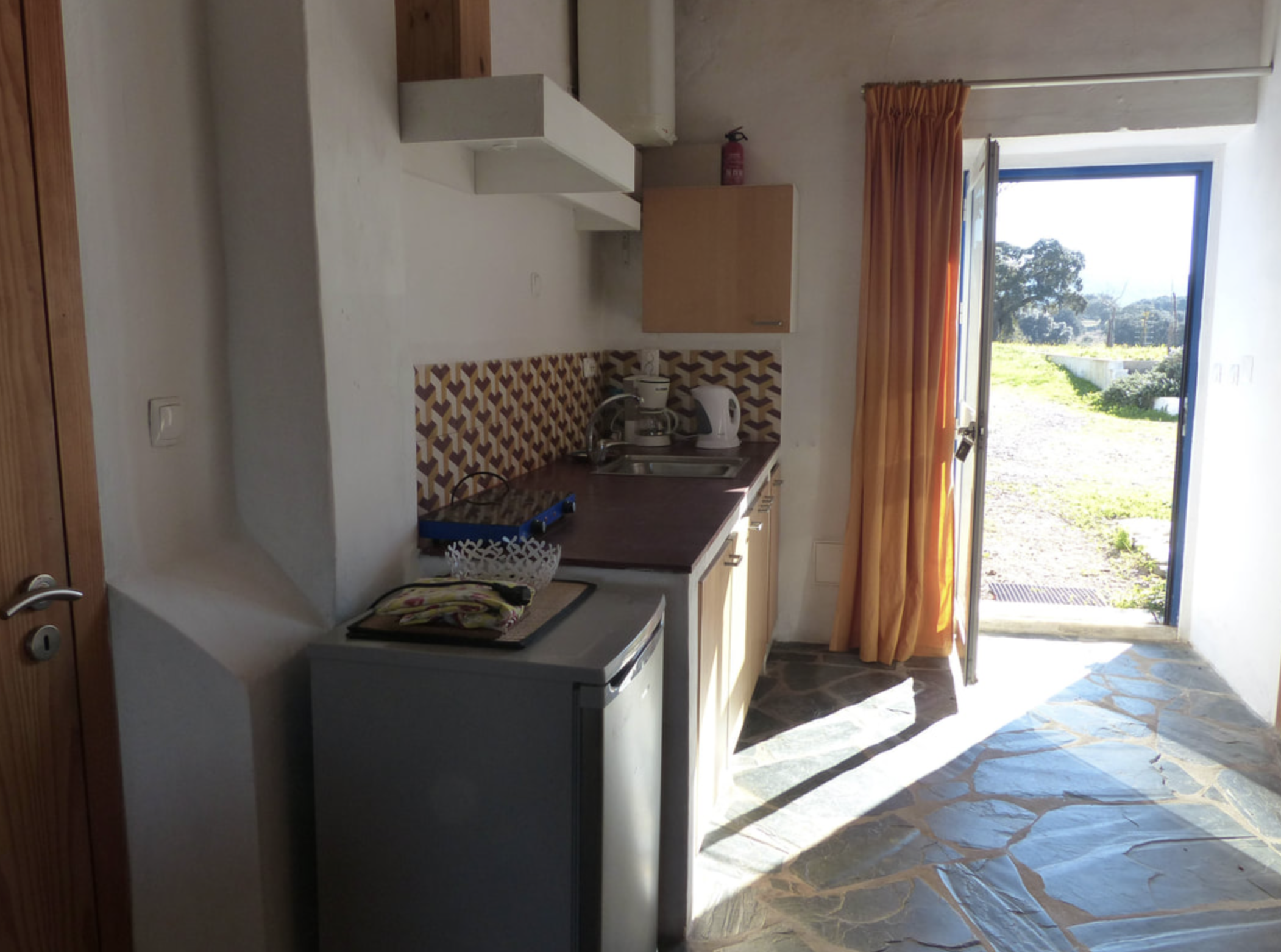
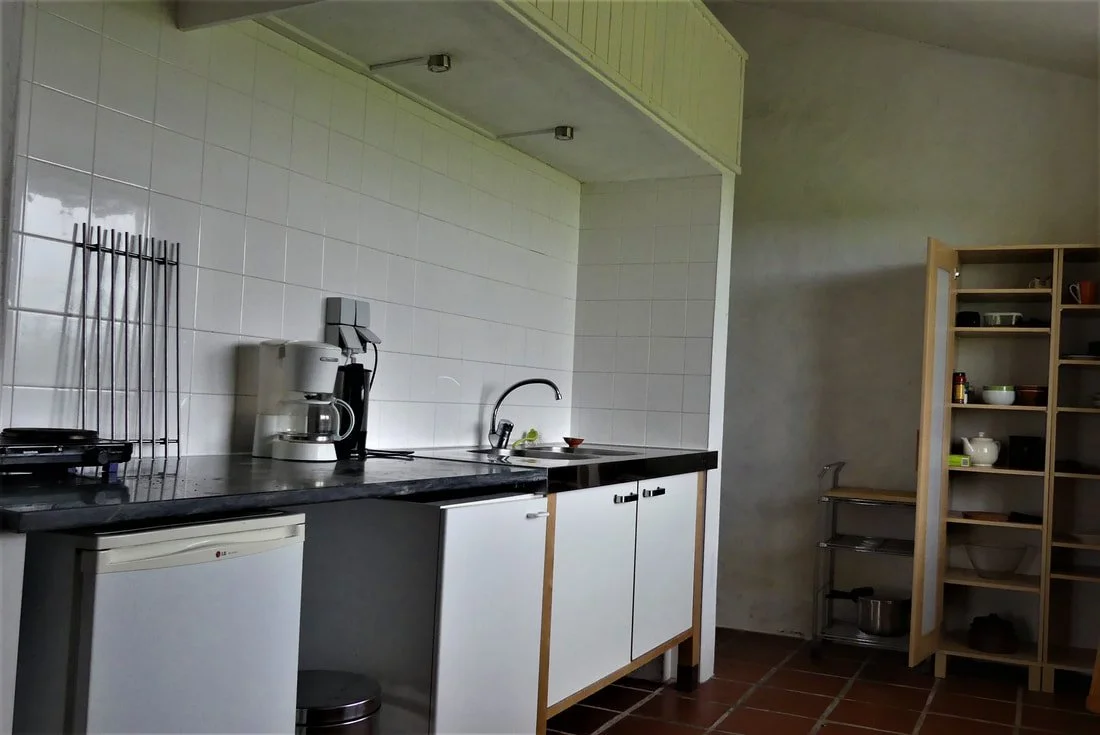
Each apartment and cottage includes a small kitchen equipped with basic amenities: small refrigerator, cooking plate, microwave, coffee machine, electric kettle, and simple cookware. Water is from our private wells and is safe to drink.
You are free to make the space your own, all we ask is that everything is returned to its original place before leaving.
There is limited access to internet on the property depending on where you stay. If you need internet please make your own arrangements, any residents bring their own device for working independent from the property wifi.
Casa Principal
Casa Principal is the main house, the center of the property. It is a traditional Portuguese monte built more than two hundred years ago.
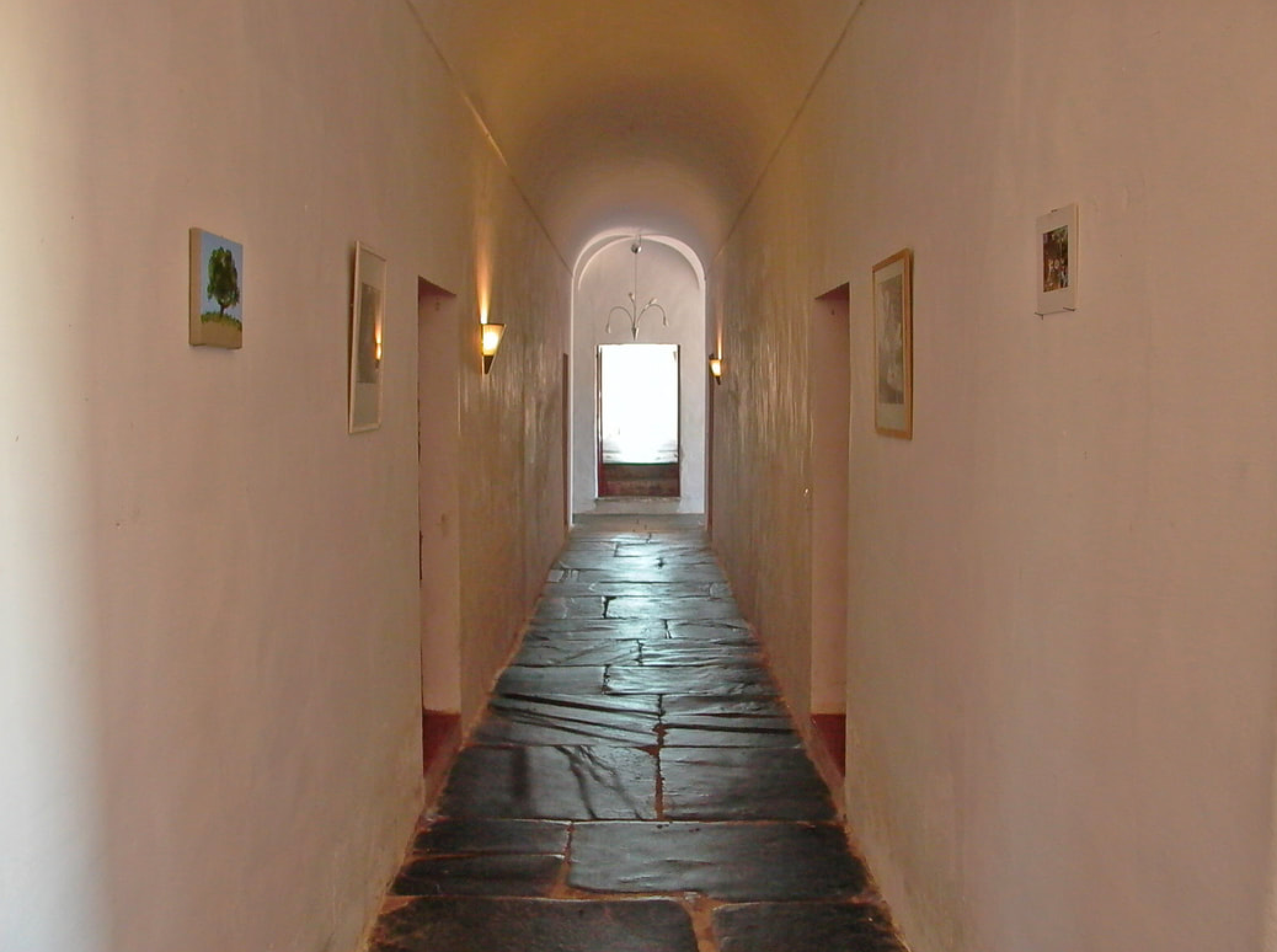
The interior is quiet and cool. The central hallway remains dim even on bright days, with light entering from the doors at either end. The space feels calm and settled. There are six apartments in Casa Principal, along with a music room, and a library.
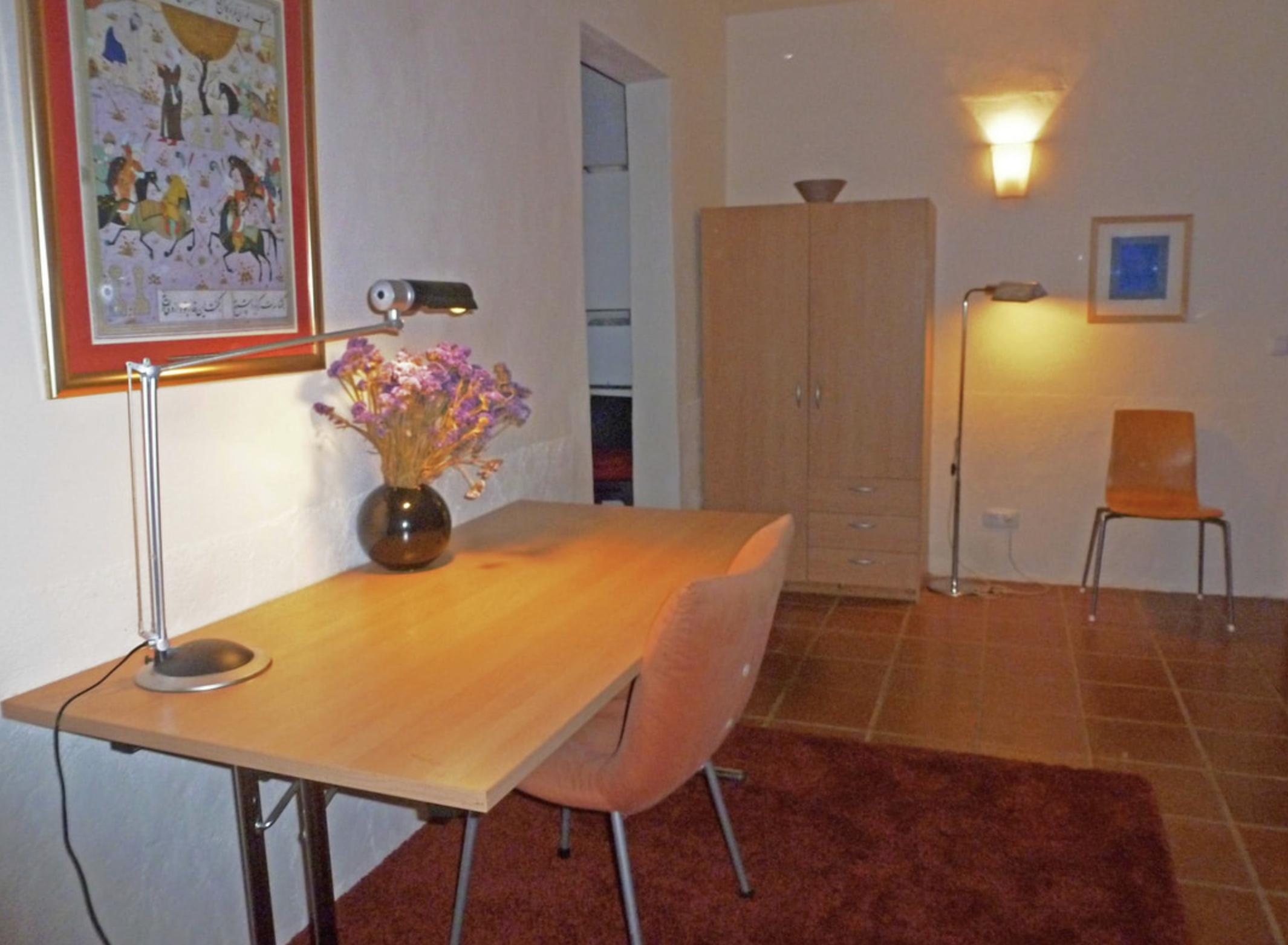
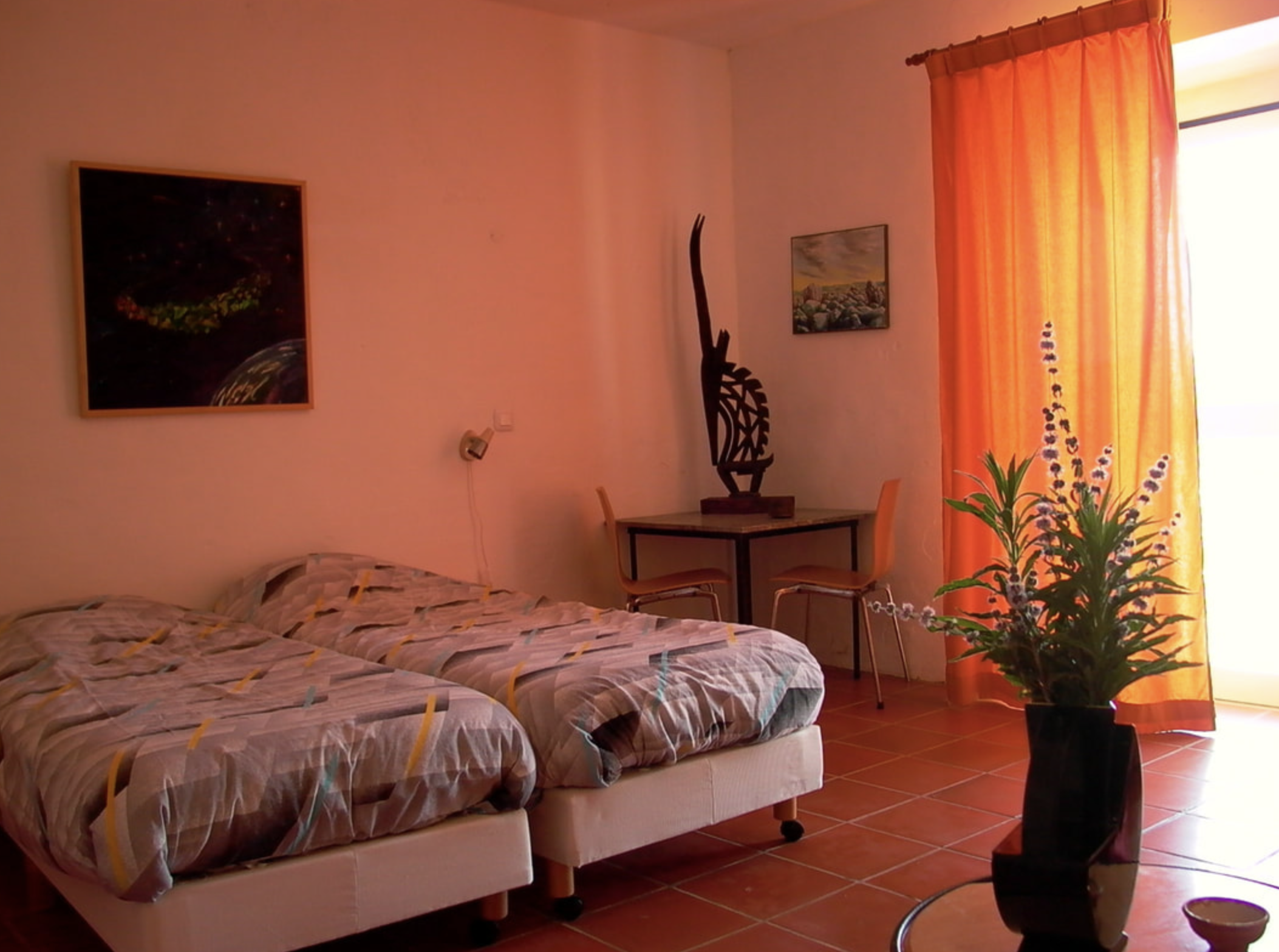
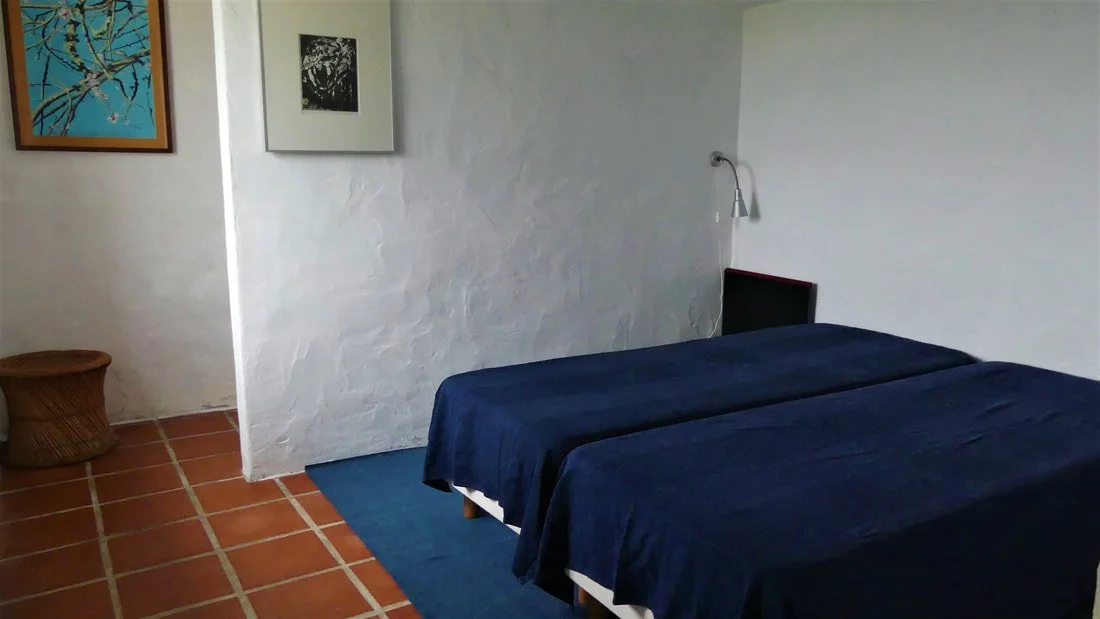
Each apartment includes a combined living and sleeping area of approximately 25 square meters, furnished with two beds, a work table and chairs, a small kitchen area, and a bathroom. All apartments have both an interior entrance from the main hallway and an exterior door that opens onto a private terrace.
Wifi is available in each room as well as in the library.
Apartments 1 and 4 have a double bed.
Apartments 3, 5, 7, and 8 have two single beds.
Casa Vicente
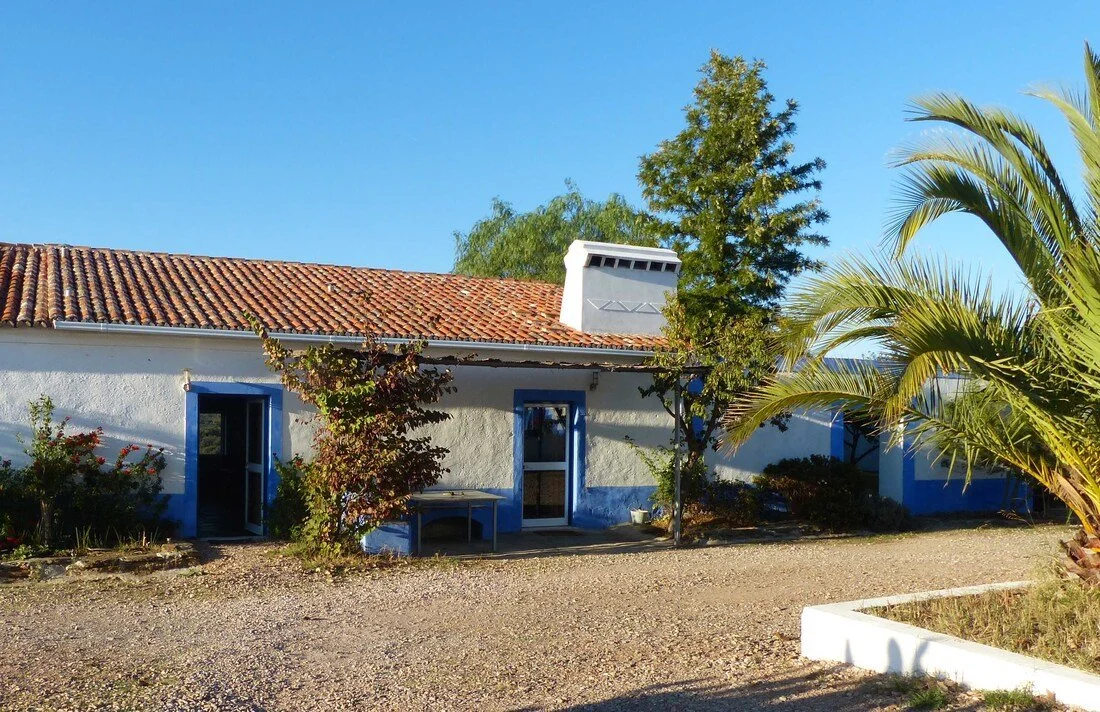
Casa Vicente is set up as a live work studio. It is located next to Casa Principal. It has two terraces — one facing the main house and one overlooking a valley.
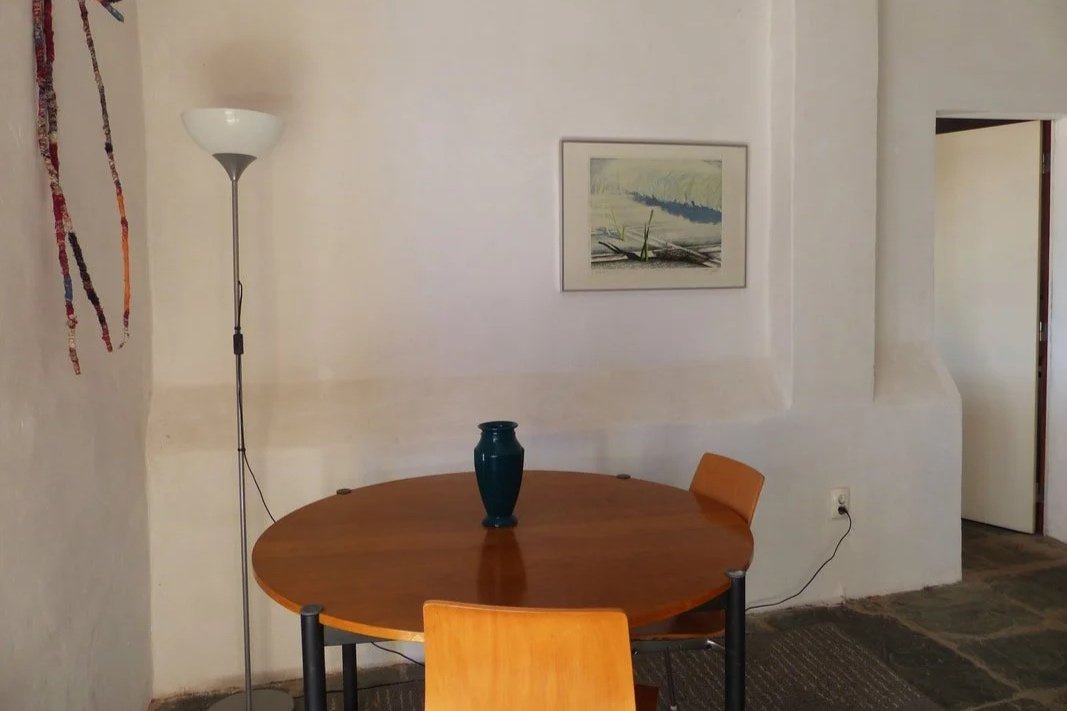
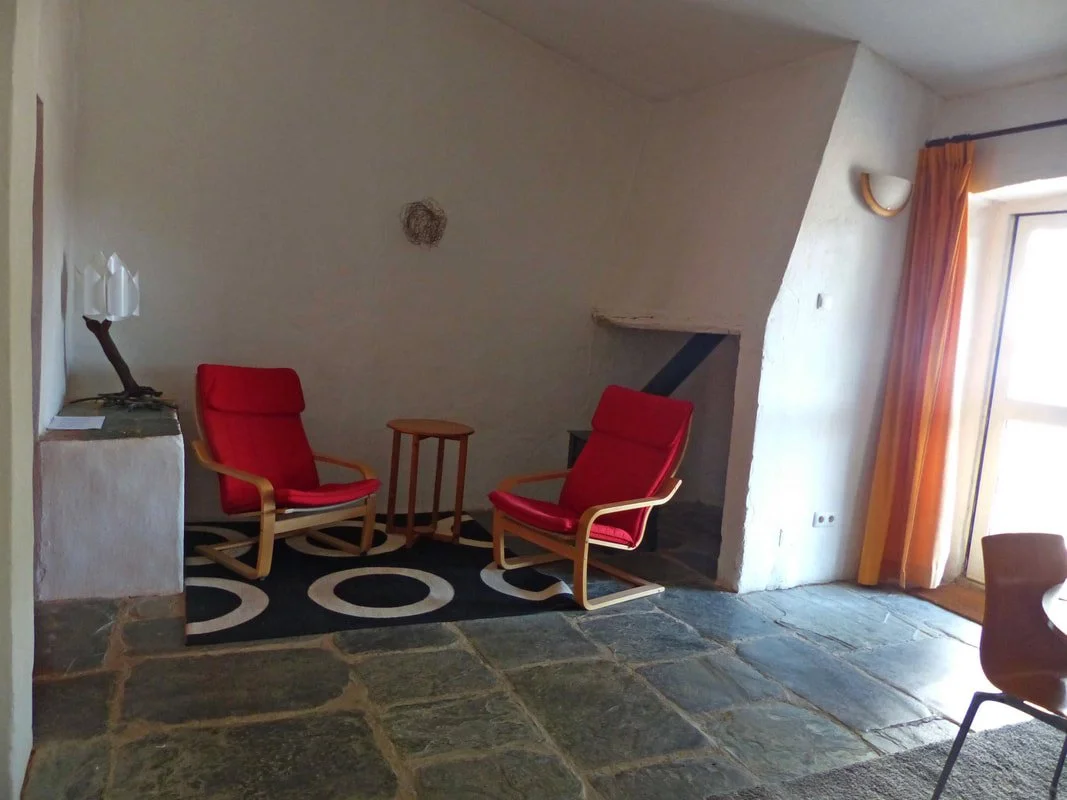
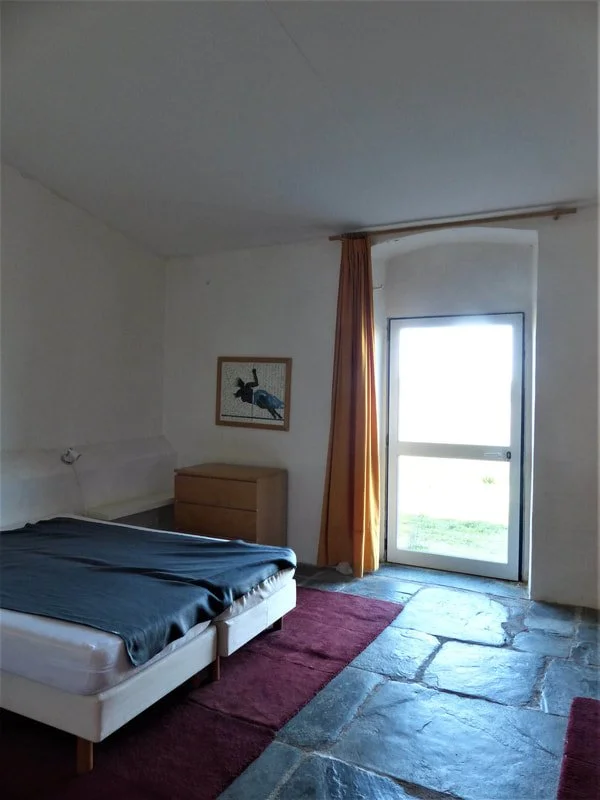
The bedroom has one double bed. There is a sitting area with a wood burning stove and dining table.
The house contains three rooms, each approximately 5 × 5 meters, along with a kitchen and bathroom. One or two of the rooms can be used as a studio, depending on your needs.
Please note there is no internet in this building. Many residents use the library to get online or bring their own device.
Casa Miradouro
Casa Miradouro sits slightly uphill, about 50 meters from Casa Principal, with open views across the surrounding countryside. Its position gives it a quieter, more secluded feeling while still being only a short walk from the studios and shared areas of the property. Terraces on three sides allow residents to sit or work outside while looking out across the fields.
The house includes a living room, bedroom, kitchen, and bathroom. The living room is large enough to be used as a working studio. Above the main living space there is a loft with two single mattresses.
Please note there is no internet in this building. Many residents use the library to get online or bring their own device.
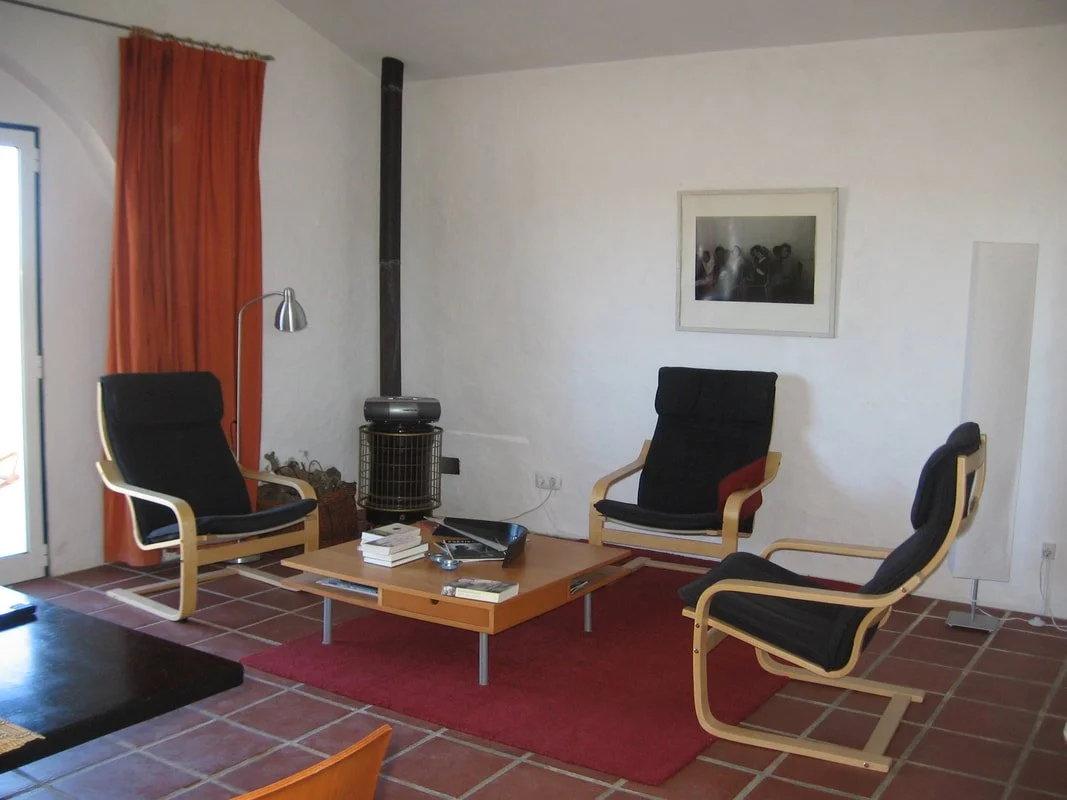
Ateliers/Studios
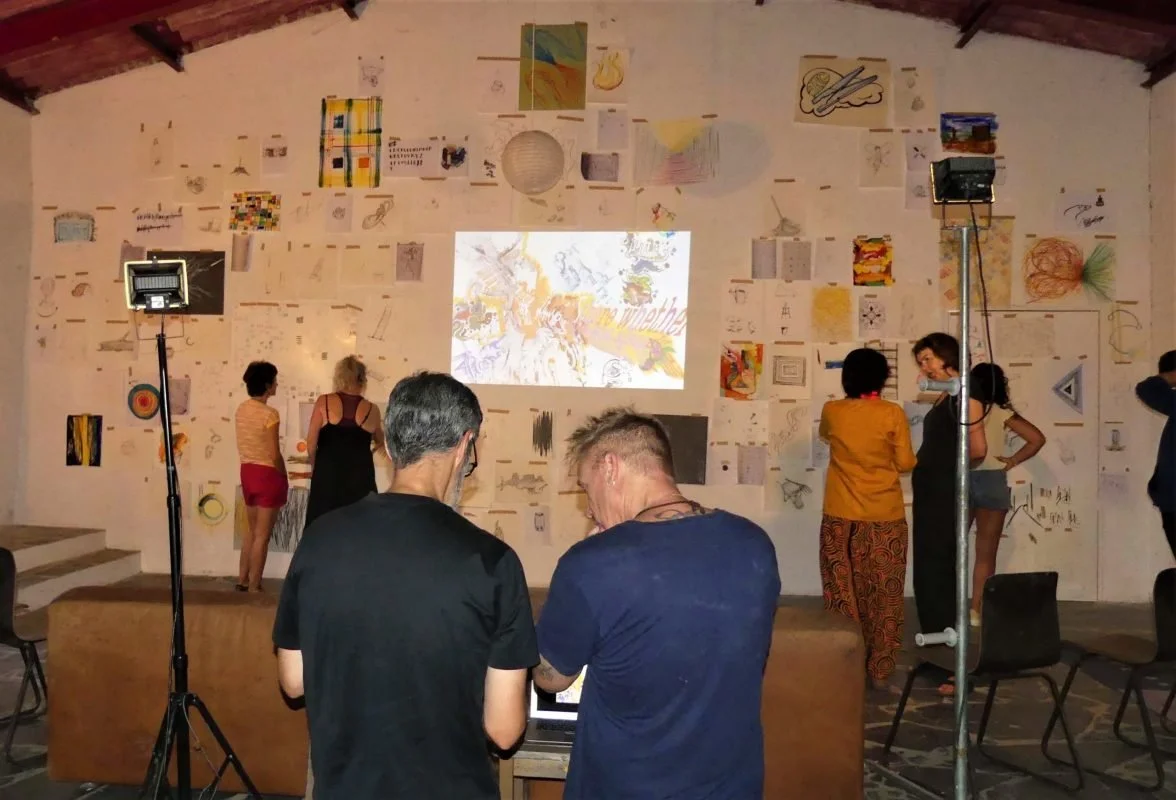
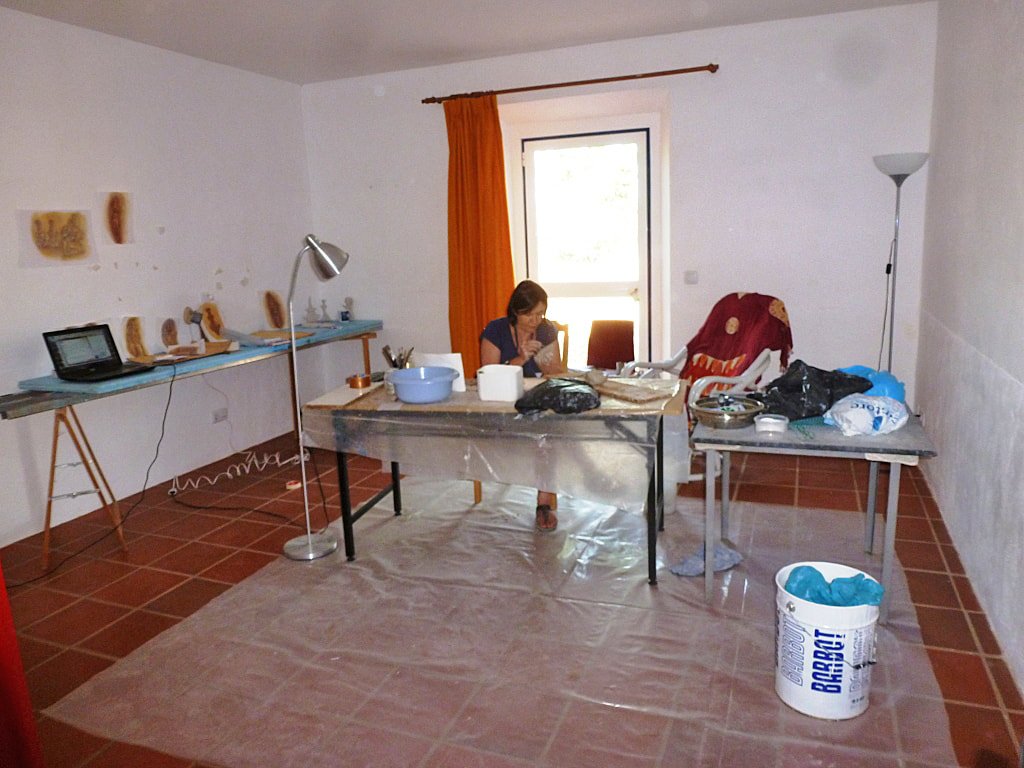
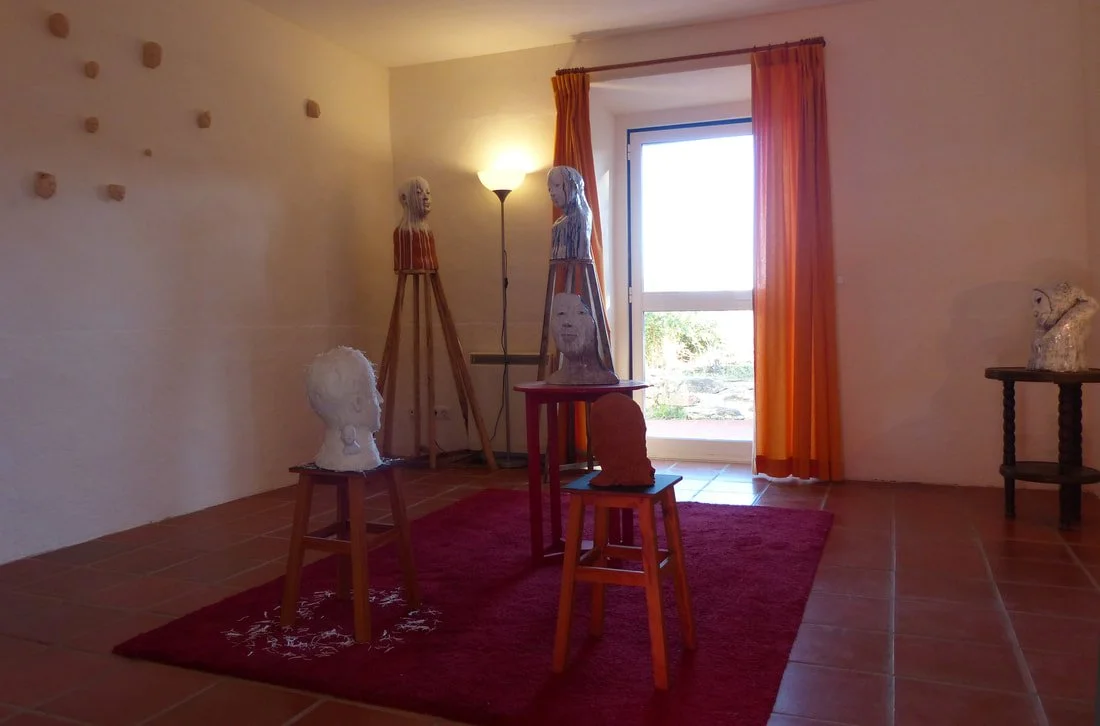
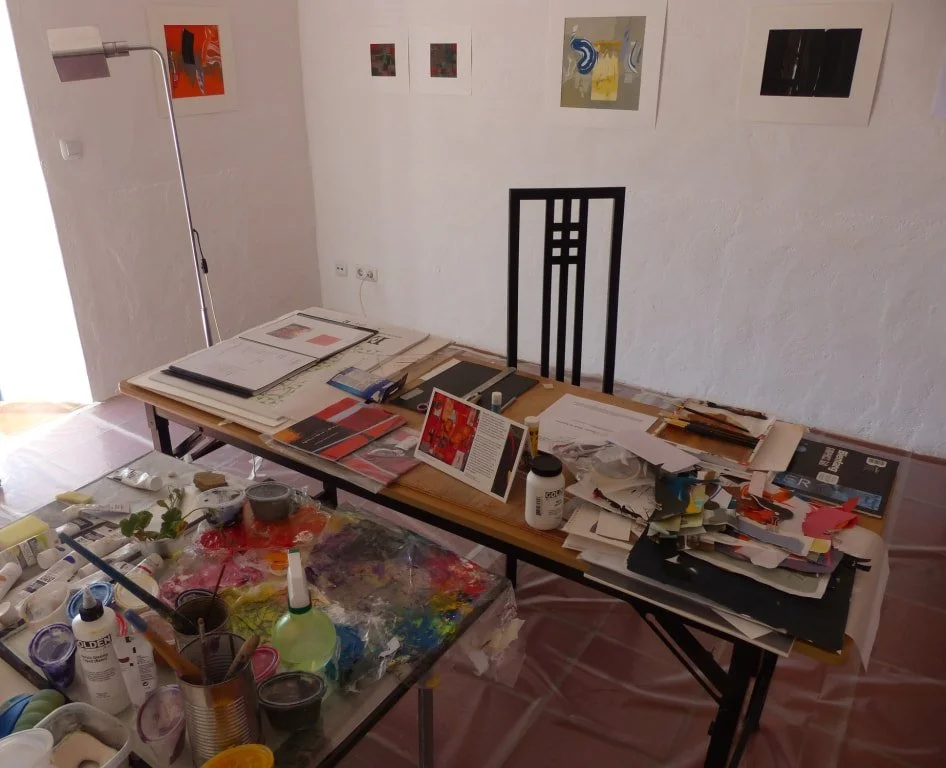
The studios at OBRAS are straightforward workspaces. Some are large and open. Others are smaller and more contained.
Not every resident receives a separate studio. Spaces are assigned based on availability and the needs of the work.
The rooms are simple: high ceilings, stone or cement floors, and natural light. There are no sinks or built-in technical infrastructure. Artists are expected to work within the limitations of the space.
Sala da Musica
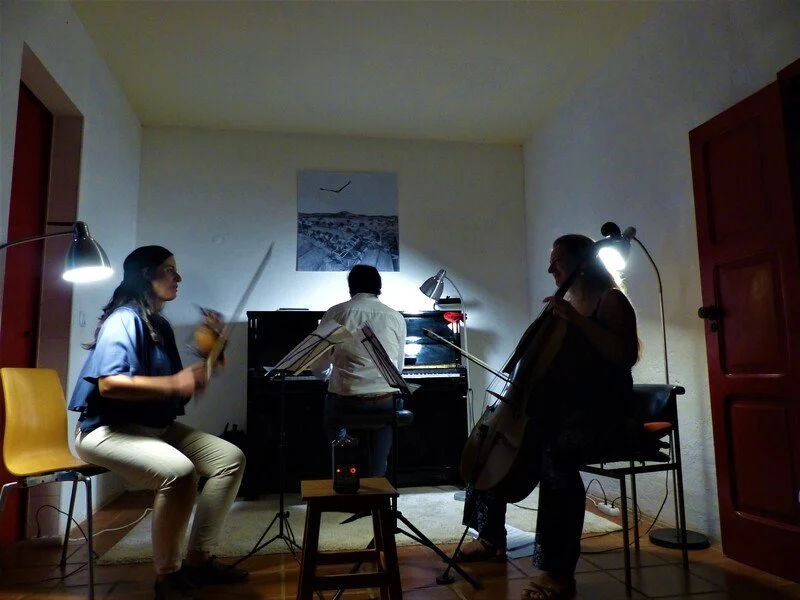
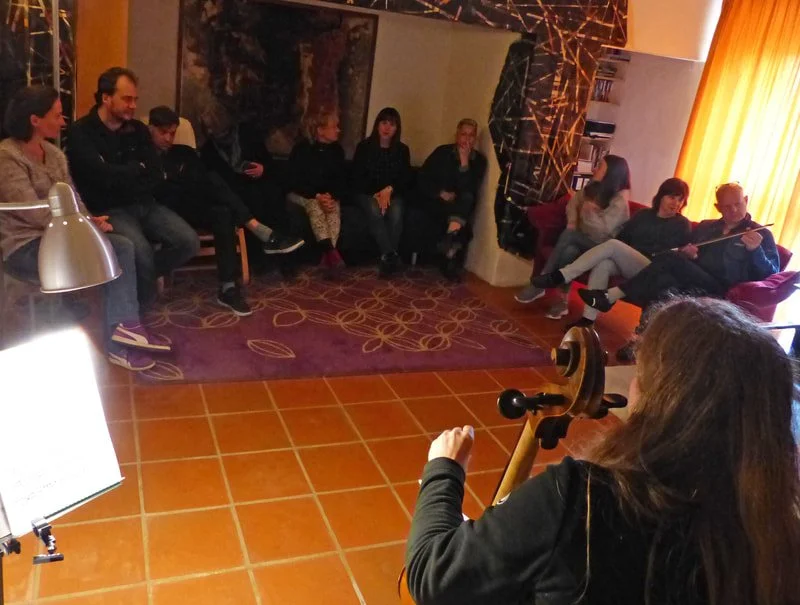
The music room is located within the Casa Principal and serves as a shared space for music, sound work, and informal gatherings.
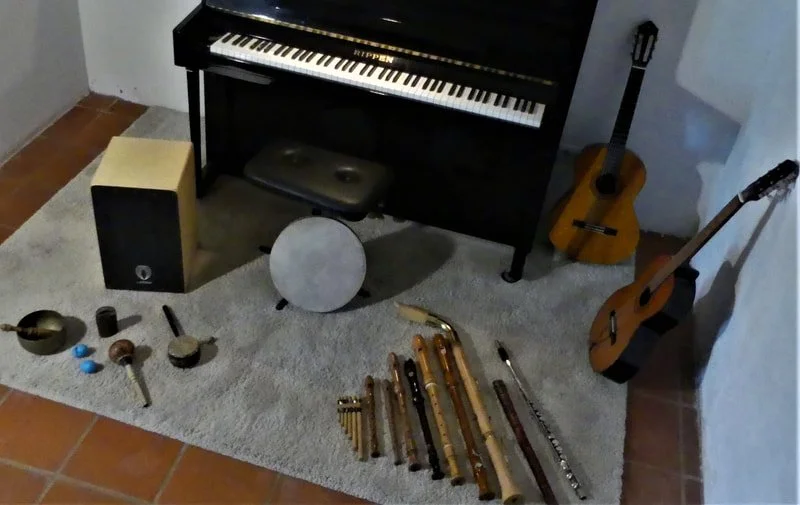
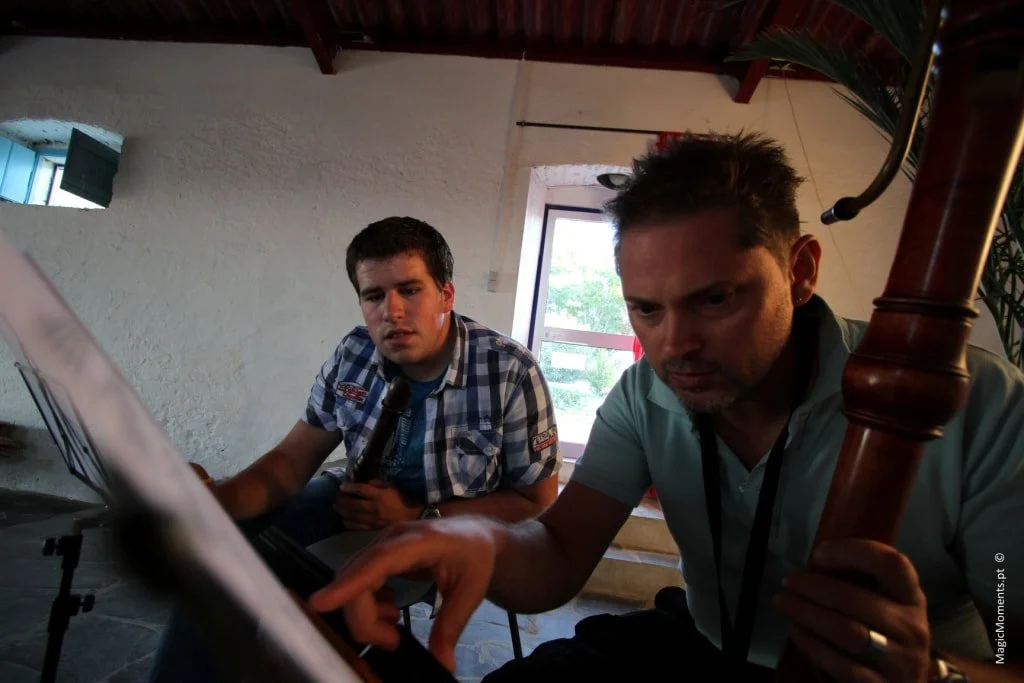
The space is simple and adaptable. A piano is available, along with several instruments including a flute, guitar, recorders, and a cajón. These are mainly intended for informal use, practice, or small collaborative sessions among residents.
The room is sometimes used for small concerts, rehearsals, or listening sessions. At other times it functions simply as a quiet place to sit, play, or work with sound.
As with many spaces at OBRAS, its use evolves depending on the residents.
Atelier Amplo
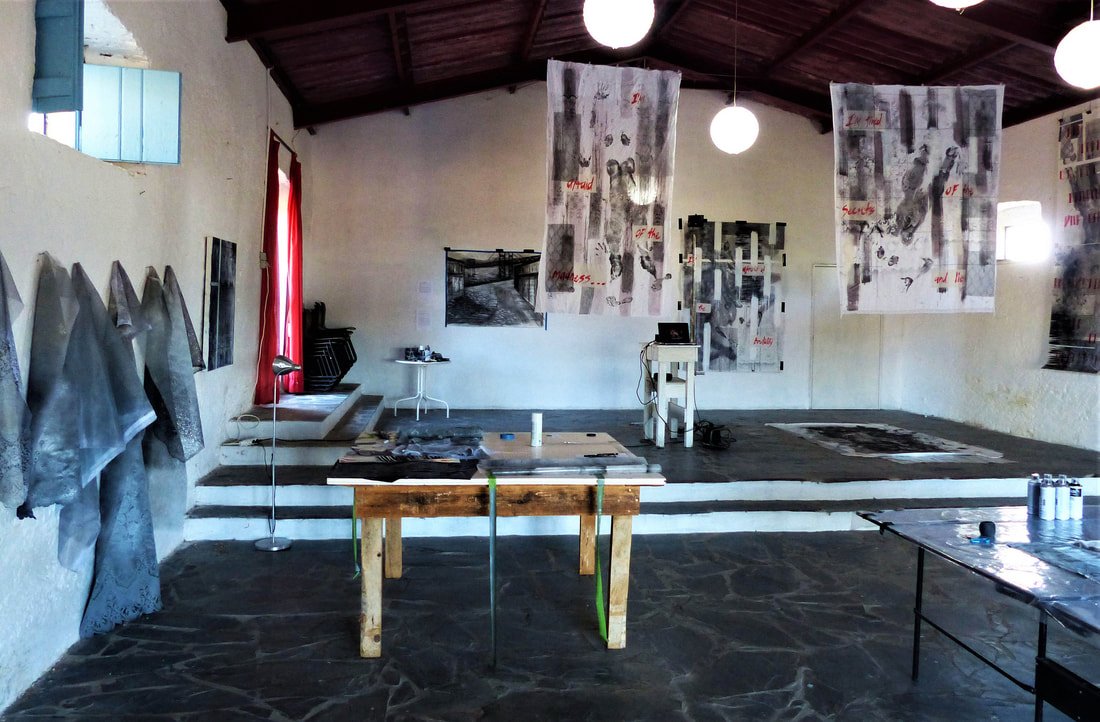
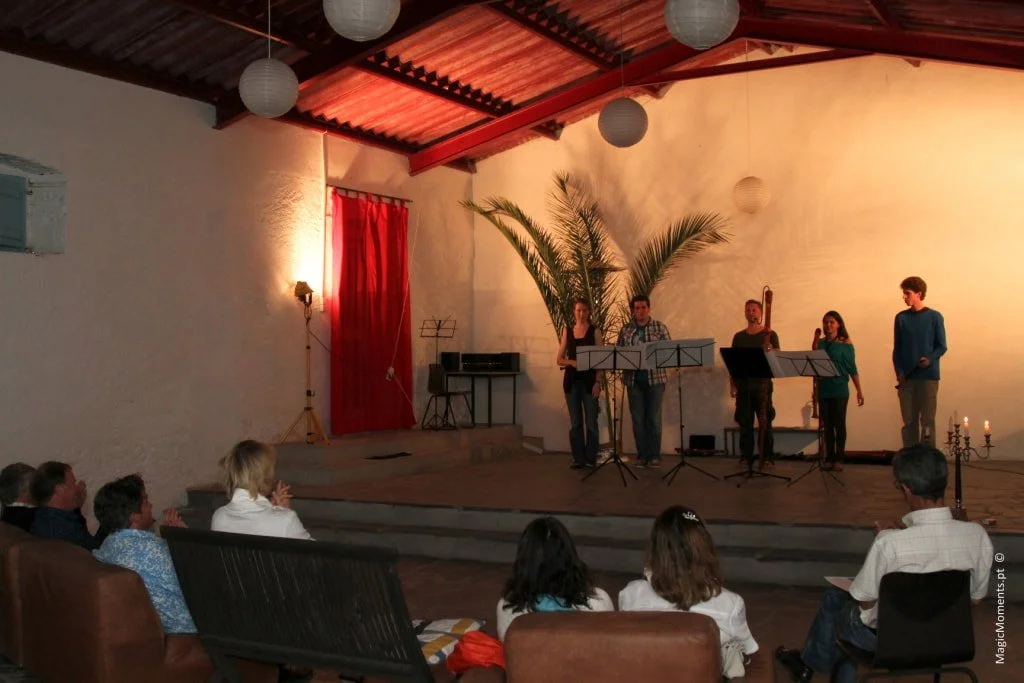
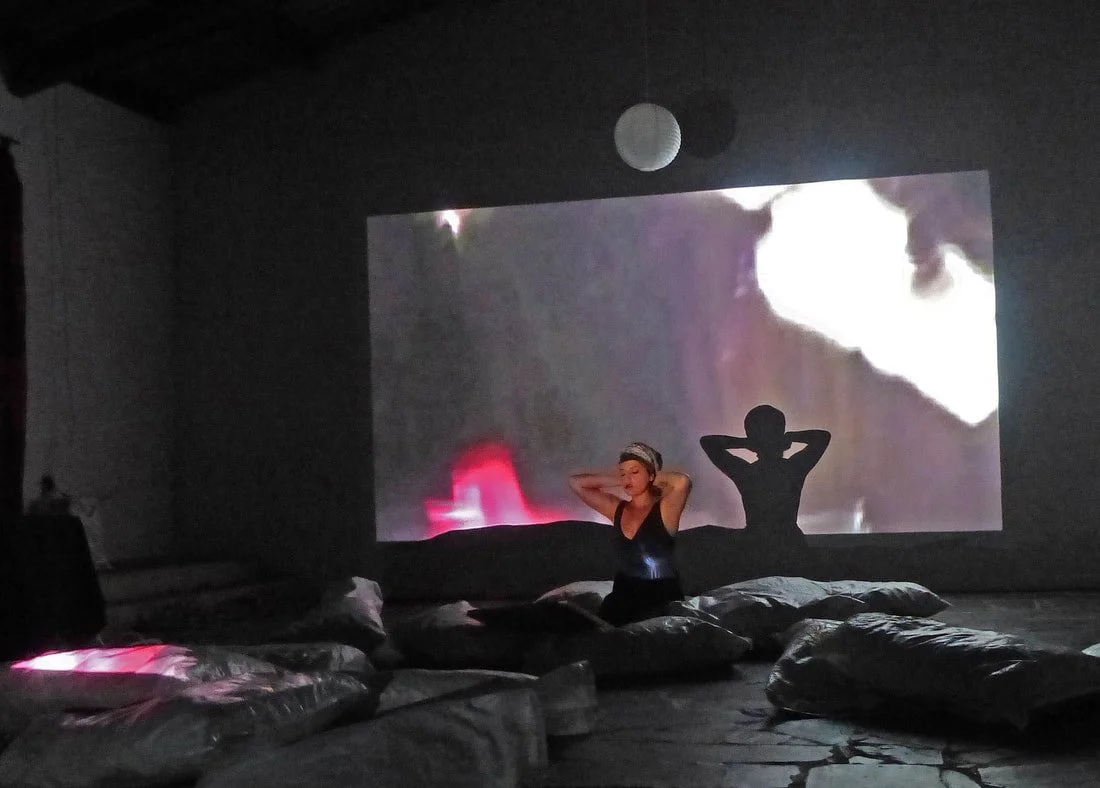
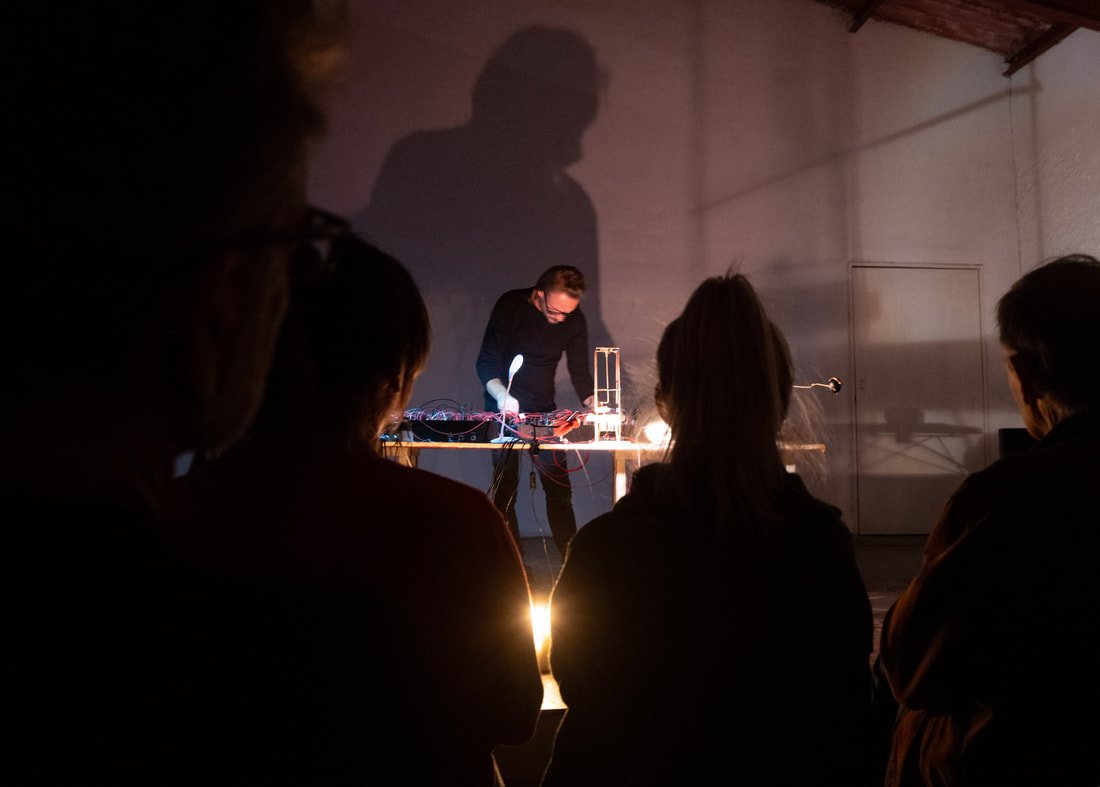
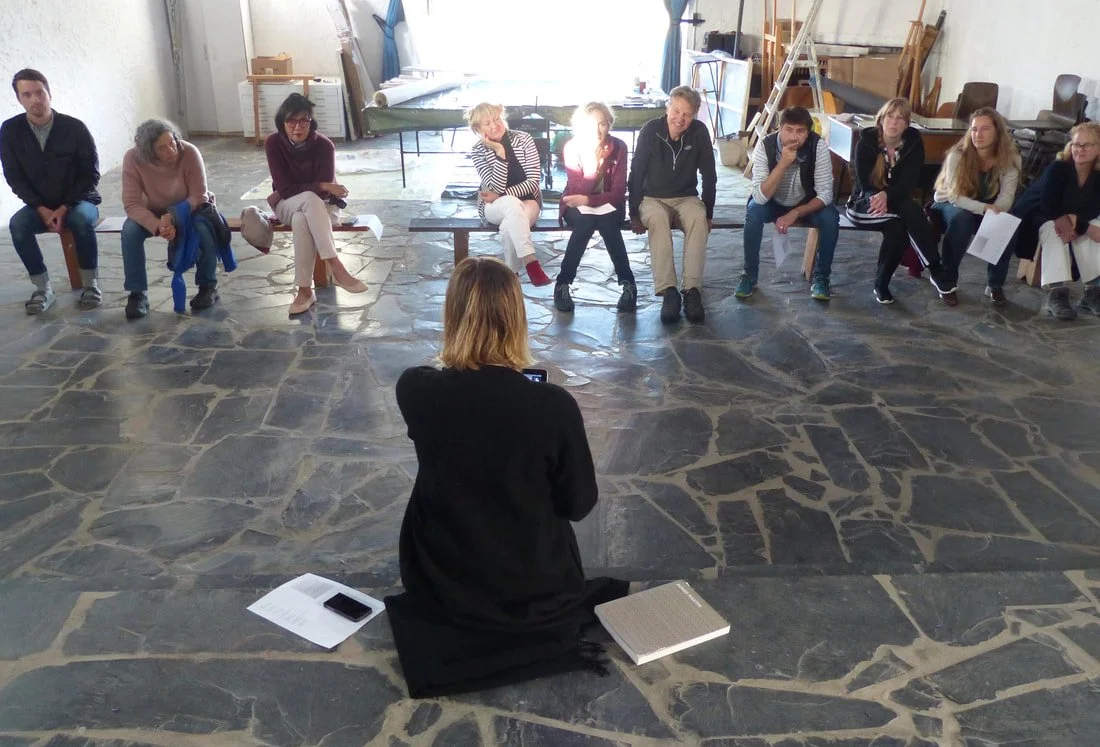
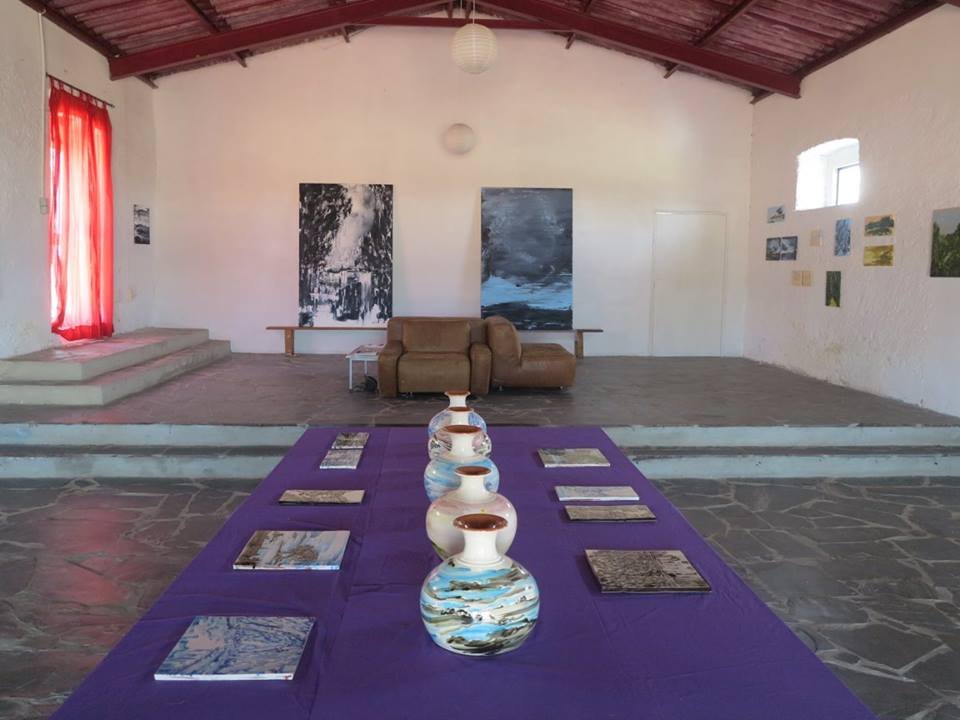
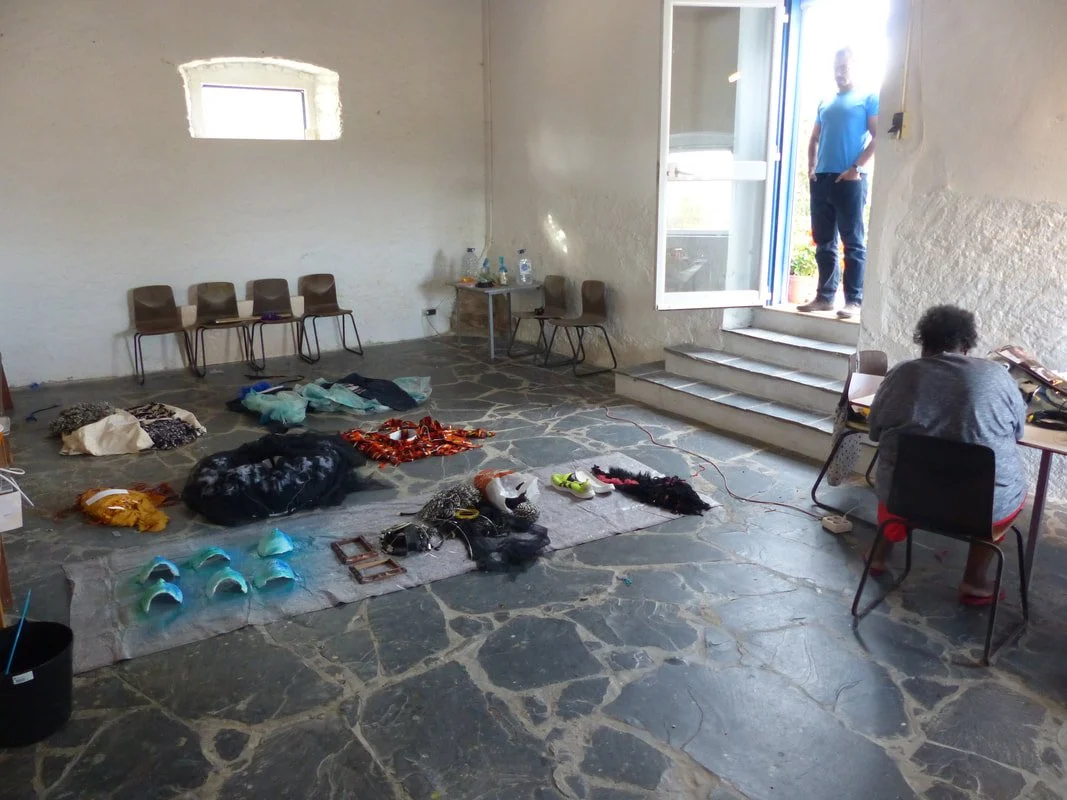
The Big Hall (25 × 10 m) is the largest indoor workspace at OBRAS. It is most often used for performances and large-scale installations.
The atelier has high ceilings and a flagstone floor. Sound carries easily in the space.
At the back of the hall there is a raised section that can function as a stage, though the room is generally used as one open space. Atelier Amplo shares a building with Atelier Rossio and may be used independently or together, depending on availability and the needs of the project.
Atelier Rossio
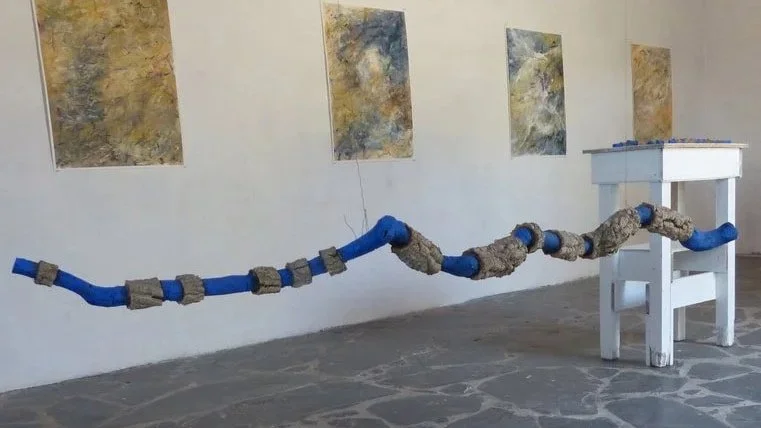
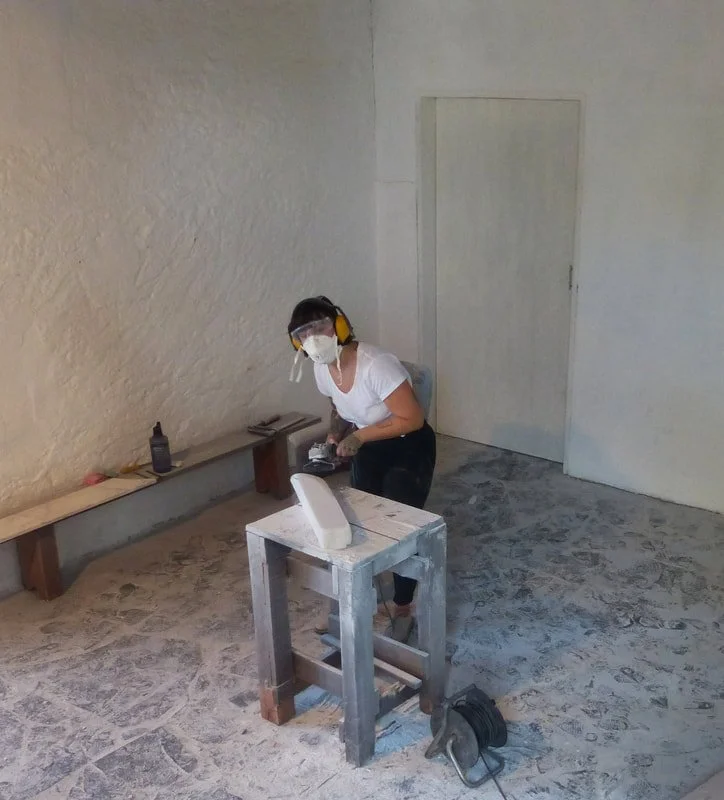
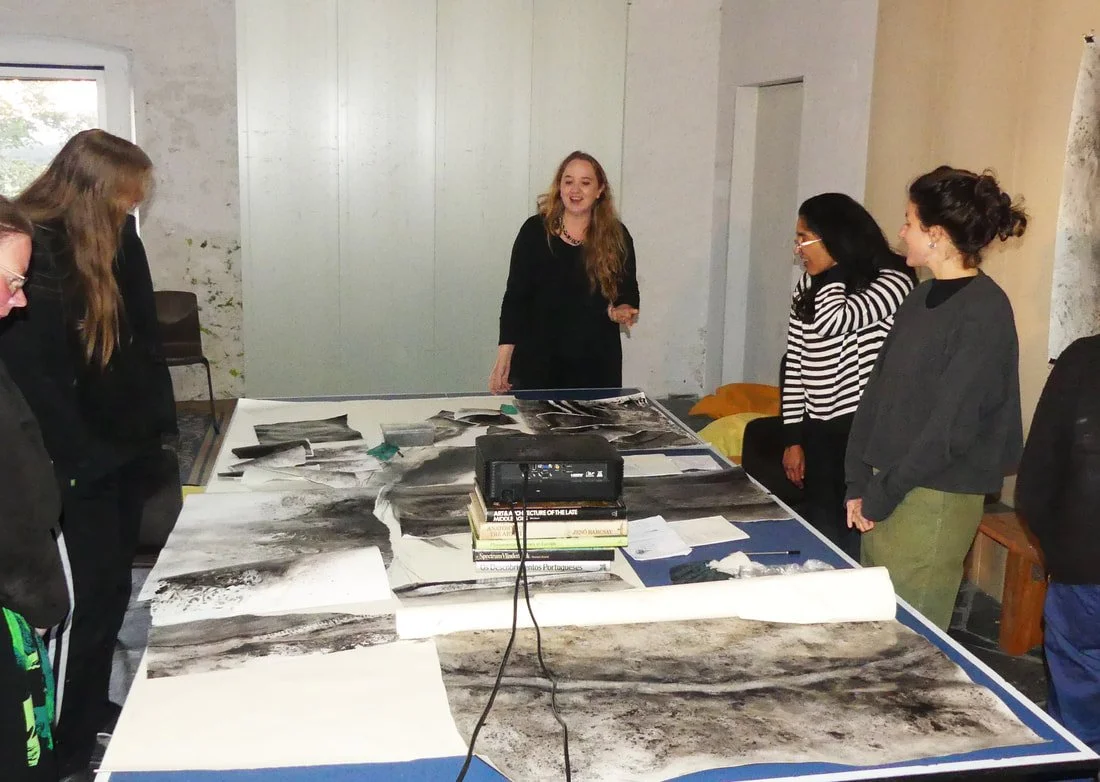
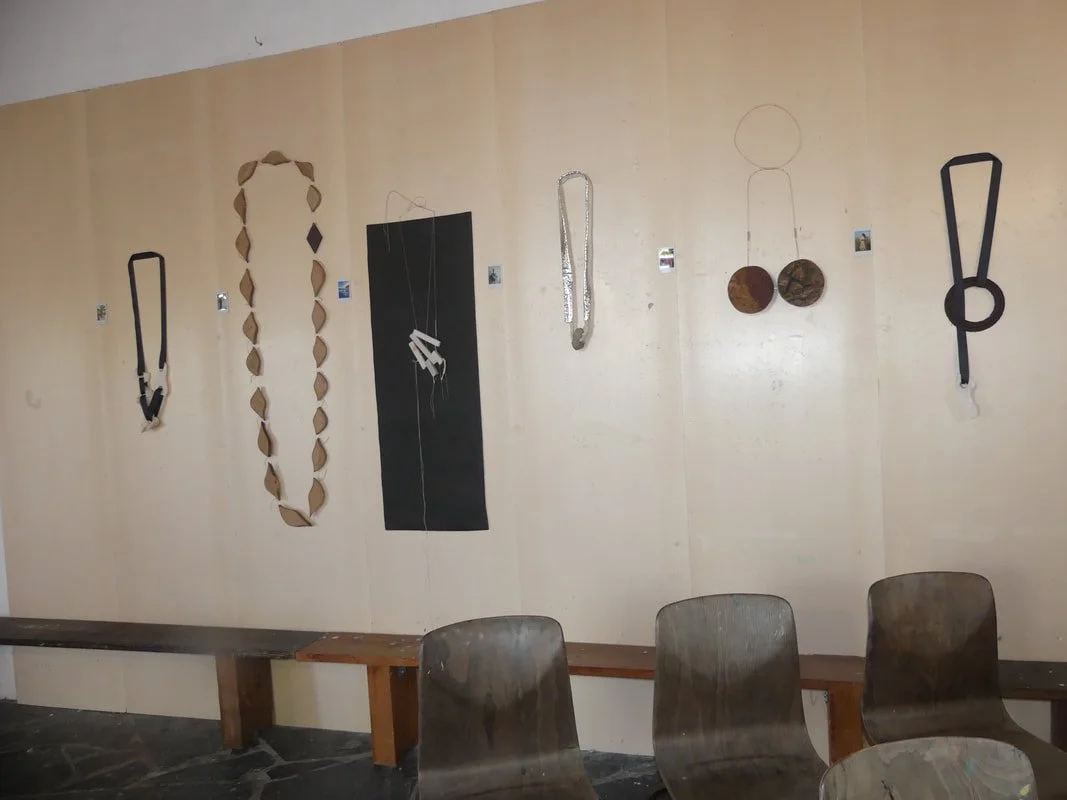
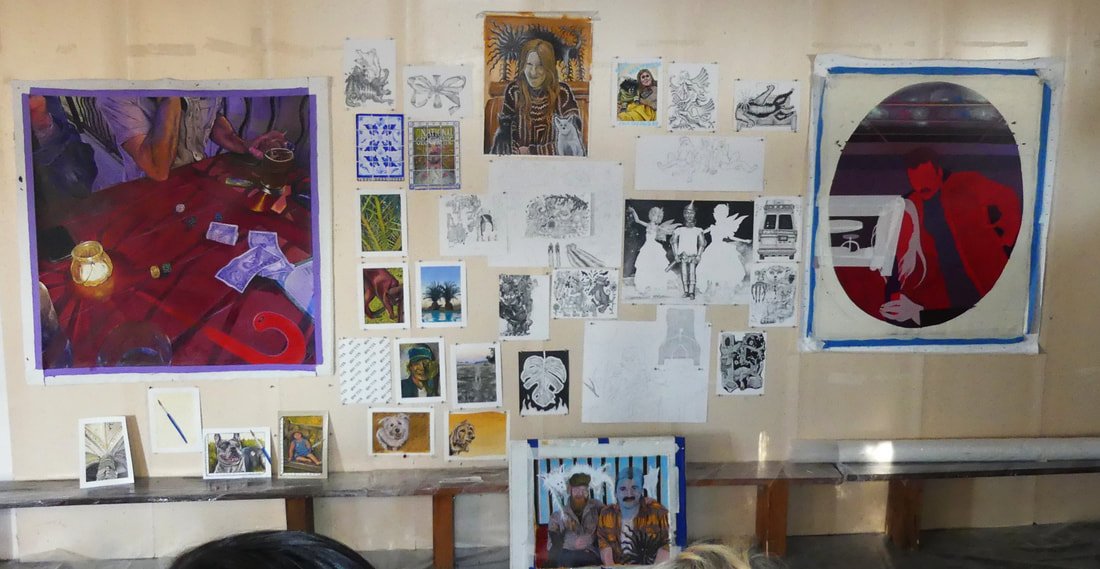
Studio Rossio (6 × 10 m) has high ceilings and a stone floor. It is located in the same building as Atelier Amplo. The atelier may be used on its own or in coordination with Atelier Amplo, depending on availability and the needs of the project.
Atelier Branco
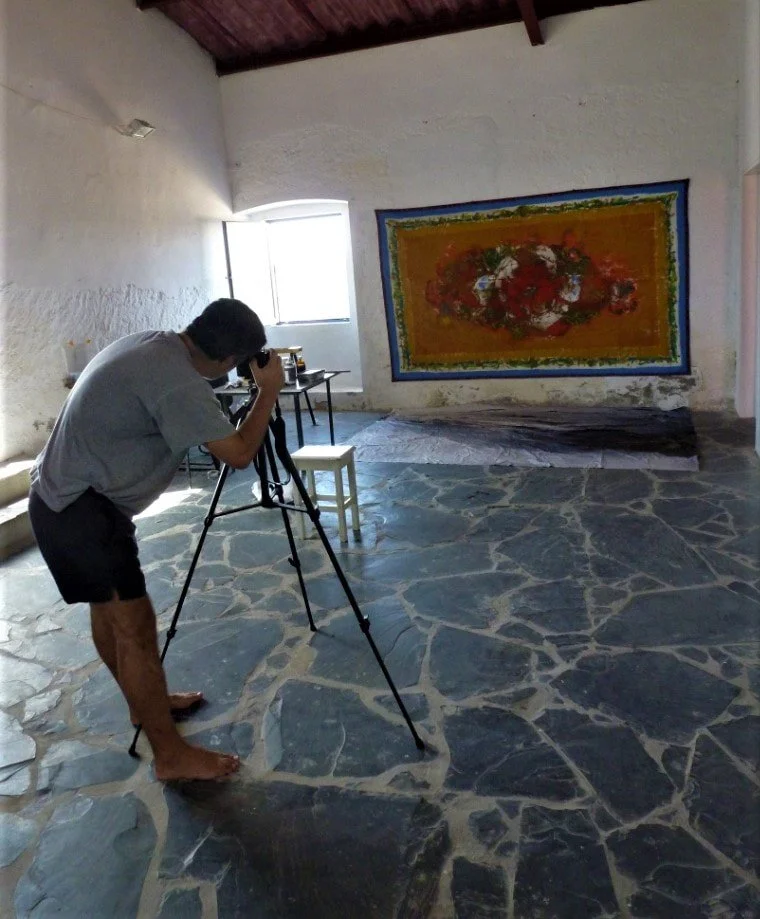
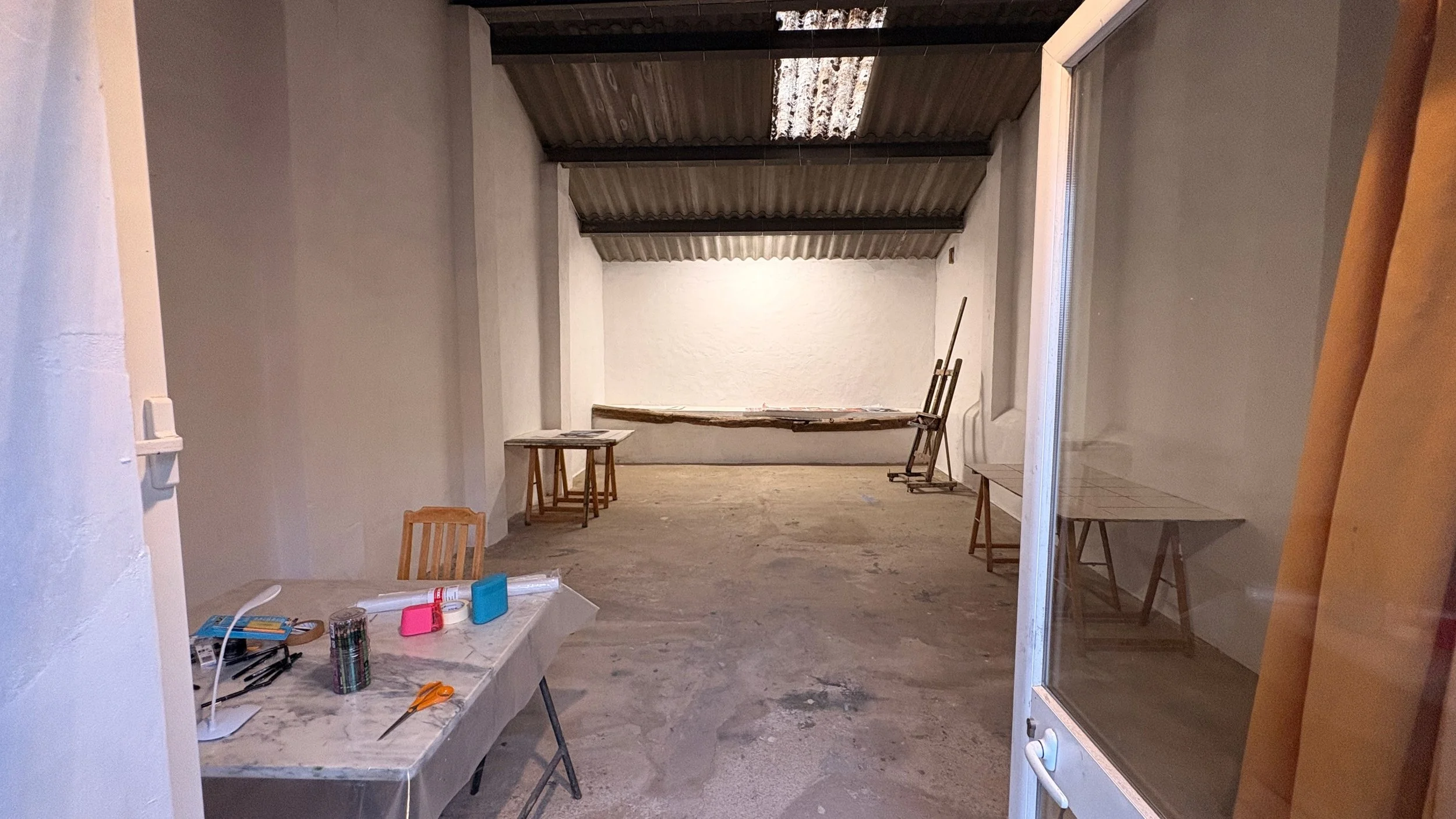
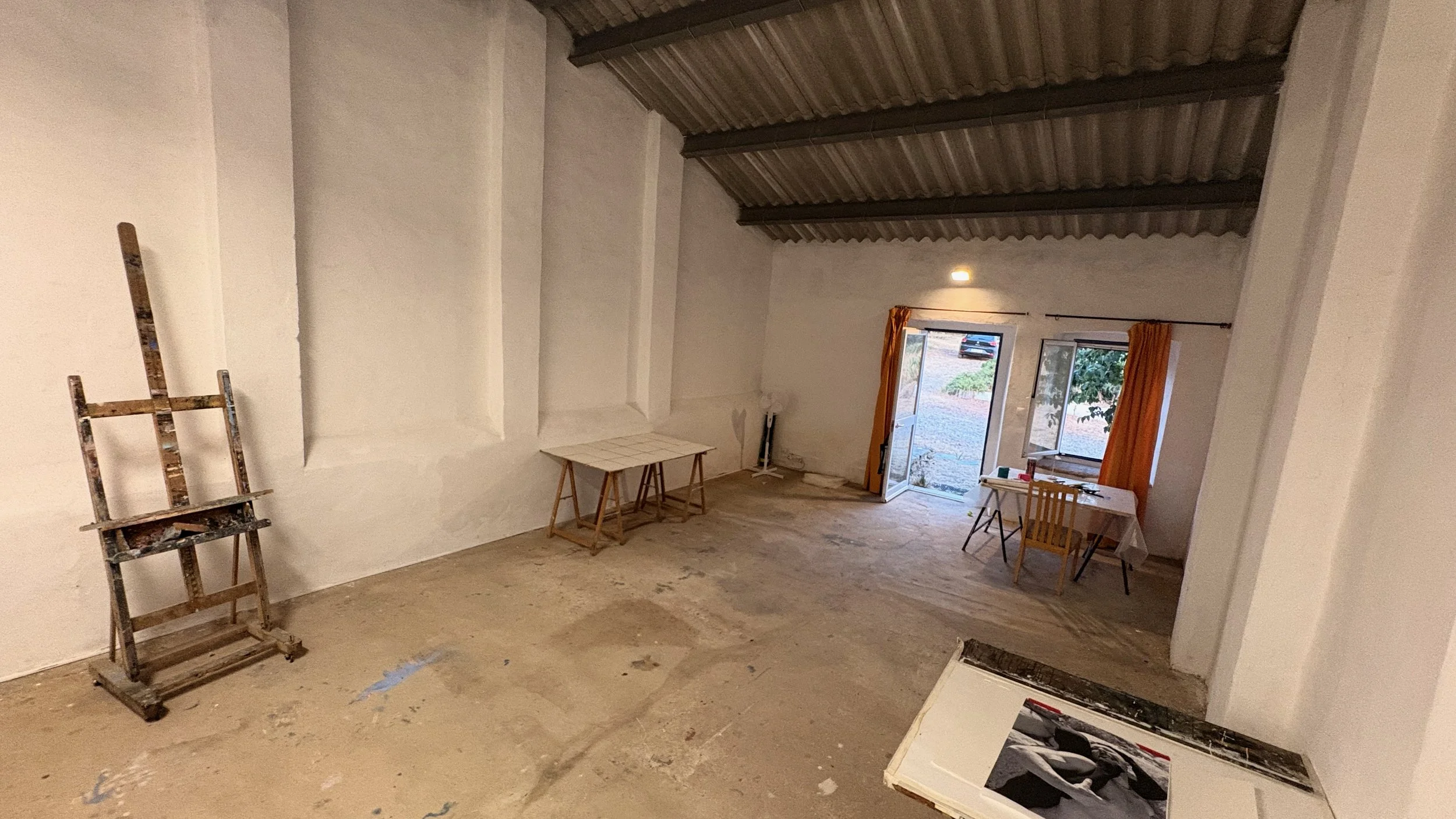
Studio Branco (5 × 10 m) has high ceilings and a cement floor.
There is a built in counter at the back end of the space.
Anexo Seis
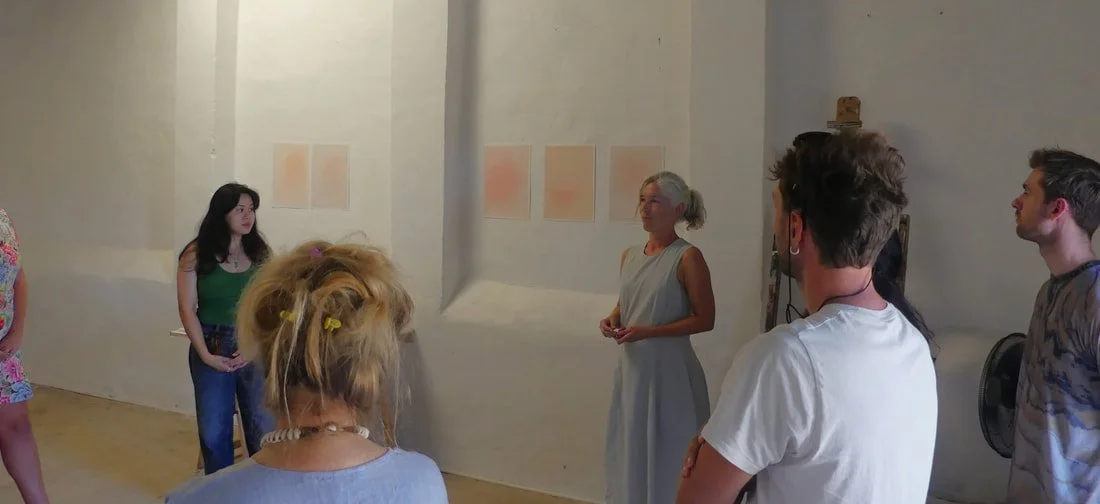
Annex 6 (5 × 5 m) is a converted apartment in Casa Principal. The space has
two entrances: one from inside the building and one from the outdoor patio.
Outdoor Spaces
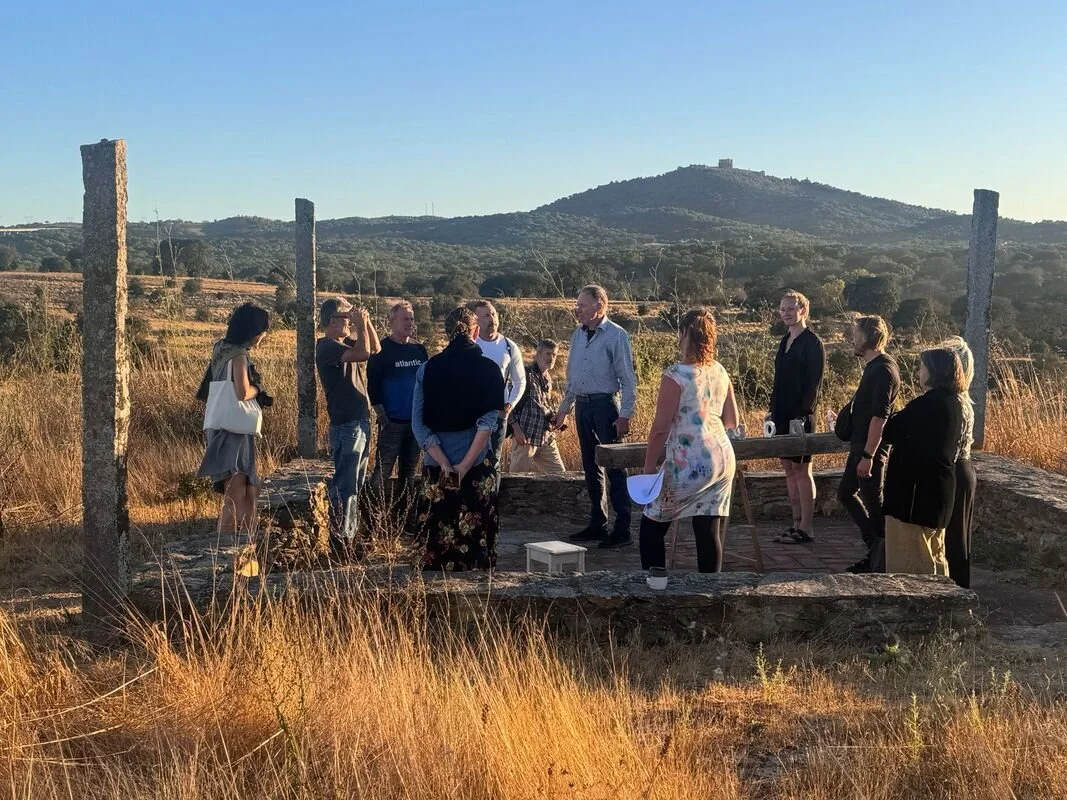
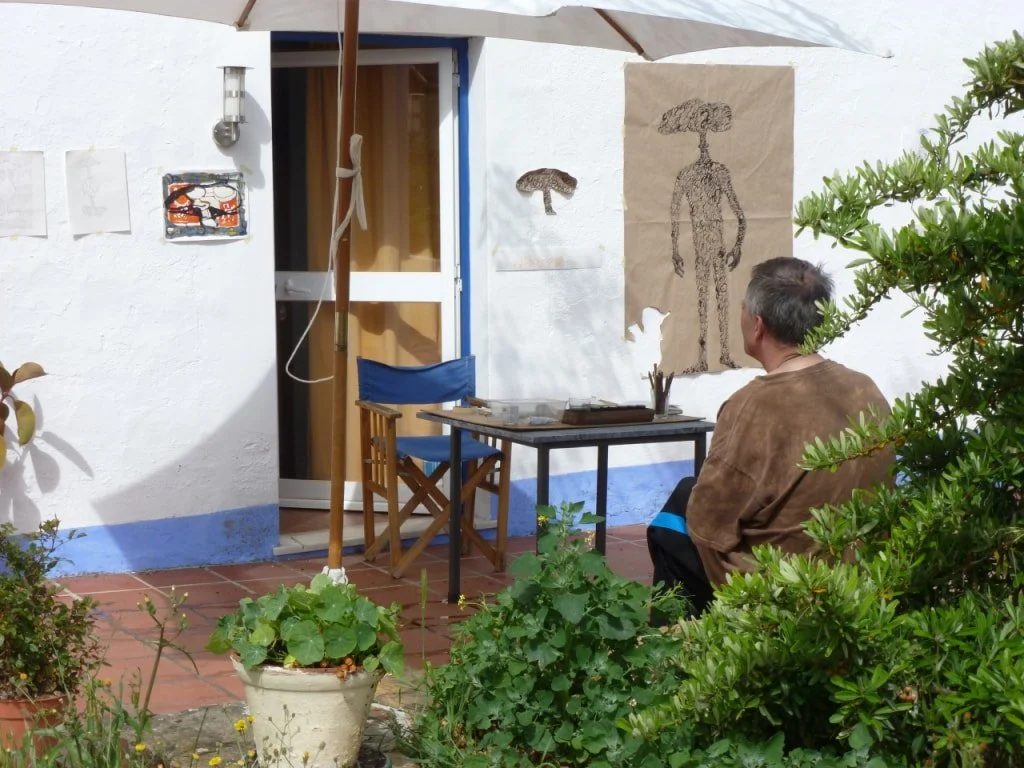
The land extends in every direction, and several defined exterior areas can be used for projects that need scale, air, or distance from walls. Some are structured by stone. Others are simply open ground. Wind, light, heat, and time of day become part of the conditions.
Residents move between interior and exterior spaces depending on the needs of the work. There is no hierarchy between them. A workspace can also be a patch of earth, a circle of stone, or a stretch of open sky.
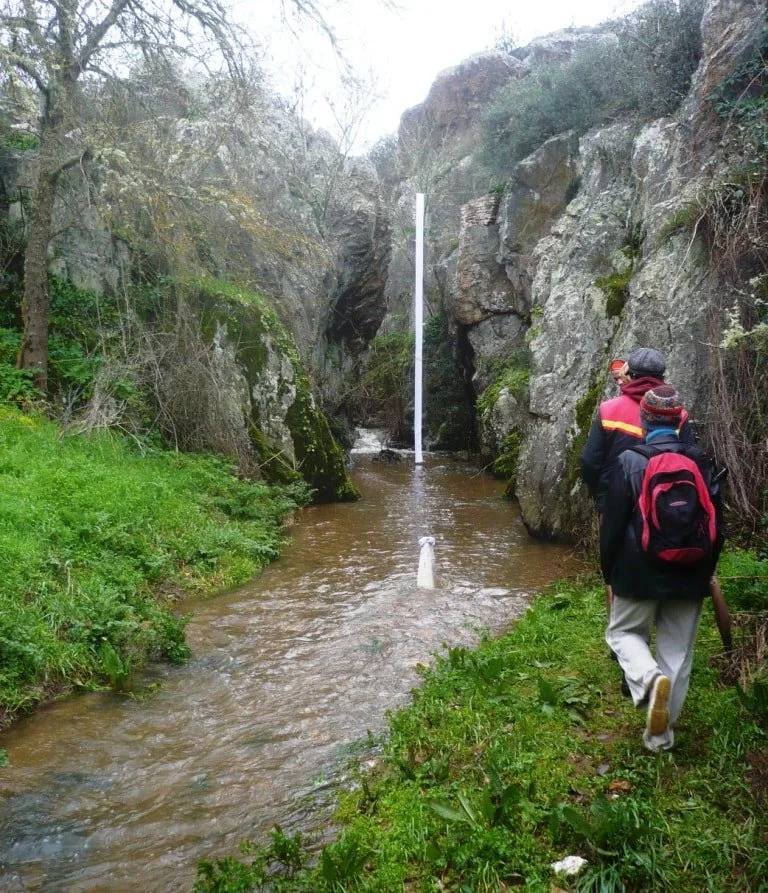
The surrounding landscape is quiet but not neutral. It carries agricultural history, traces of earlier structures, and long sight-lines toward Évoramonte. For some artists this becomes part of the work, for others it is simply the ground on which the residency unfolds.
Patio
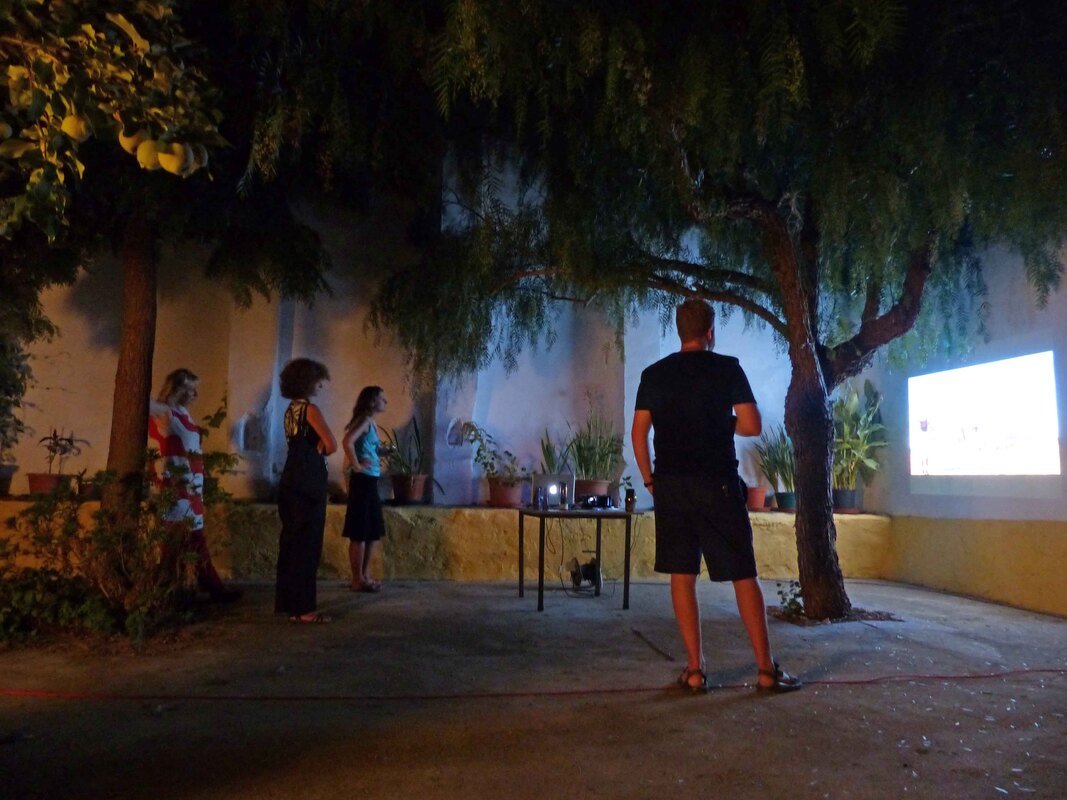
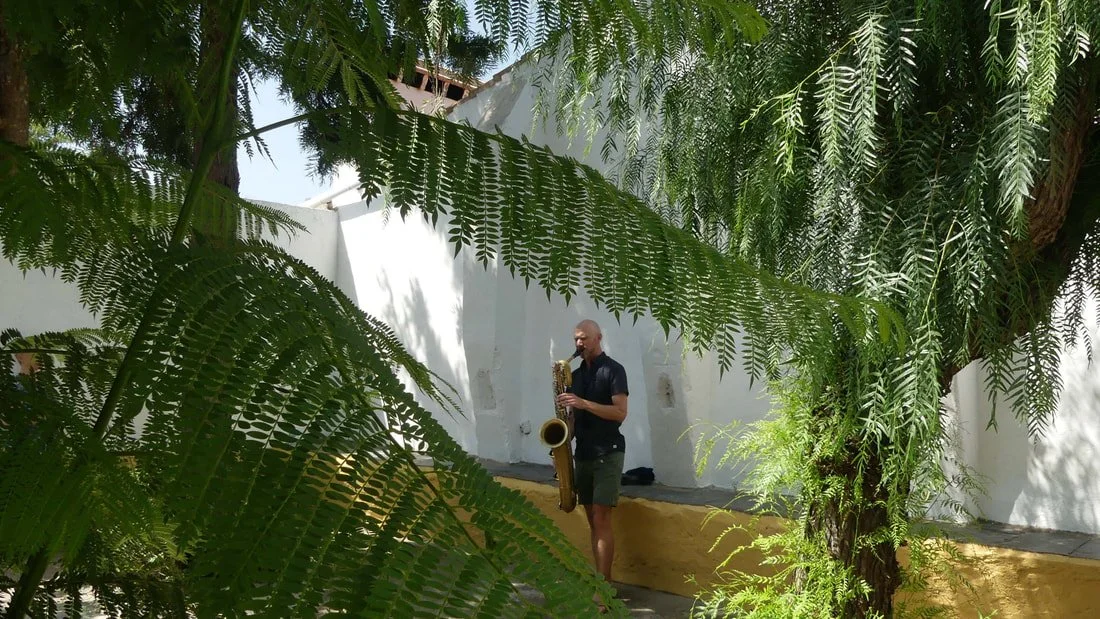
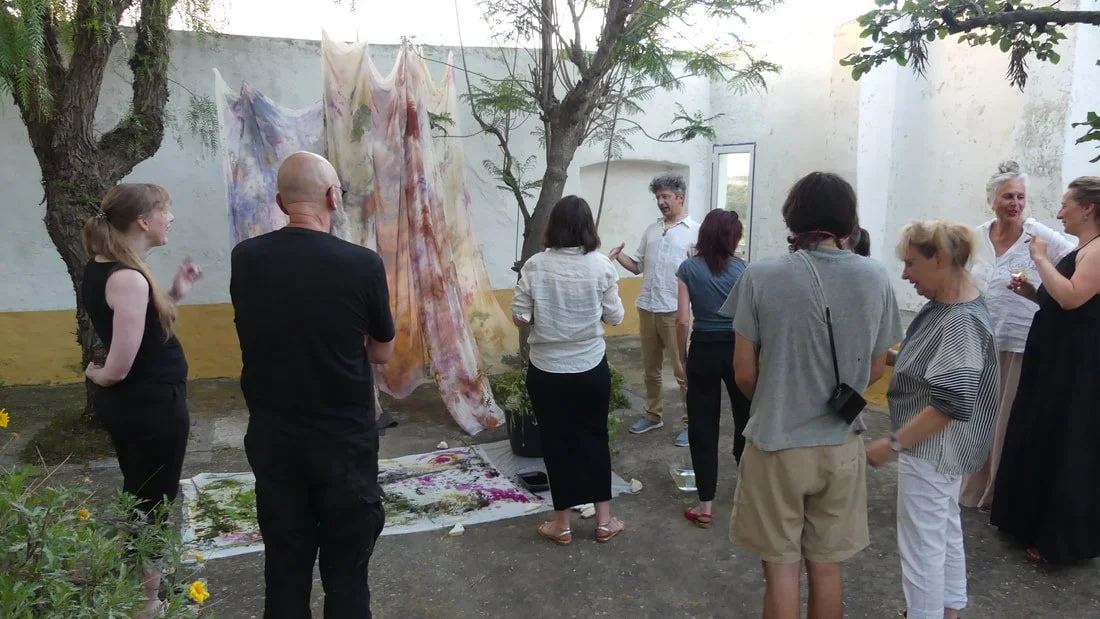
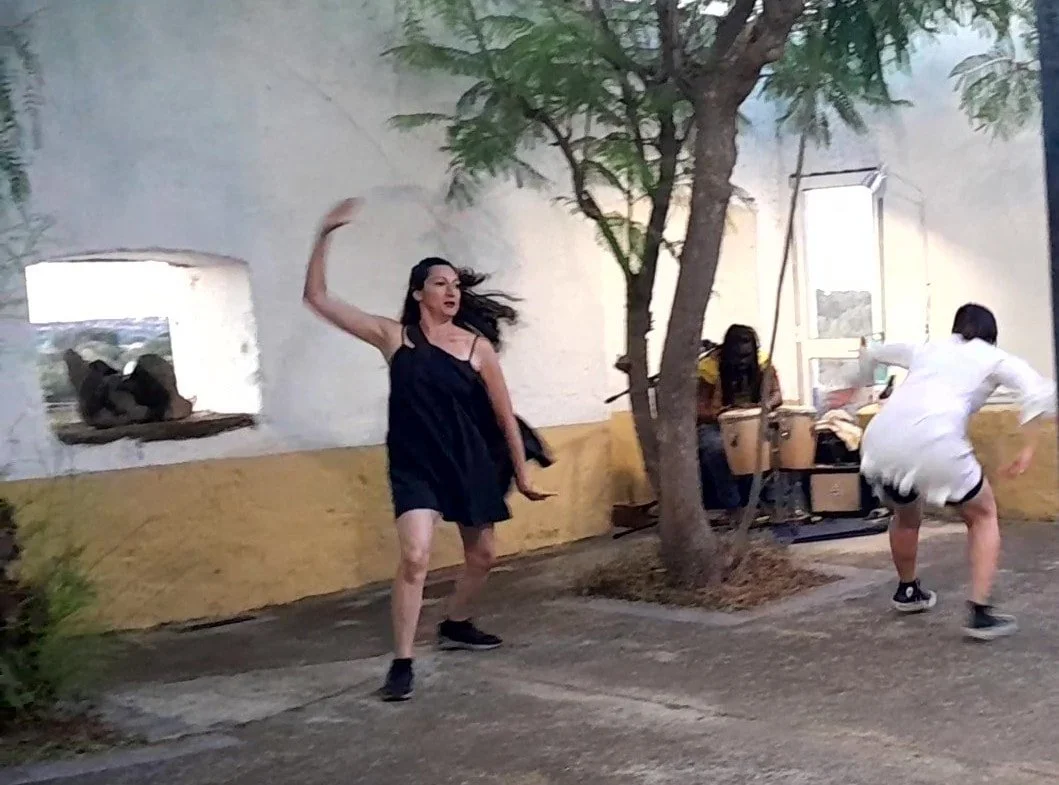
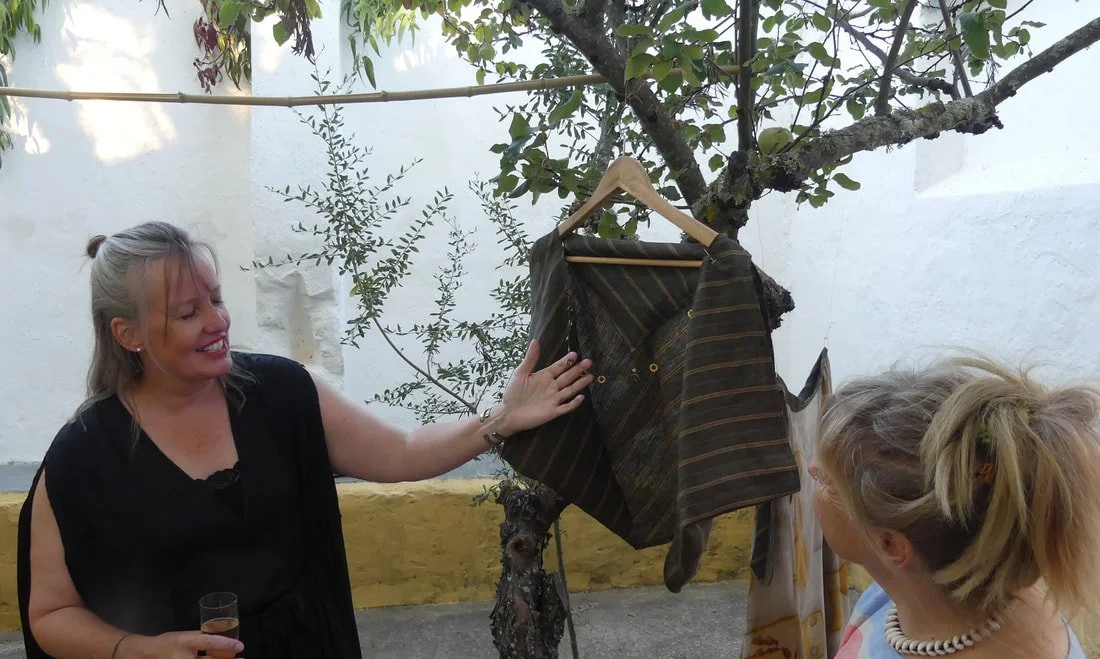
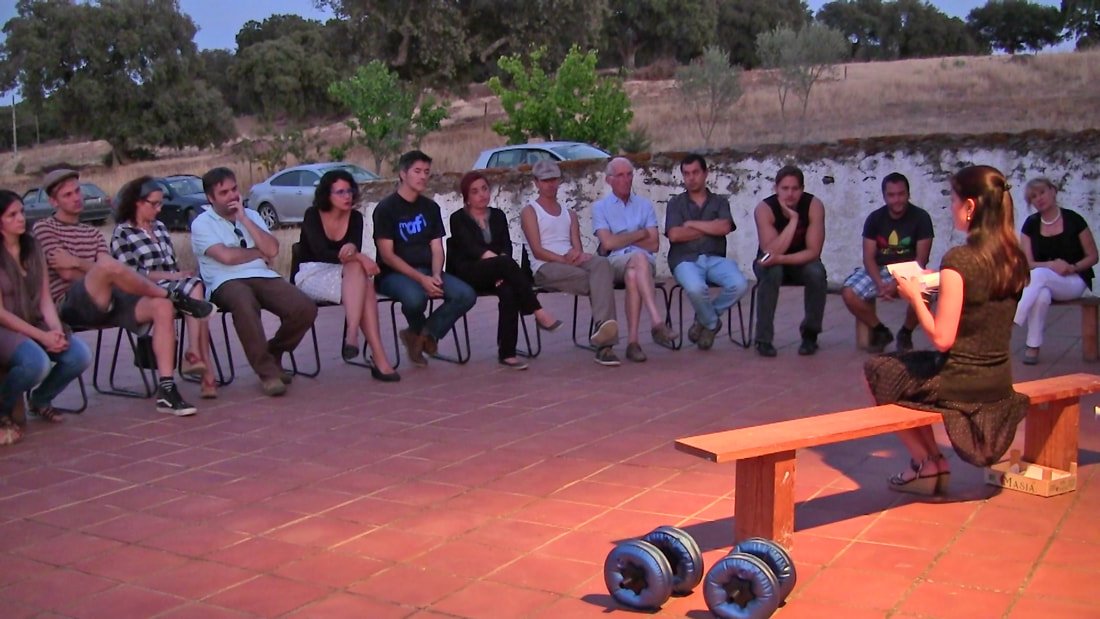
The Pátio is an open-air courtyard located in the same building as Casa Vicente. It has no roof and is open to the sky. Mature trees grow directly through the paved ground, creating natural shade during the day and a quiet night atmosphere.
Built-in benches line the walls. Cushions can be added when needed. The walls are whitewashed stone. The space feels enclosed without being sealed off from air and light.
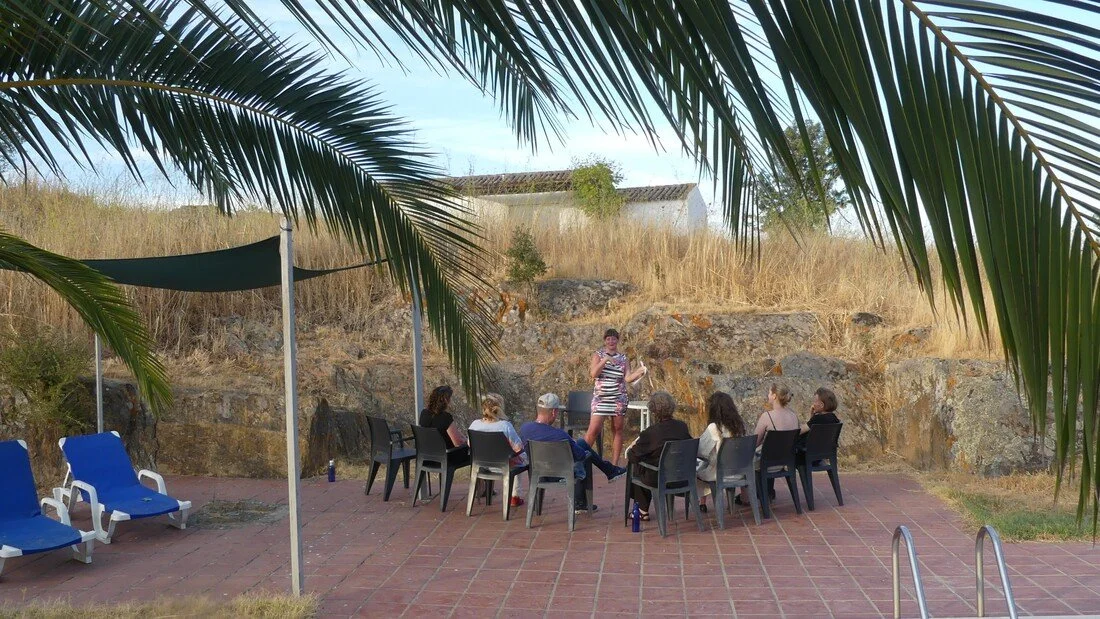
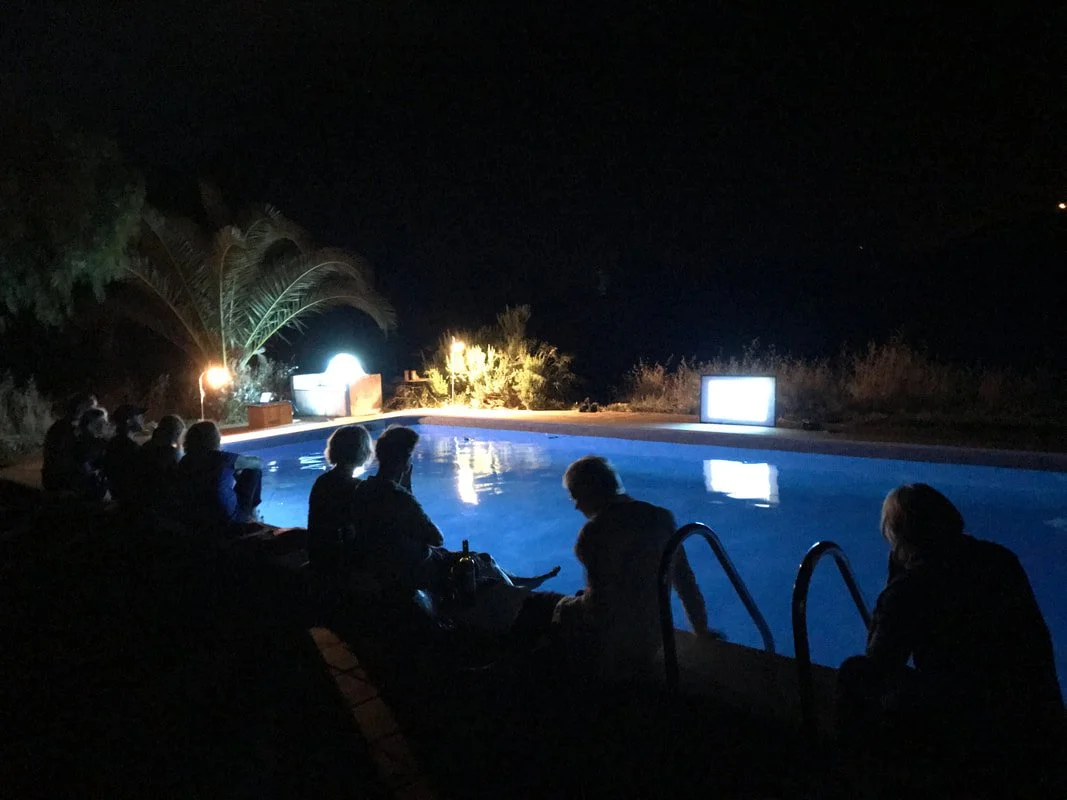
The Patio is often used for artist talks, small performances, screenings, and evening gatherings. It is not a formal venue. It is simply a place where people come together.
Pergola
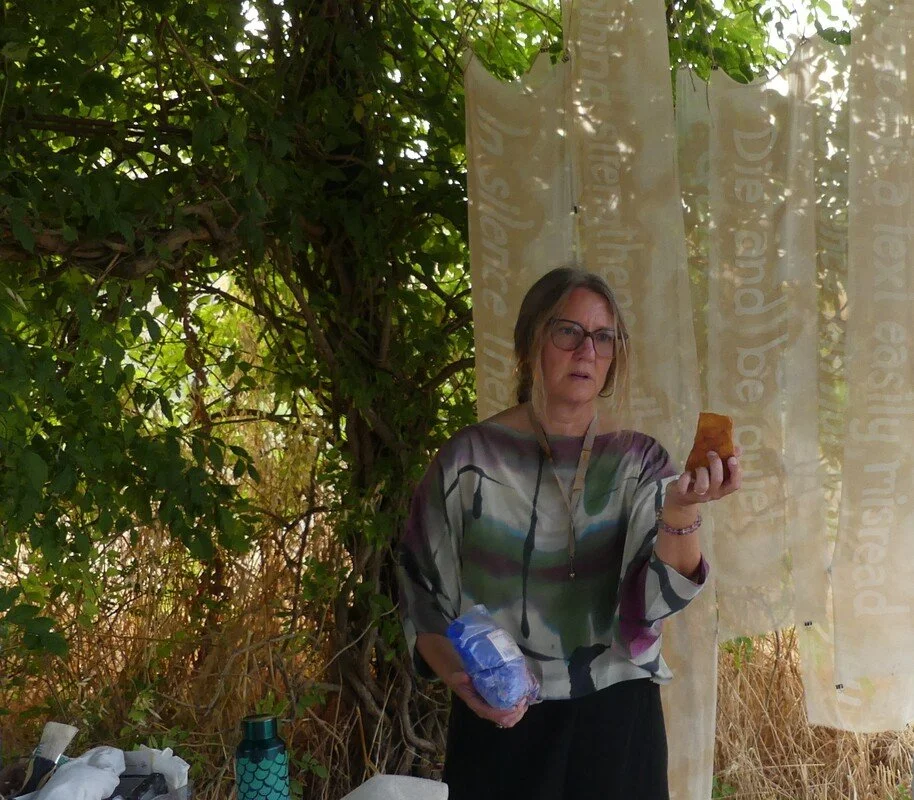
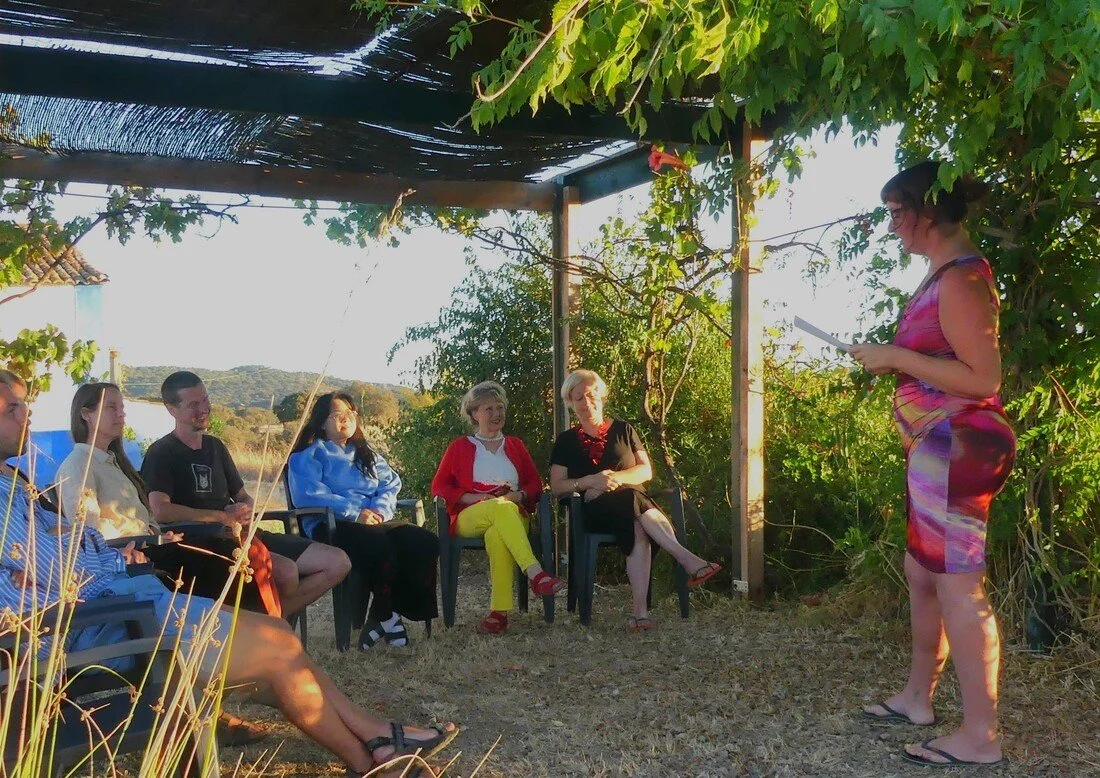
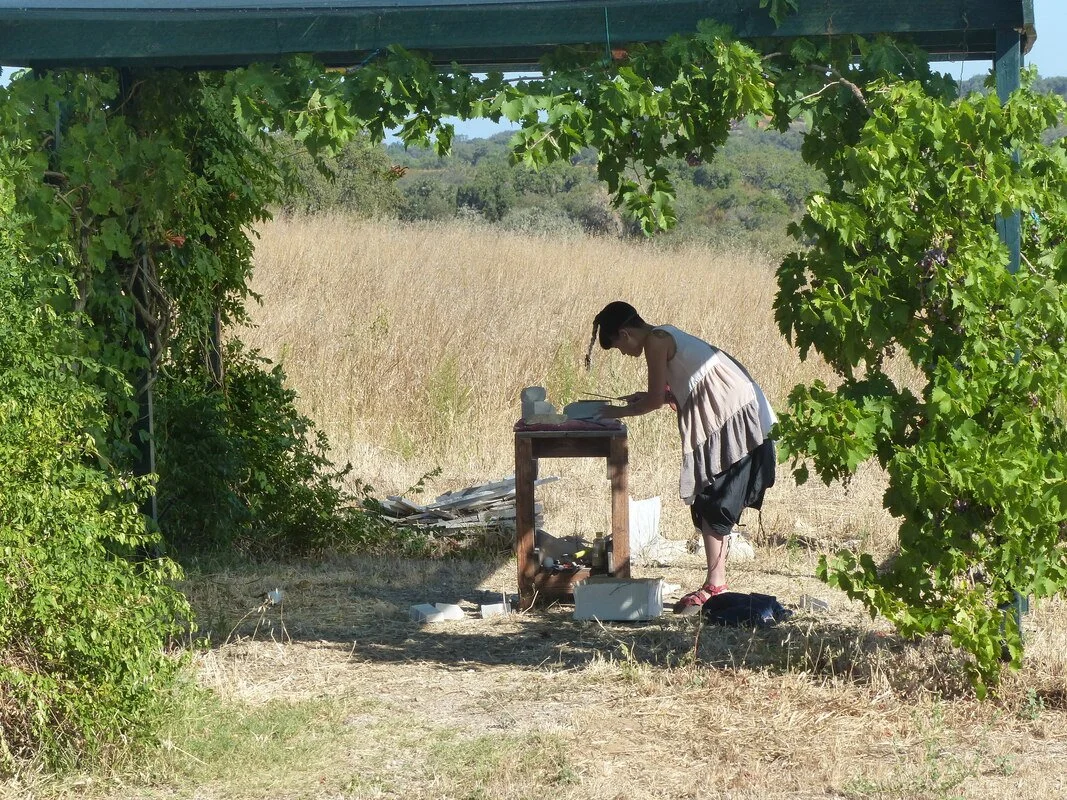
The Pérgola (3.5 x 8m) is a shaded outdoor structure covered with established grape vines. It sits close to the working areas but feels slightly removed, with open views across the fields.
The filtered light makes it comfortable during the warmer months. It is often used for working with materials such as marble or wood, for small group discussions, or for quiet individual work.
It is simple and practical — a place to step outside without leaving the rhythm of the day.
Circular Square
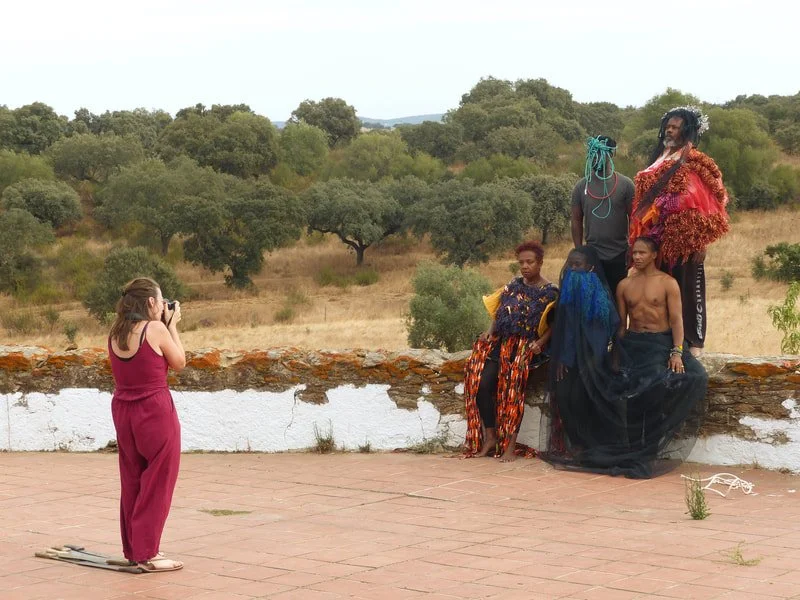
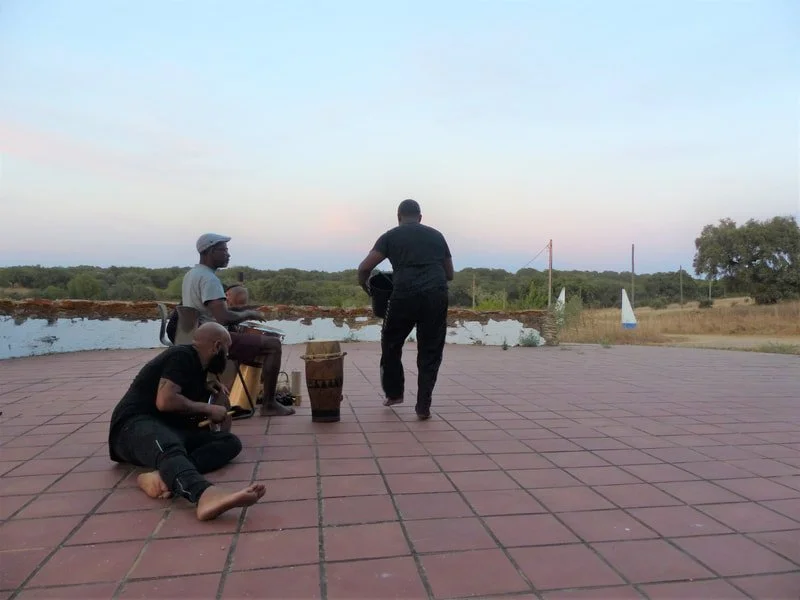
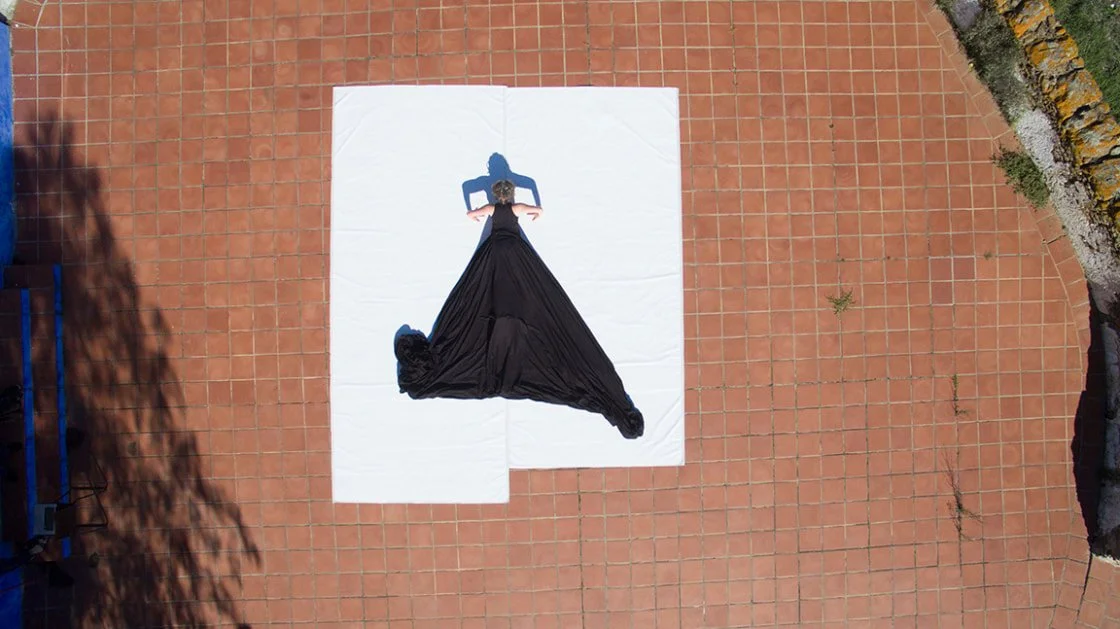
The Circular Square is an open-air working area defined by a low stone boundary. It feels
both contained and exposed. You are outside, but there is still a sense of edge.
Some residents use it for sculpture, temporary constructions, rehearsals, or discussions.
Others simply pass through it on the way between buildings. It is not programmed for
anything specific. It becomes what the work requires.
Excavation Site
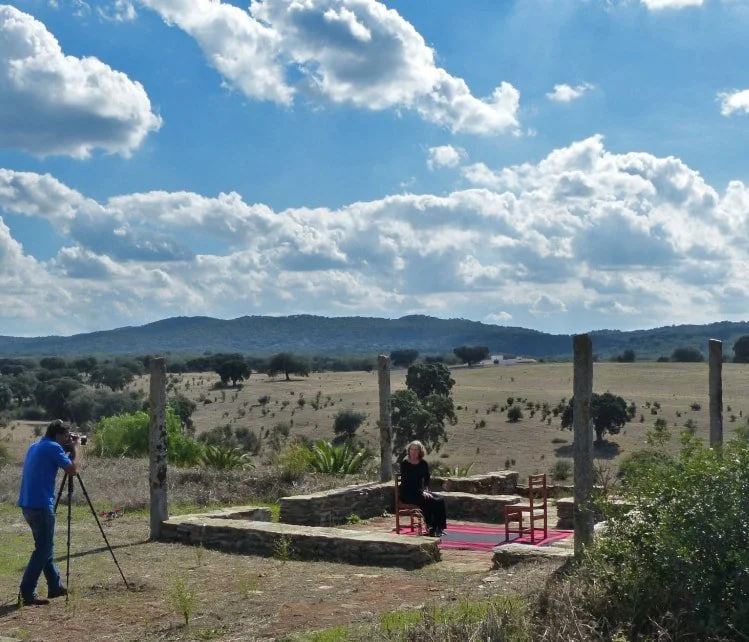
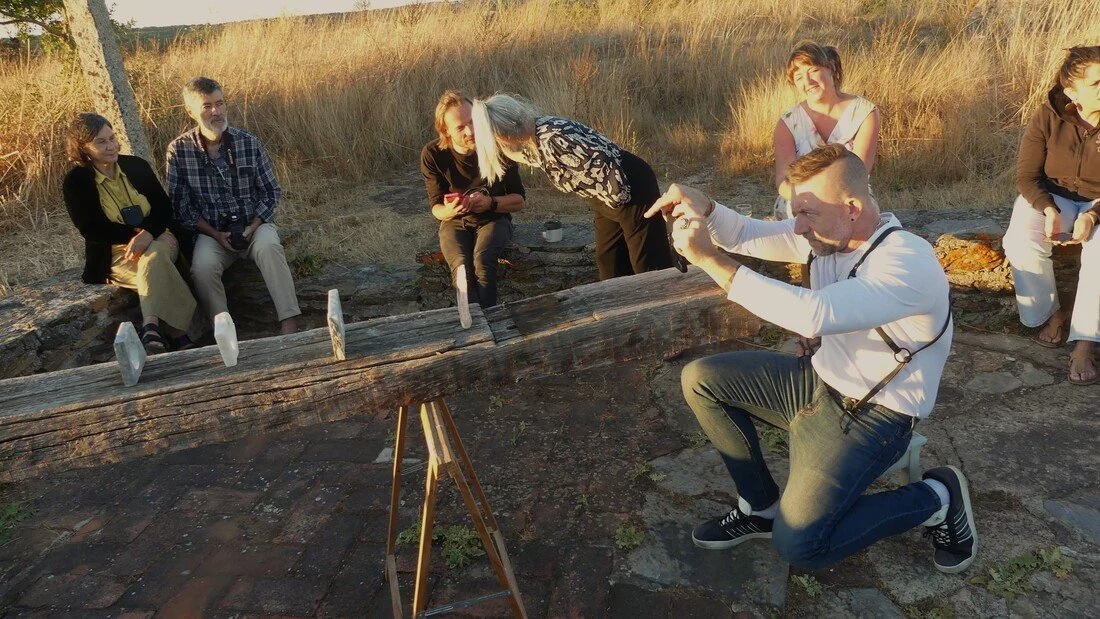
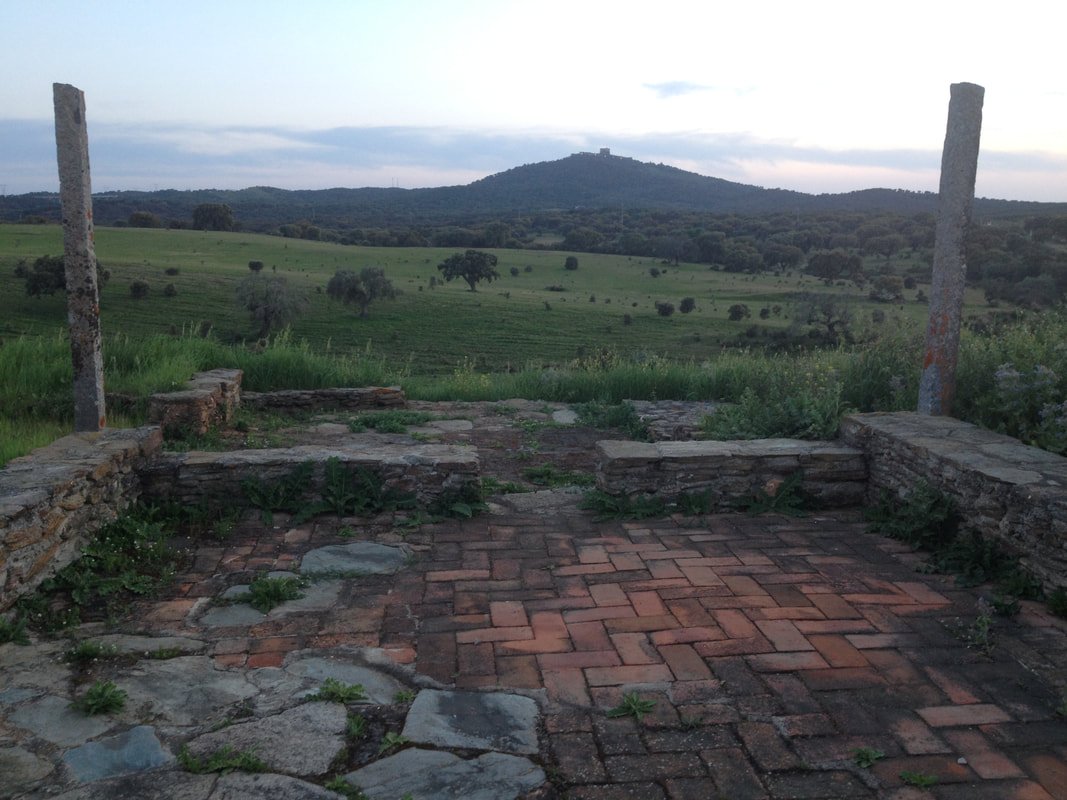
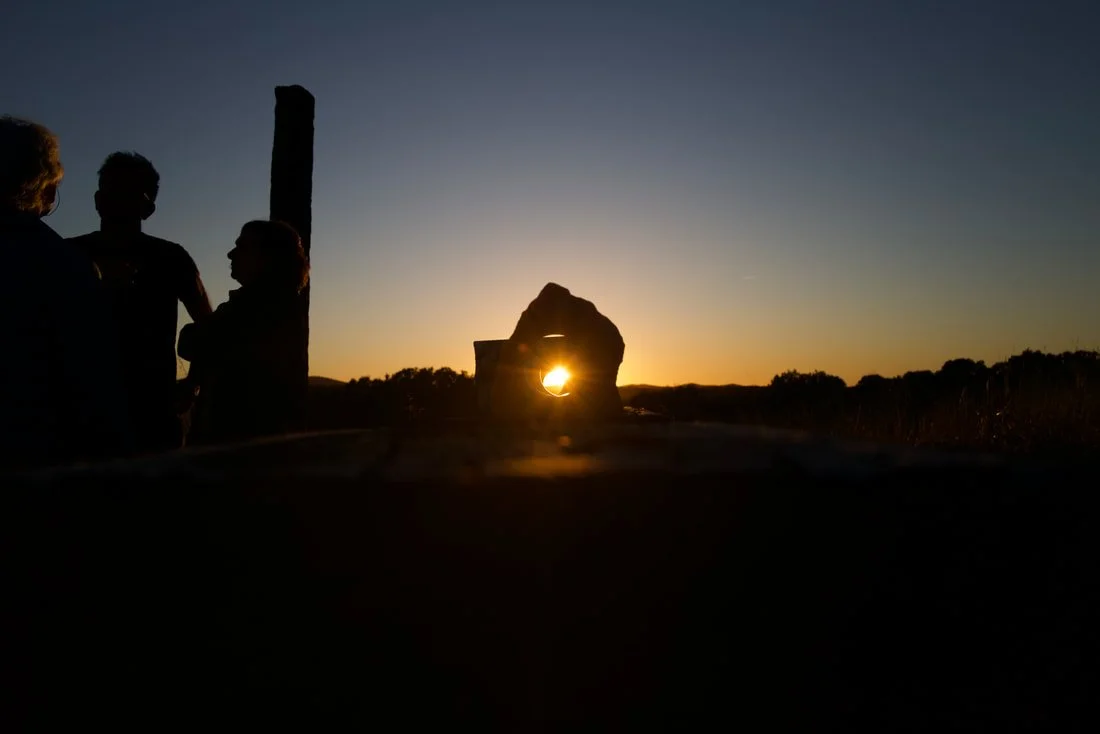
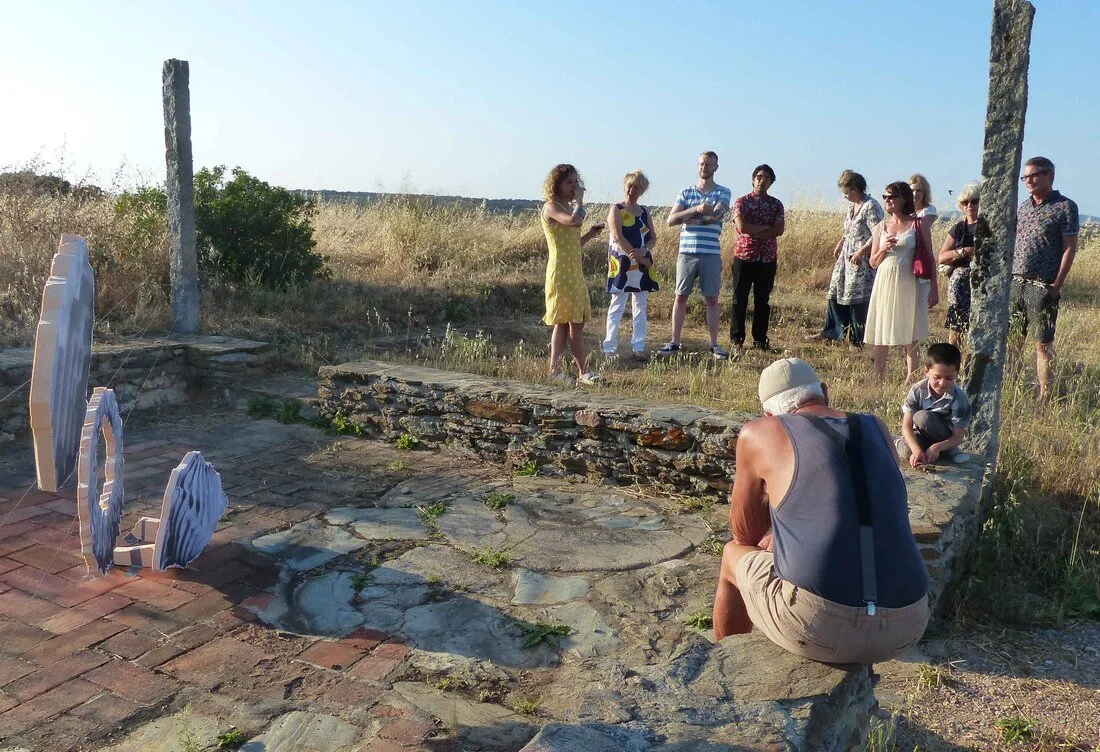
The sítio arqueológico is the ruins of a roman farmhouse, unearthed by OBRAS founder Ludger van der Eerden. It now functions as an open ground for projects that need space and distance.
It is rougher than the interior studios. Wind and weather are part of the conditions.
The ground carries traces of earlier activity, and new work enters into that continuity rather than replacing it.
This is a place for scale, for risk, or for work that benefits from being fully outdoors.
Swimming Pool
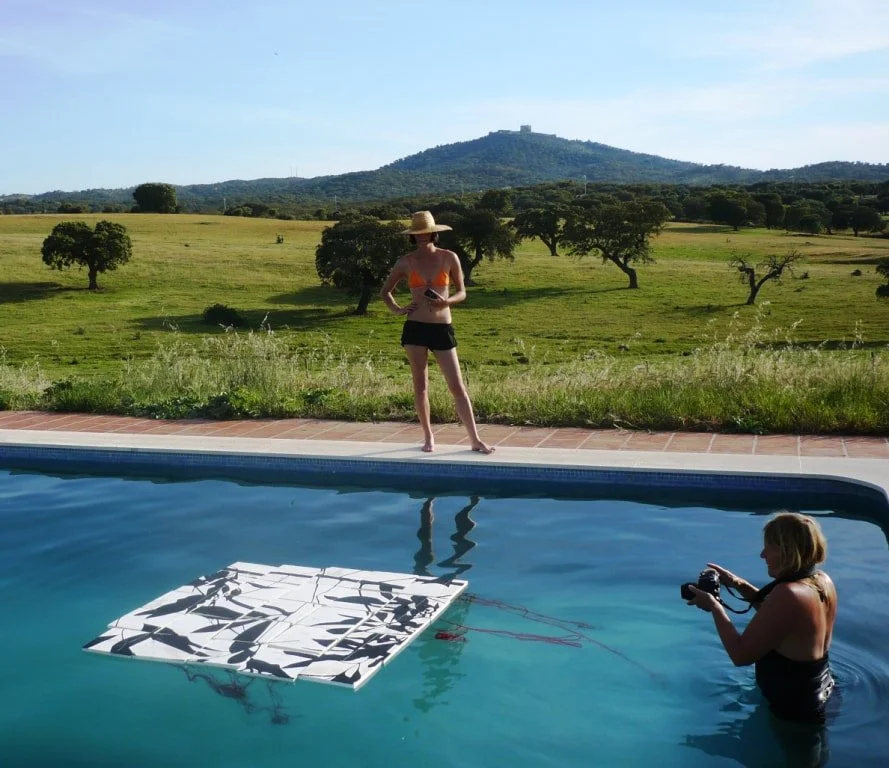
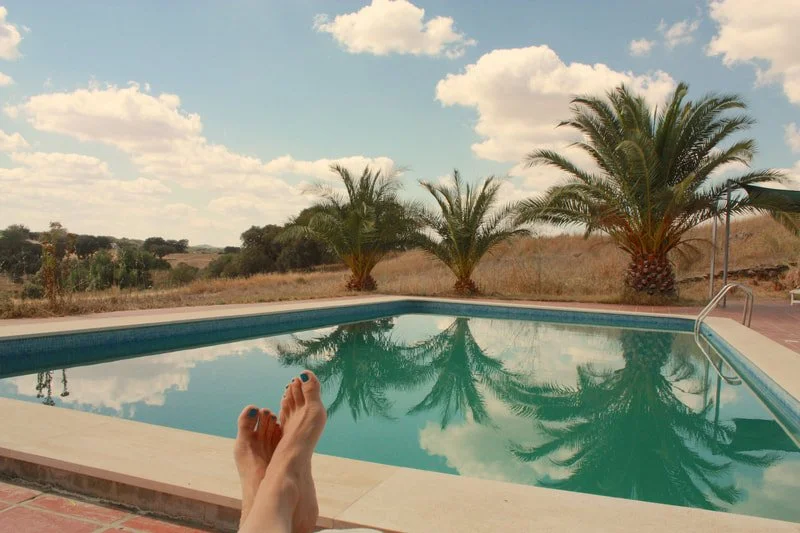
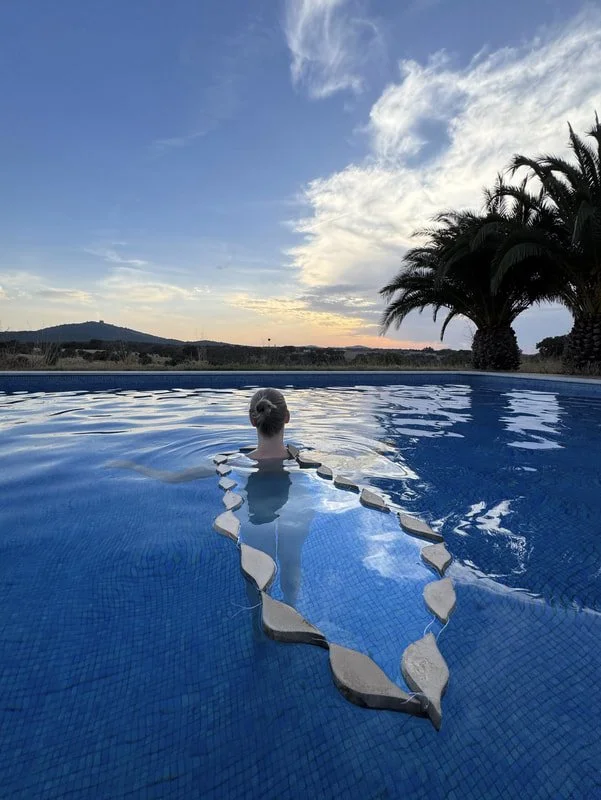
The piscina sits slightly apart from the working areas. It is quiet, informal, and part of the
daily rhythm. Like everything else at OBRAS, it is there to support the time you spend working.