
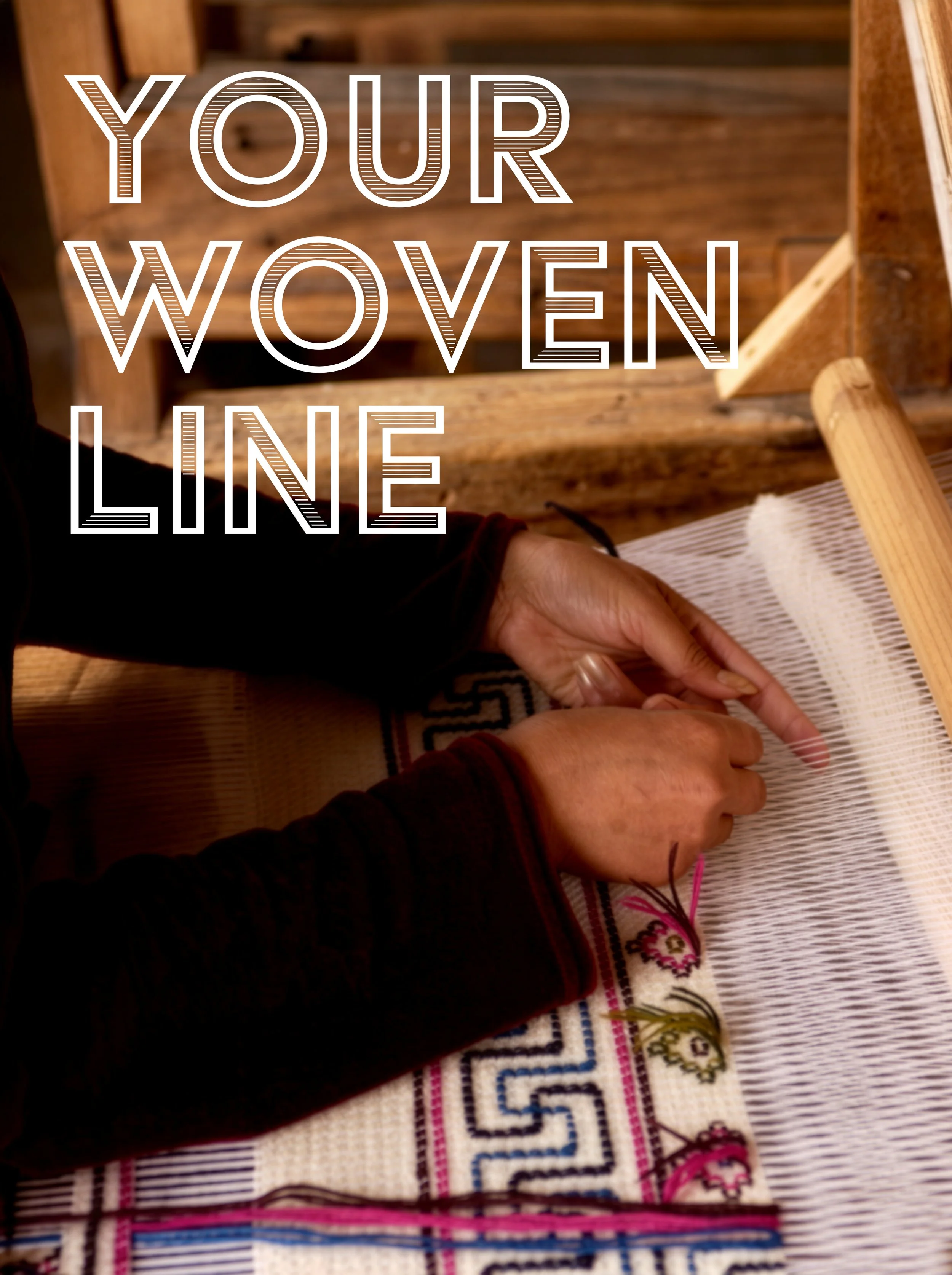
TWO WEEK
WEAVING WORKSHOP
Explore material, colour, pattern, and structure
in collaboration with Andar a Monte
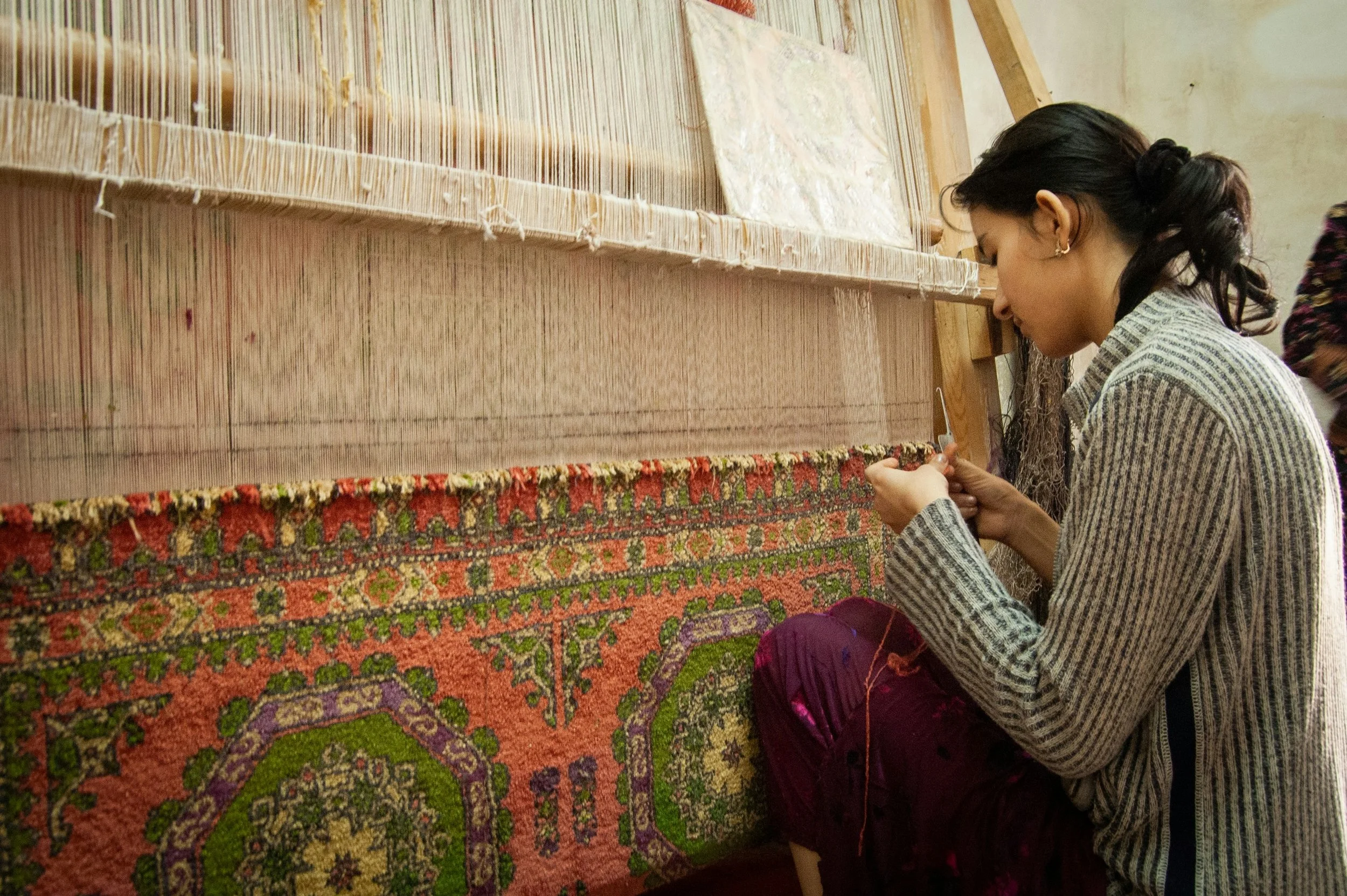
Working on traditional looms, participants will learn and explore weaving as an artistic medium. Developing their own ideas. Discovering how materials and techniques can influence their work.
Sessions take place at Andar a Monte, a weaving studio in the historic hilltop village of Évoramonte, directly across from its remarkable 12th-century castle. Participants will stay at OBRAS, in the surrounding countryside, where the residency setting offers time and space for independent work, reflection, and conversations with other artists.
The workshop is open to artists with or without previous weaving experience. For those new to the medium, it offers a foundation in traditional weaving techniques. For artists already working with fibre and textiles, it offers an opportunity to reconsider familiar processes, explore new possibilities, and discover connections between weaving and other areas of their practice.
The Workshop
The workshop combines technical instruction with individual experimentation, allowing each artist to develop their own approach.
EXPLORING MATERIALS AND IDEAS
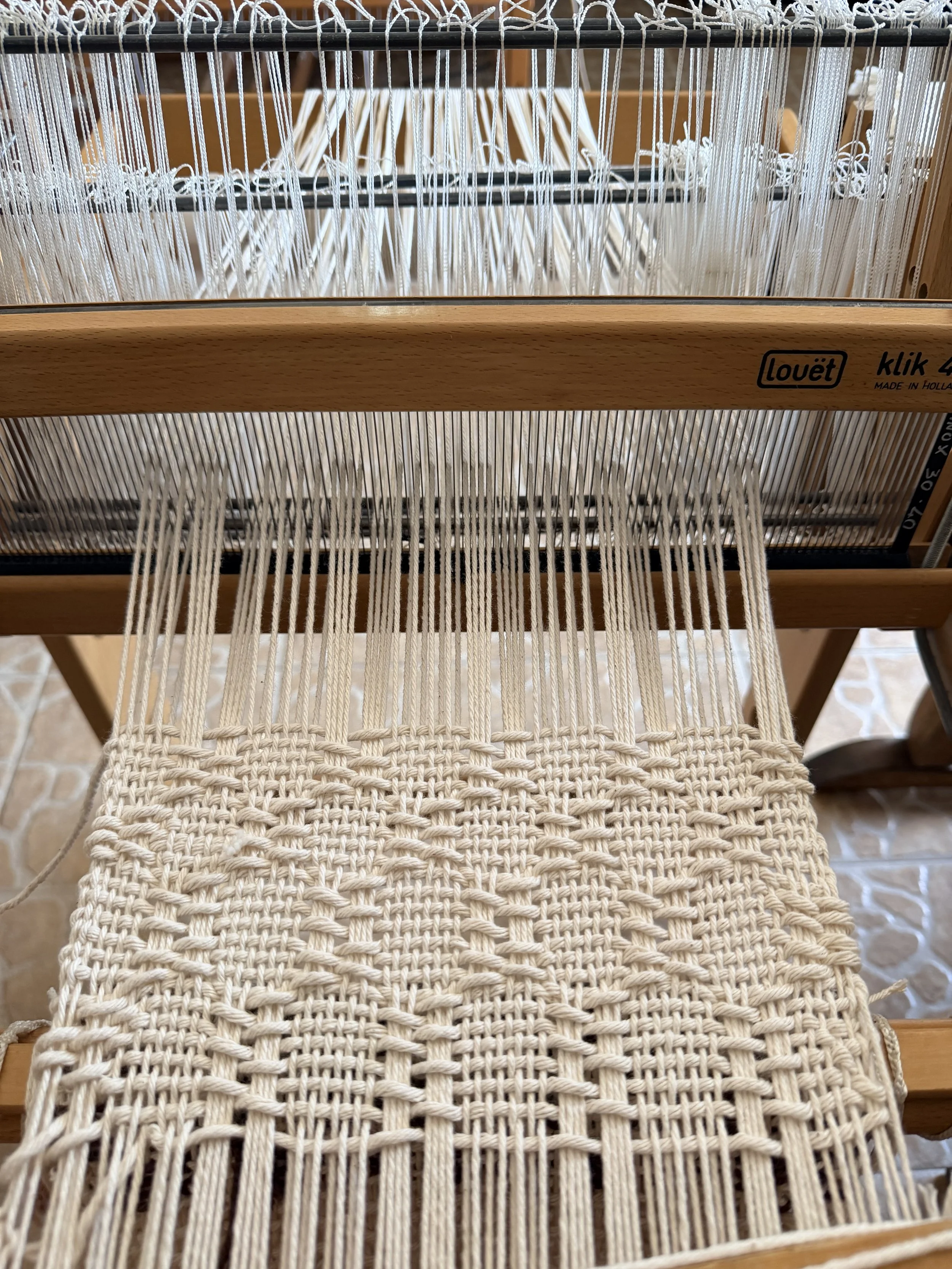
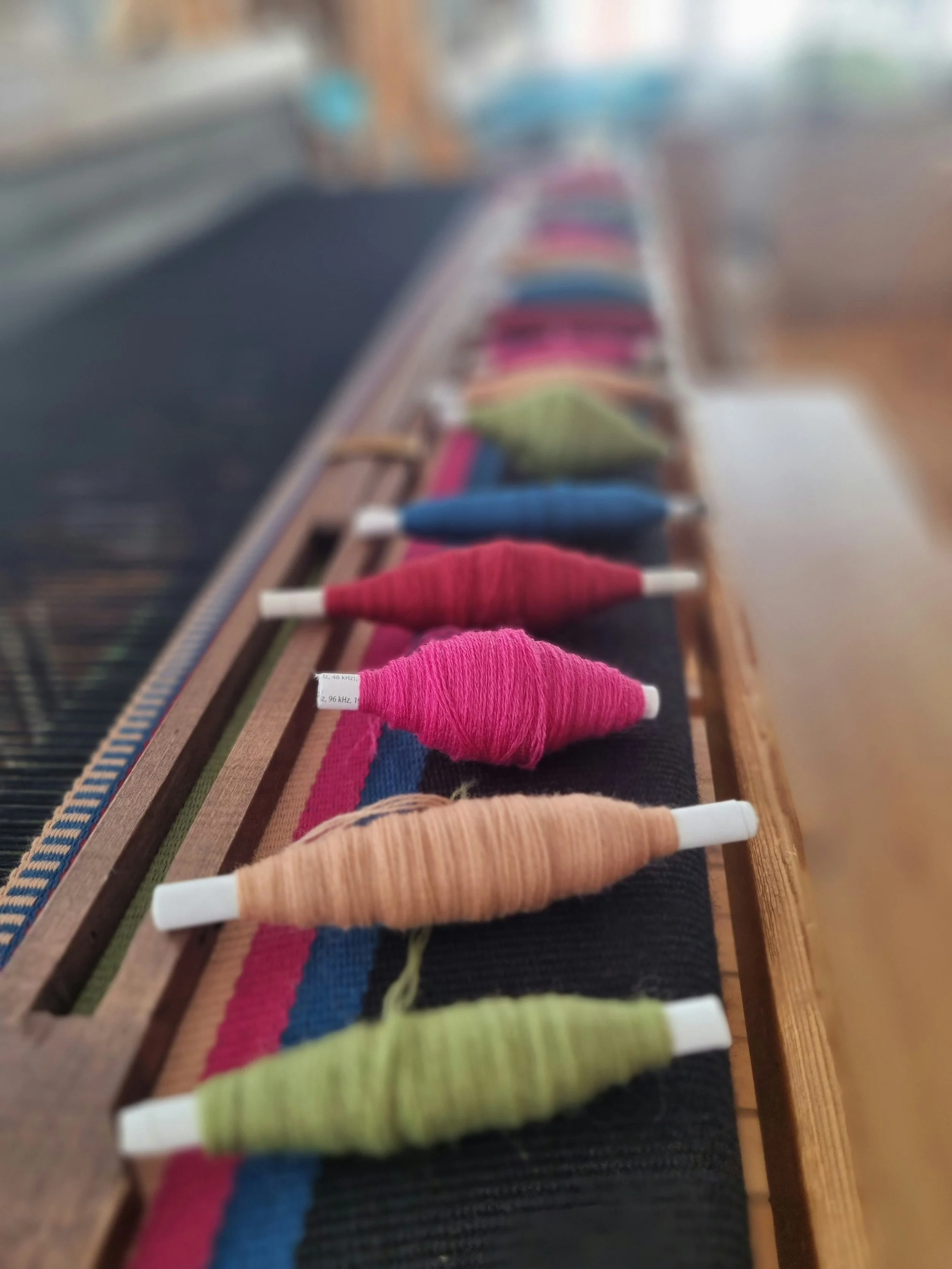
The workshop begins with an introduction to the loom and the relationship between warp and weft. Participants explore different yarns, fibres, colours, and textures, considering how these elements might become part of their own artistic practice.
DEVELOPING AN APPROACH
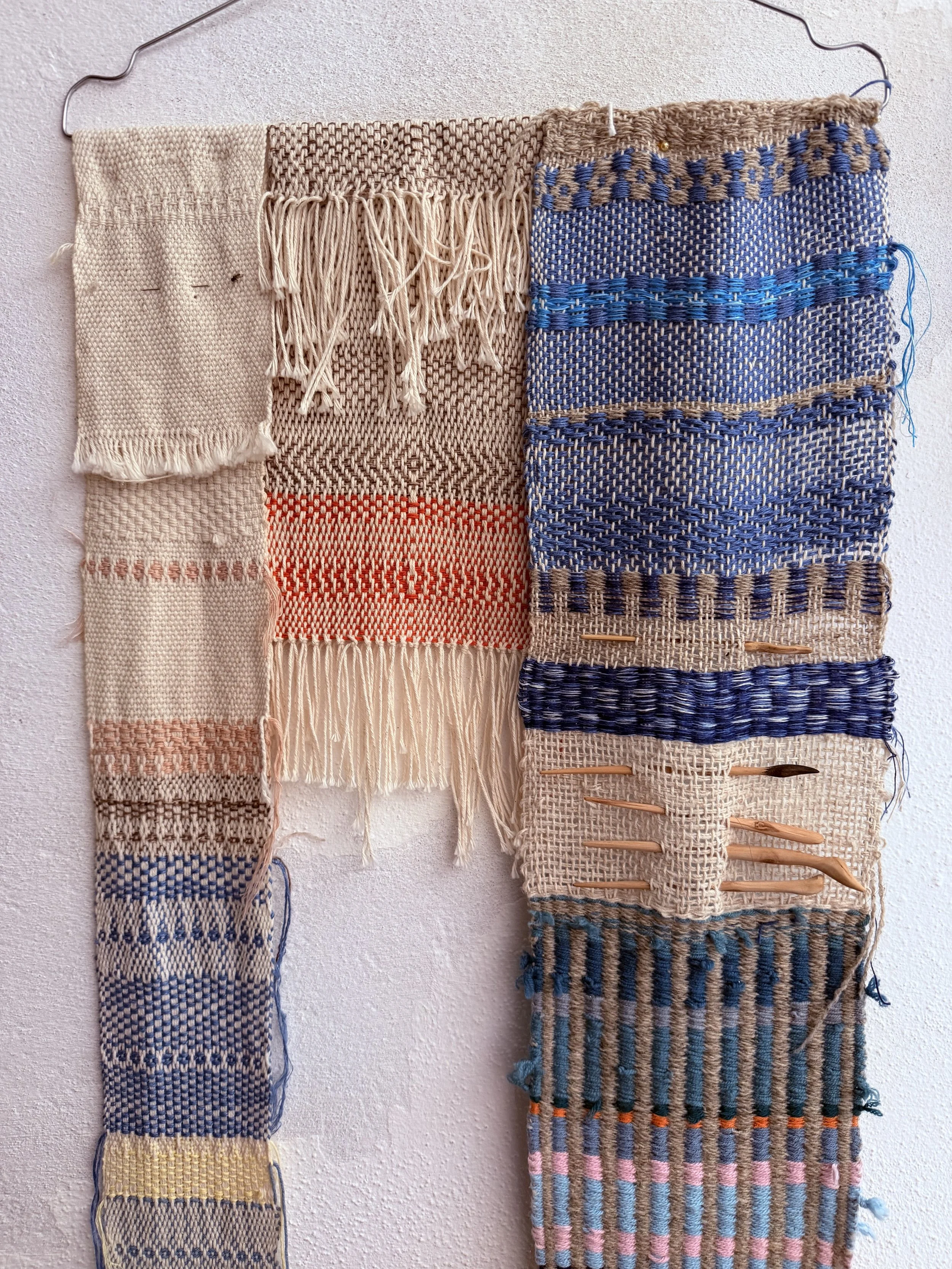
Through sketches, samples, and experimentation, participants begin developing ideas for woven work. Some may choose to work toward a particular composition, while others may prefer to explore the materials and techniques without a predetermined outcome.
PREPARING THE LOOM
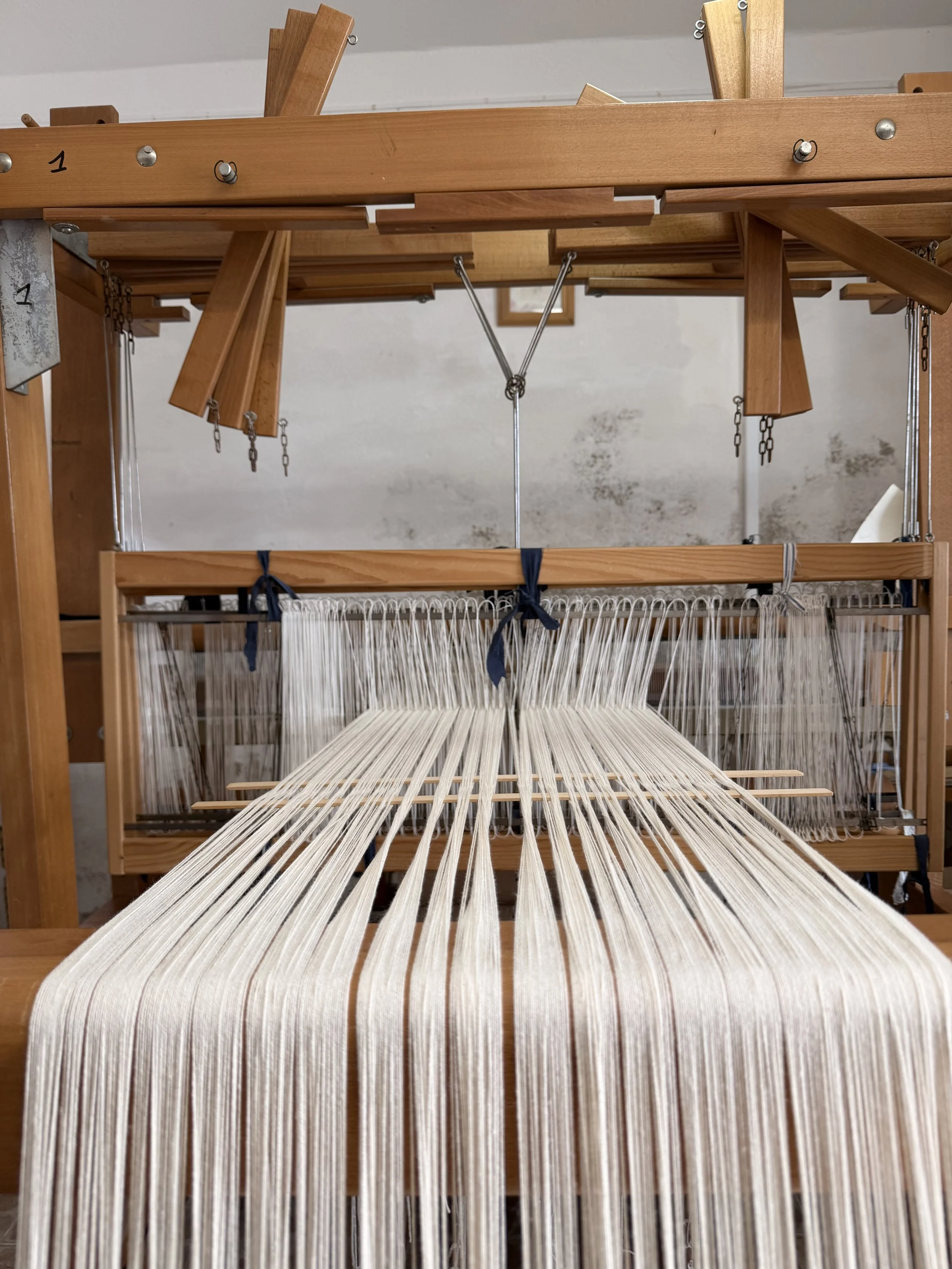
Participants learn to measure and wind a warp, dress the loom, and understand how the structure of weaving influences the resulting textile. These technical foundations provide a starting point for both planned work and more intuitive experimentation.
WEAVING AND EXPERIMENTATION
Working on traditional looms, participants explore colour, pattern, texture, density, and structure. They may develop a single piece, produce a series of smaller studies, or simply investigate the medium.
There is no requirement to produce a finished work.
WORKING BEYOND THE STUDIO
For those interested in continuing their explorations independently at OBRAS, there is also the possibility of working with portable looms.
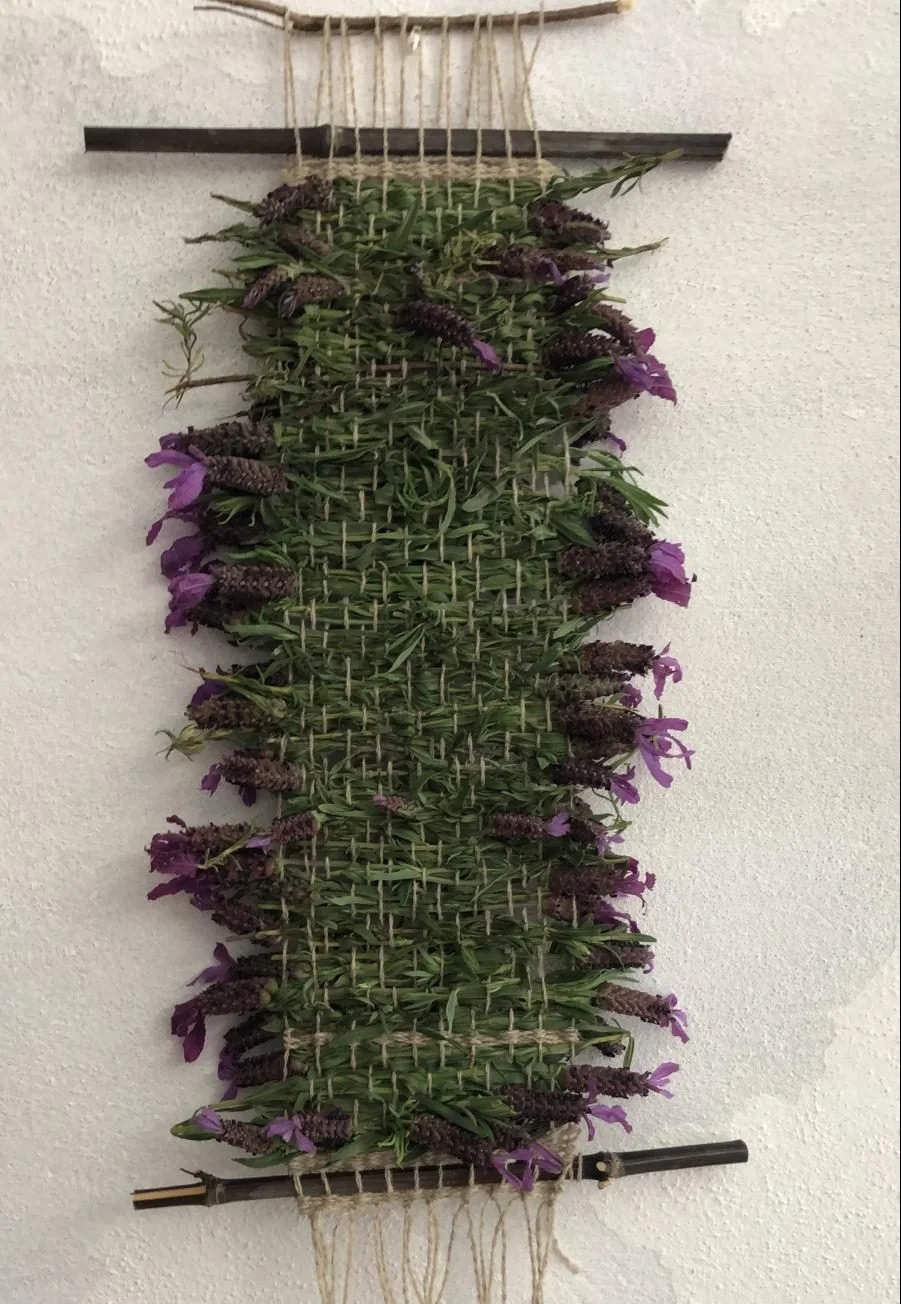
The residency environment offers opportunities to think more broadly about weaving and textile making. The surrounding landscape, rich in natural materials, may inspire some artists to explore unconventional fibres, incorporate found elements, or reconsider what a woven structure can be.
These possibilities offer ways to extend the workshop experience, expand ideas around weaving, and discover connections to an existing artistic practice.
CONTUNING THE EXPLORATION
The final days can be used to develop existing work, try new approaches, or consider how weaving might become part of a broader artistic practice.
Participants may leave with a completed textile, a collection of samples and studies, or simply new ideas to pursue.
The Daily Rhythm
Each day is shaped by a balance between time spent at the weaving studio and the quieter, more independent rhythm of life at OBRAS.
Workshop sessions take place for several hours each day at Andar a Monte, in Évoramonte, with daily transportation between OBRAS and the weaving studio included.
Back at OBRAS, participants become part of the daily life of the residency, living alongside artists working across different disciplines and approaches to making.
The hours outside the workshop are intentionally unstructured, allowing each artist to establish their own rhythm. This may be time spent reflecting on the day's work, walking through the surrounding countryside, and simply enjoying the quiet and open spaces of the Alentejo.
As part of the wider residency experience, workshop participants will take part in the artist talks, presenting their own work and gaining insight into the practices of others. They are also warmly encouraged to join the shared dinners, which offer a more informal setting for conversation and exchange. Beyond these gatherings, artists are free to spend their time as they wish, with other conversations and connections developing naturally.
What makes these two weeks distinctive is the opportunity to combine the experience of learning and working with a particular medium with the freedom of an artist residency. Time away from familiar routines, exposure to other artistic practices, and space for independent exploration can offer new perspectives on both the work developed during the workshop and the work that continues beyond it.